

How Does Foreclosure Work? The Complete Process Explained in California
Worried about losing your home because of missed mortgage payments? Foreclosure is the legal process where a mortgage lender can take back your house if you default on your mortgage loan. 2 This guide explains exactly how foreclosure works in California, including what to expect and steps you can take to protect yourself. 3
Key Takeaways
- Foreclosure is the legal process where your mortgage lender takes back your home after missed payments. Federal law requires lenders to wait at least 120 days after the first missed payment before starting foreclosure. 4
- California primarily uses non-judicial foreclosure, meaning lenders can foreclose without going to court. The process typically takes four to six months from the Notice of Default.
- California homeowners have important rights, including receiving a Notice of Default, a 90-day reinstatement period, and protections under the California Homeowner Bill of Rights. HUD-approved housing counselors offer free help — call the HOPE Hotline at (888) 995-HOPE.
- Options to avoid losing your home include loan modification, forbearance, short sale, deed-in-lieu of foreclosure, Chapter 13 bankruptcy, or selling quickly for cash before the auction date.
- After foreclosure, expect a credit score drop of 100–160 points and a seven-year mark on your report. California's anti-deficiency statutes protect many homeowners from owing the remaining loan balance after a foreclosure sale on a purchase-money mortgage.
What Is Foreclosure?

Foreclosure happens when a mortgage lender takes legal action to repossess your home after you miss several mortgage payments. In California, this process almost always follows the non-judicial path, moving faster than court-based foreclosures in other states.
Definition of foreclosure and its purpose
Lenders use foreclosure as a legal process to recover the balance of your home loan if you stop making mortgage payments. Your lender can take possession of your property because the deed of trust — used in nearly all California home purchases — makes your home collateral for the debt.
The purpose is to allow lenders to recoup losses through a trustee's sale or public auction. If no one buys at auction, properties become Real Estate Owned (REO). This system gives lenders a way to resolve unpaid secured debt while giving homeowners multiple chances to avoid losing their home through loan modification, repayment plans, short sale, or help from HUD-certified housing counselors.
California uses non-judicial foreclosure
Because virtually all California mortgages are structured as deeds of trust with a power of sale clause, lenders can foreclose without filing a lawsuit. A third-party trustee — not a court — manages the process under California Civil Code. This non-judicial path typically takes four to six months from the first Notice of Default to the trustee's sale.
Judicial foreclosure is available in California but rarely used. Lenders sometimes choose it when they want to pursue a deficiency judgment, though California's anti-deficiency statutes limit that option significantly.
Foreclosure is a last resort for lenders
California lenders do not want to foreclose. Federal law requires lenders to wait at least 120 days after the first missed payment before initiating foreclosure. During that window, servicers must reach out and offer loss mitigation options such as forbearance, repayment plans, or loan modification.
The California Homeowner Bill of Rights adds extra layers of protection, banning dual-tracking — meaning your lender cannot advance the foreclosure while actively reviewing your application for mortgage relief. Foreclosure only begins when other solutions have failed.
The Complete Foreclosure Timeline in California
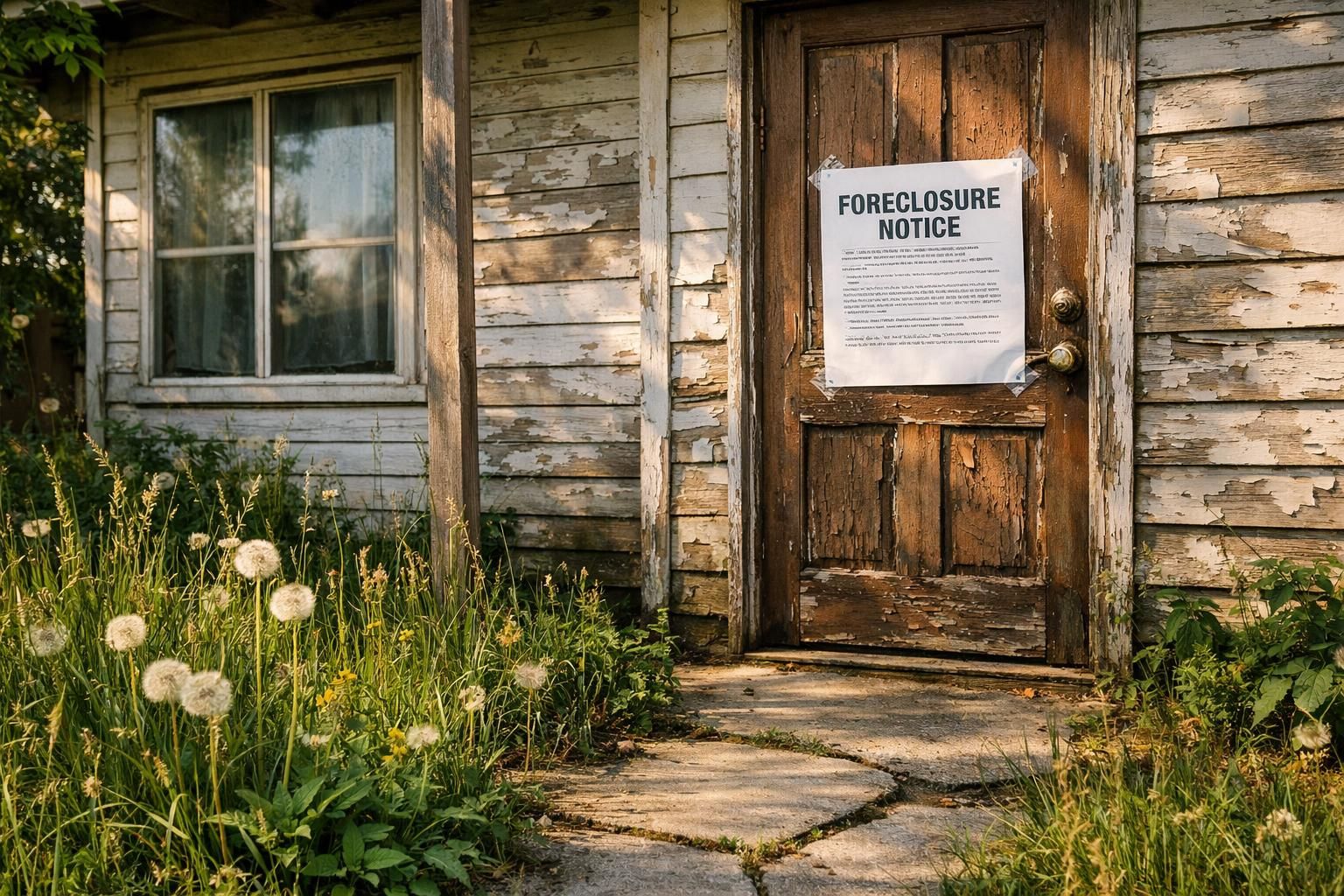
Understanding California's foreclosure timeline helps you prepare and protect your rights at every step.
Missed Payments (30–120 days)
Mortgage payments typically have a 15-day grace period. After 30 days past due, your loan is in default and the delinquency gets reported to credit bureaus. Between 30 and 120 days, your lender is required by federal law to contact you and present options such as forbearance or a repayment plan before initiating any formal foreclosure action.
This is the best window to call a HUD-approved housing counselor and explore your choices.
Notice of Default (Day 1 of the formal process)
After at least 120 days of missed payments, the lender instructs the trustee to record a Notice of Default (NOD) with the county recorder's office — in Los Angeles, Sacramento, San Diego, or whichever county the property is located. The NOD is also mailed to you and any other parties with an interest in the property.
Once the NOD is recorded, California law gives you a 90-day reinstatement period. During this time, you can cure the default by paying all past-due amounts, including fees and costs, to stop the foreclosure entirely.
Notice of Trustee's Sale (After 90-day reinstatement period)
If you have not cured the default within 90 days of the NOD, the trustee can record and publish a Notice of Trustee's Sale. California law requires this notice to be:
- Recorded at least 20 days before the sale date
- Published in a local newspaper once a week for three consecutive weeks
- Posted on the property and in a public place
- Mailed to you and all parties with recorded interests
The sale cannot happen until at least 20 days after the notice is recorded, giving you a final window to pay off the loan in full or find another solution.
Trustee's Sale (Public Auction)
On the sale date, the property is auctioned to the highest bidder, typically on the courthouse steps or at a designated location. The opening bid is usually the amount owed to the lender. If no third party outbids the lender, the property becomes REO (Real Estate Owned) and the lender takes title.
Up until the moment of sale, you can still stop the auction by paying the full loan balance or filing for bankruptcy. Once the trustee's deed is recorded, you lose all ownership rights.
Post-Sale: Eviction and Deficiency
After the trustee's sale, the new owner — whether the lender or a third-party buyer — can begin the eviction process. California law requires a formal unlawful detainer (eviction) action; no one can remove you without following proper legal procedures.
California does not offer a post-sale redemption period in most non-judicial foreclosures, which means once the trustee's deed is recorded, you generally cannot reclaim the property by paying off the debt.
On deficiency judgments: California's anti-deficiency statutes protect homeowners in many situations. If the foreclosure was non-judicial (the most common type) or involved a purchase-money loan used to buy your primary residence, the lender typically cannot pursue you for any remaining balance after the sale. 2
Judicial vs. Non-Judicial Foreclosure in California

Key differences for California homeowners
| Feature | Non-Judicial (Common in CA) | Judicial (Rare in CA) |
|---|---|---|
| Court involvement | None — trustee manages process | Superior Court filing required |
| Typical timeline | 4–6 months from NOD | 1–3 years |
| Deficiency judgment | Barred in most cases by CA anti-deficiency law | Possible, subject to fair value limitations |
| Post-sale redemption | Generally not available | 3-month redemption period may apply |
| When used | Deed of trust with power of sale clause | Lender seeks deficiency; no power of sale clause |
Most California homeowners — from San Francisco to San Diego — will face non-judicial foreclosure because their loans are secured by a deed of trust. The faster timeline makes early action critical.
Your Rights During Foreclosure in California
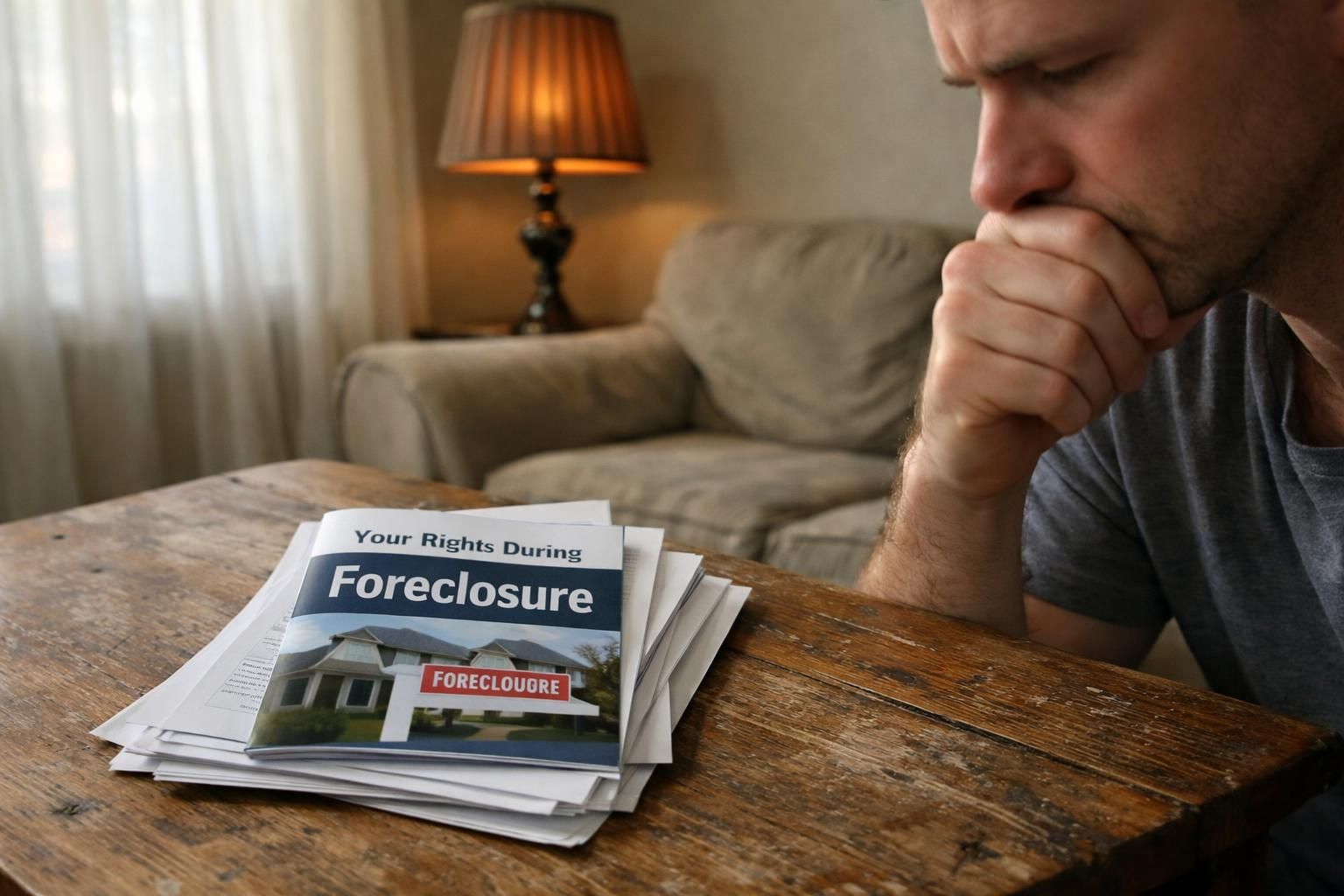
California Homeowner Bill of Rights
California enacted the Homeowner Bill of Rights to provide meaningful protections during the foreclosure process. Key provisions include:
- No dual-tracking: Your servicer cannot proceed with foreclosure while reviewing a complete loan modification application.
- Single point of contact: Your servicer must assign you a dedicated representative who knows your file and can connect you with decision-makers.
- Written denial with appeal rights: If your loan modification is denied, the servicer must explain why in writing and give you 30 days to appeal.
- Verified documentation: Servicers must review accurate, complete information before recording a Notice of Default or Notice of Trustee's Sale.
Federal protections that also apply
- Federal law requires a 120-day waiting period after the first missed payment before foreclosure can start. 4
- Active-duty military members are protected by the Servicemembers Civil Relief Act (SCRA), requiring a court order before foreclosure can proceed.
- Renters living in a foreclosed property are entitled to at least 90 days' notice under the Helping Families Save Their Homes Act of 2009.
- The CFPB requires lenders to provide clear written notices, including information about your rights and available loss mitigation options, throughout the process.
- Canceled mortgage debt on a primary residence may be excluded from taxable income through 2025 under the Mortgage Forgiveness Debt Relief Act, up to $750,000.
For free guidance, contact a HUD-approved housing counselor or call the HOPE Hotline at (888) 995-HOPE.
Living in your home during foreclosure
You can remain in your home throughout the California foreclosure process — from the Notice of Default all the way until the trustee's sale closes and the deed is recorded. After that, the new owner must file an unlawful detainer action through California Superior Court to remove you. No one can force you out without following legal eviction procedures. During this time, continue maintaining the property and paying any applicable property taxes to avoid additional complications.
Options to Stop or Avoid Foreclosure
Loan modification, forbearance, and repayment plans
If you fall behind on mortgage payments, your lender must consider loss mitigation options before moving forward with foreclosure under both federal law and the California Homeowner Bill of Rights.
- Loan modification changes the terms of your existing mortgage — lowering the interest rate, extending the loan term, or adding missed payments to the balance — to make monthly costs more manageable.
- Forbearance temporarily pauses or reduces your payments for three to twelve months. You repay the suspended amount through a lump sum or added future payments. Federal rules prohibit foreclosure from advancing while a forbearance application is under review.
- Repayment plans spread your past-due balance over several months on top of your regular payment, letting you catch up gradually without refinancing.
Apply early. Under the California Homeowner Bill of Rights, your servicer must acknowledge receipt of a complete application within five business days and cannot record a Notice of Default or Notice of Trustee's Sale while your application is pending.
Short sale, deed in lieu, and refinancing
- Short sale lets you sell the property for less than you owe, with lender approval. In California, lenders who consent to a short sale on a first mortgage typically cannot pursue a deficiency judgment afterward. The process usually takes three to six months. Fannie Mae and Freddie Mac allow new financing two years after a short sale. 5
- Deed in lieu of foreclosure transfers title voluntarily back to the lender in exchange for debt release. Any junior liens or HELOCs must be resolved first. This is generally less damaging to your credit than a completed foreclosure.
- Refinancing replaces your current loan with a new one at better terms. FHA short-refinance programs can allow refinancing with a first lien up to 97.75% loan-to-value when a lender writes down at least 10% of the principal balance.
Chapter 13 bankruptcy
Filing Chapter 13 in California's federal bankruptcy court triggers an automatic stay that immediately halts all foreclosure activity. 6 You propose a three-to-five year repayment plan to cure past-due mortgage payments while keeping your home. You must demonstrate regular income and meet debt limits to qualify. Unlike Chapter 7, Chapter 13 is specifically designed to help homeowners retain their property when they have the income to support a structured repayment plan.
Selling your home for cash before foreclosure
A fast cash sale is one of the most effective ways to stop the California foreclosure process and protect your credit. Cash buyers can often close within days — well before a trustee's sale date. If you have equity in your home, a cash sale lets you pay off the mortgage balance and potentially walk away with funds. You keep control over timing and avoid the damage of a completed foreclosure on your credit report. This option works even if you have received a Notice of Default, as long as the trustee's sale has not yet occurred.
What Happens After Foreclosure in California?
Credit score impact and recovery timeline
Foreclosure typically drops your credit score by 100 to 160 points and remains on your credit report for seven years. A short sale causes a smaller drop — roughly 45 to 65 points.
Waiting periods to buy again vary by loan type:
- FHA loans: 3-year wait after foreclosure
- VA loans: 2-year wait
- Conventional loans: 7-year wait (reduced to 3 years with documented extenuating circumstances)
- After short sale or deed-in-lieu: Fannie Mae and Freddie Mac allow new financing after 2 years
Work with a HUD-approved housing counselor to build a credit recovery plan and prepare for future homeownership.
Deficiency judgments and tax implications in California
California's anti-deficiency statutes offer meaningful protection. When foreclosure is non-judicial — by far the most common type in the state — lenders generally cannot pursue a deficiency judgment for any remaining loan balance after the trustee's sale. Purchase-money loans used to buy your primary residence are also typically protected even in judicial foreclosure.
On the tax side, forgiven mortgage debt on your primary residence may qualify for exclusion from taxable income through 2025 under the Mortgage Forgiveness Debt Relief Act (up to $750,000). California conforms to this federal exclusion for primary residences. Consult a tax professional for guidance specific to your situation.
If a foreclosure stalls and the lender walks away without completing the process, you may remain responsible for California property taxes — which are reassessed at the point of ownership transfer — until title officially changes hands.
In-Depth: How Foreclosure Works in California
California foreclosure begins after you miss mortgage payments for roughly three to four months. Federal law mandates a 120-day waiting period before any formal action can start. 7 The trustee then records a Notice of Default with the county recorder, starting a 90-day reinstatement period during which you can pay all past-due amounts to stop the process.
If you don't cure the default, a Notice of Trustee's Sale is recorded and published at least 20 days before the auction. At the sale, the property goes to the highest bidder. California's non-judicial process — governed by the deed of trust and state Civil Code — means the entire timeline from NOD to sale can unfold in as little as four months.
Throughout this process, California law and federal CFPB rules require your servicer to offer loss mitigation options, maintain a single point of contact, and avoid dual-tracking. Anti-deficiency protections prevent most lenders from pursuing you for the remaining balance after a non-judicial sale. 7
Acting quickly after receiving a Notice of Default — whether by pursuing a loan modification, short sale, or cash sale — gives you the most options and the best chance of protecting your credit and financial future.
Conclusion
California's non-judicial foreclosure process moves fast, but you have meaningful rights and real options at every stage. From the 90-day reinstatement window after a Notice of Default to California's strong anti-deficiency protections, state law gives you tools that homeowners in many other states don't have. Connect with a HUD-approved housing counselor or call the HOPE Hotline at (888) 995-HOPE for free guidance.
If you need to sell quickly to avoid foreclosure, KDS Homebuyers purchases homes directly for cash throughout California — no repairs, no listings, no waiting. Visit kdshomebuyers.net to request your free cash offer today and take control of your situation before the trustee's sale date arrives.
FAQs
1. How long does foreclosure take in California?
California's non-judicial foreclosure typically takes four to six months from the Notice of Default to the trustee's sale. The 90-day reinstatement period after the NOD and the required 20-day notice before the sale are built into that timeline.
2. Can a California lender sue me for the remaining balance after foreclosure?
In most cases, no. California's anti-deficiency statutes generally prohibit lenders from pursuing a deficiency judgment after a non-judicial foreclosure or after foreclosing on a purchase-money loan used to buy your home.
3. What is a Notice of Default in California?
A Notice of Default is the formal document recorded with the county recorder's office that officially starts the California foreclosure process. It triggers a 90-day reinstatement period during which you can pay all past-due amounts to stop the foreclosure.
4. Can I stay in my home during the foreclosure process?
Yes. You can remain in your home until after the trustee's sale is completed and the deed is recorded. After that, the new owner must file an unlawful detainer action through California Superior Court — no one can remove you without following proper legal eviction procedures.
5. Does California offer a redemption period after the foreclosure sale?
Generally, no. In California non-judicial foreclosures, there is no post-sale redemption period. Once the trustee's deed is recorded, you cannot reclaim the property by paying off the debt. This makes it especially important to act before the sale date.
6. How does foreclosure affect my credit and when can I buy again?
A completed foreclosure drops your credit score by roughly 100 to 160 points and stays on your report for seven years. FHA loans require a three-year wait, VA loans two years, and conventional loans seven years — reduced to three with documented extenuating circumstances.
References
- ^ https://lawecommons.luc.edu/cgi/viewcontent.cgi?article=2738&context=luclj
- ^ https://www.consumerfinance.gov/ask-cfpb/how-does-foreclosure-work-en-287/ (2024-05-28)
- ^ https://law.wisc.edu/fjr/clinicals/foreclosure_timeline.pdf
- ^ https://www.dfs.ny.gov/consumers/help_for_homeowners/foreclosure_assistance/consumer_bill_of_rights
- ^ https://www.nolo.com/legal-encyclopedia/deed-lieu-vs-short-sale.html
- ^ https://cannonlaw4u.com/blog/how-chapter-13-bankruptcy-can-help-you-avoid-foreclosure/ (2025-05-27)
- ^ https://en.wikipedia.org/wiki/Foreclosure
