

Deficiency Judgments After Foreclosure: Can You Still Owe Money in Florida
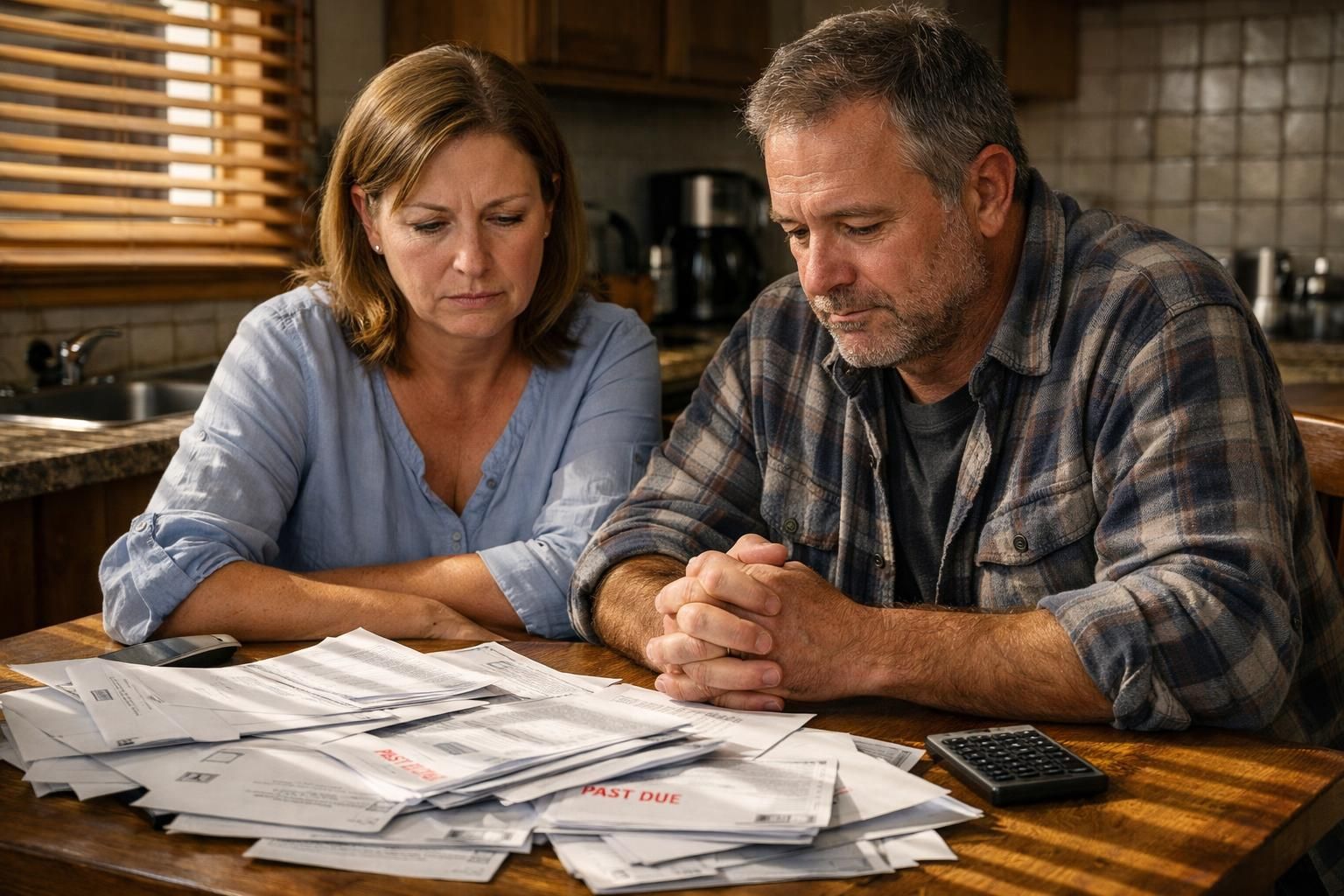
If you've lost your home in a Florida foreclosure, you might still owe money even after the sale is over. A deficiency judgment after foreclosure can leave you responsible for any remaining mortgage debt if your house sold for less than what you owed. 1 Florida is a recourse state, meaning lenders can and do pursue borrowers for unpaid balances. This article explains how deficiency judgments work under Florida law and what steps you can take to protect yourself.
Key Takeaways
- After a Florida foreclosure, you could still owe money if your home sells for less than your mortgage balance. This gap is called a deficiency. If you owed $200,000 and the sale brought $150,000, the lender may pursue you for the remaining $50,000. 1
- Florida allows deficiency judgments. Lenders must file within one year of the foreclosure sale or the certificate of title issuance, whichever applies. Missing that deadline eliminates their right to collect.
- Florida uses judicial foreclosure exclusively — every foreclosure goes through the court system, and a judge must approve any deficiency judgment amount.
- A deficiency judgment can lead to wage garnishment (up to 25% of disposable income under federal law) or liens on other property you own. It can appear on your credit report for up to seven years.
- You can reduce deficiency risks through loan modifications, short sales with a written waiver, deeds in lieu, bankruptcy (Chapter 7 or 13), negotiated settlements, or selling quickly to a cash buyer before foreclosure begins. 7
Understanding the fear and confusion after foreclosure
Losing your home to foreclosure in Florida can leave you feeling lost about what comes next. Many homeowners believe the nightmare ends once the foreclosure sale is complete — but in Florida, lenders have up to one year after the sale to file for a deficiency judgment if the property sold for less than the total mortgage debt.
For example, on a $200,000 loan where the foreclosure sale brings only $150,000, you could still face a $50,000 personal debt. That court order can trigger wage garnishment or bank account seizures. Foreclosures also stay on your credit report for up to seven years, making it harder to secure new financing. Borrowers often miss critical notices or misunderstand their rights during Florida's judicial foreclosure process, creating unexpected financial burdens long after the home is gone.
What is a deficiency judgment? Example: $200k mortgage, $150k sale, $50k deficiency
A deficiency judgment is a court order making you personally responsible for the gap between your mortgage balance and the foreclosure sale price. If you owe $200,000 but your home sells at a Florida foreclosure auction for $150,000, the lender can ask the court to hold you liable for the $50,000 difference. 1
Because Florida requires judicial foreclosure, a judge oversees the entire process — including the deficiency claim. If granted, the judgment allows the lender to collect through wage garnishment or liens on your other assets. Even after walking away from your home, you may face ongoing financial obligations tied to that unpaid loan balance.
How Deficiency Judgments Work in Florida
Florida's court system plays a central role in every foreclosure and any resulting deficiency claim. Understanding how the process unfolds can help you respond strategically.
The foreclosure sale process and deficiency calculation
Florida uses a judicial foreclosure process exclusively. After the lender files suit and the court enters a final judgment of foreclosure, the clerk of court schedules a public auction through the county's online bidding platform — most Florida counties, including Miami-Dade, Hillsborough, and Duval, now use online auctions. You must vacate before the sale date.
Under Florida law, the deficiency amount is calculated as the difference between the total mortgage debt and the greater of the foreclosure sale price or the property's fair market value at the time of sale. 2 So if you owe $275,000 and the home sells for $200,000 but an appraisal shows fair market value of $225,000, the court uses $225,000 — reducing the deficiency to $50,000 rather than $75,000.
Lenders may also add unpaid interest, attorney's fees, maintenance costs, and other foreclosure-related expenses to the deficiency claim. Courts require documented evidence before approving these amounts. Any resulting judgment can become a lien on other Florida property you own or lead to wage garnishment. 3
Additional costs: legal fees, maintenance, and sale expenses
Legal fees, property maintenance, and auction costs can significantly raise the amount you owe after a Florida foreclosure. If your mortgage balance is $200,000 and the property sells for $190,000, that's a $10,000 deficiency. If the lender spent another $40,000 on attorney fees and upkeep during the foreclosure proceeding, they may seek a total of $50,000 — unless you challenge those figures in court.
Florida courts require lenders to produce itemized records supporting every cost. Check whether insurance payouts or rental income collected during the foreclosure period were properly credited against your balance. These details can make a meaningful difference in the final judgment amount.
Florida's one-year statute of limitations
This is one of the most important deadlines for Florida homeowners to understand. Under Florida law, a lender must file for a deficiency judgment within one year of the foreclosure sale or the date the certificate of title is issued. If the lender misses that window, they permanently lose the right to pursue a deficiency. Once the deadline passes, no court action or debt collection can recover that balance. Monitoring this deadline — and consulting with a foreclosure defense attorney promptly — gives you critical leverage.
Florida: A Deficiency Judgment State

Florida is a recourse state, meaning lenders can pursue borrowers for unpaid mortgage balances after a foreclosure sale. Unlike California or Oregon — which have strong anti-deficiency protections — Florida gives lenders broad rights to collect remaining debt through the court system.
Recourse loans in Florida
Most mortgages in Florida are recourse loans. This means that if your home sells at auction for less than your loan balance, the lender can take legal action to recover the difference. They may garnish wages, place liens on other real estate you own in Tampa or Orlando, or pursue bank account levies. Knowing your loan type before you default gives you time to plan a response and explore alternatives.
No purchase-money mortgage protection in Florida
Unlike Arizona or California, Florida does not have a broad anti-deficiency statute protecting purchase-money mortgages on primary residences. Whether your loan was used to buy the home, refinance it, or draw on a home equity line, Florida lenders generally retain the right to seek a deficiency after foreclosure. This makes it especially important to explore pre-foreclosure options early.
When Lenders Pursue Deficiency Judgments

Factors lenders consider
- The size of the deficiency. A $50,000 gap on a Jacksonville property is more likely to be pursued than a few thousand dollars. Lenders weigh expected recovery against legal costs. 6
- Your financial situation. If you have no significant assets or income, lenders may decide collection is not worth the effort. Borrowers who are insolvent or in bankruptcy present high collection risk.
- Legal costs in Florida. Attorney's fees, court filing costs, and appraisal expenses all factor into a lender's decision to pursue litigation versus settlement.
- Documentation requirements. Florida courts require lenders to submit credible evidence — including an independent appraisal — before a deficiency judgment is approved. 5
- The one-year deadline. Lenders who delay lose their right to collect. Acting quickly is in their interest, which means you should act quickly too.
What Happens If You're Sued in Florida
Lawsuit process and response timeline
- The lender files a deficiency claim in the Florida circuit court where the foreclosure was handled.
- You receive a legal summons — by process server or certified mail — starting your response clock.
- Florida civil procedure generally requires you to respond within 20 days of being served.
- Failing to respond can result in a default judgment, allowing the lender to immediately pursue wage garnishment or property liens.
- If contested, the court schedules a hearing where both sides present evidence about fair market value, sale price, and added costs.
- The judge reviews the lender's appraisal, your financial records, and any disputes about inflated fees before entering a final deficiency amount.
- An experienced Florida foreclosure defense attorney can challenge improper calculations, inflated costs, or procedural errors before the judgment is entered.
Consequences of a default judgment
If you ignore a deficiency lawsuit in Florida, the lender wins by default and can begin collection immediately. Under federal law, wage garnishment can reach up to 25% of your disposable income. The lender can also place liens on other Florida real estate you own, making it impossible to sell or refinance without first satisfying the judgment. The judgment appears on your credit report and can be renewed under Florida law before it expires, potentially keeping it active for many years.
Your Defense Options
Common defenses in Florida
- Improper foreclosure procedures. If the lender failed to follow Florida's judicial process — including required notices and publication requirements — courts may limit or deny the deficiency.
- Inflated costs. Challenge attorney's fees, maintenance charges, or uncredited insurance proceeds. Florida courts require itemized documentation for every cost added to the deficiency claim.
- Fair market value disputes. If your home sold well below its true market value at auction — a common issue in rapidly changing markets like Miami or Tampa — an independent appraisal can convince the court to reduce the deficiency amount.
- Failure to credit rental income. If the lender collected rent on the property after taking possession, that income must be credited against your balance.
- Statute of limitations. If the lender files even one day after the one-year deadline, you have an absolute defense. Courts will dismiss the claim.
Importance of legal counsel
A Florida foreclosure defense attorney can protect your rights at every stage — from the original foreclosure through any deficiency proceeding. They can identify procedural errors, file motions to contest inflated costs, and negotiate settlements. If you cannot afford private counsel, Florida Legal Aid organizations and HUD-approved housing counselors offer free or low-cost assistance. Acting early gives you the most options.
Alternatives and Solutions
Settlements, bankruptcy, and payment plans
- Settlements often resolve for 20 to 40 cents on the dollar. A $50,000 deficiency may settle for $10,000–$20,000, especially if you can show financial hardship. Get any settlement agreement in writing before making payment.
- Chapter 7 bankruptcy can discharge deficiency judgment debt completely, stopping all collection efforts. Chapter 13 allows you to repay a restructured balance over three to five years under court supervision.
- Payment plans may stop wage garnishment if you can show hardship. Some Florida lenders accept reasonable monthly installments rather than pursuing costly litigation.
- Always negotiate a written waiver of the deficiency before or during any short sale or deed-in-lieu transaction. Verbal agreements are not enforceable.
Tax implications for forgiven debt
Forgiven mortgage debt in Florida may count as taxable income under IRS rules. If your lender forgives more than $600, you'll receive a Form 1099-C and must report the amount. The Mortgage Forgiveness Debt Relief Act, extended through 2025, may allow you to exclude up to $750,000 of forgiven debt on your primary residence. Borrowers who are insolvent or in bankruptcy at the time of forgiveness may qualify for additional exclusions. Consult a qualified tax professional before filing — Florida has no state income tax, so the federal rules are your primary concern here.
Preventing Deficiency Judgments in Florida
Pre-foreclosure options
- Loan modification. Request a modification before the foreclosure sale. Processing takes 30 to 90 days. Lenders require proof of hardship, income records, and financial statements. Acting before Miami-Dade or Hillsborough circuit courts enter a final judgment gives you the most flexibility.
- Short sale. Sell your home for less than the loan balance with lender approval. If you owe $200,000 but sell for $150,000, negotiate a written waiver of the $50,000 deficiency before closing. Florida does not have a blanket prohibition on deficiency claims after short sales the way California does, so the written waiver is critical. Most short sales take 60 to 120 days and must begin before the foreclosure sale date.
- Deed in lieu of foreclosure. Transfer ownership directly to the lender. Processing takes 30 to 60 days. Lenders may decline if there are multiple liens on the property. Always get written confirmation that the deficiency is waived as part of the agreement.
HUD-approved housing counselors can guide you through these options at no cost. Acting early — before a foreclosure sale date is set — gives you the most options and preserves your credit.
Selling to a cash buyer as a proactive solution
Selling your home to a cash buyer before foreclosure begins is one of the most effective ways to avoid a deficiency judgment in Florida. 8 Cash sales typically close in 7 to 14 days — fast enough to stop foreclosure proceedings before they reach the auction stage. You avoid court orders, legal fees, and the uncertainty of what a courthouse auction might bring.
Many Florida homeowners in Jacksonville, Orlando, and Tampa have used this strategy to protect their credit, eliminate deficiency risk, and move forward without the weight of lingering debt. A quick sale at or near fair market value may even generate proceeds that help pay down the mortgage balance, reducing or eliminating any gap entirely.
Conclusion
Deficiency judgments are manageable with the right approach
Florida's one-year statute of limitations, the judicial foreclosure process, and the court's power to limit deficiency amounts based on fair market value all give you tools to fight back. Keep thorough documentation of your loan balance, all sale proceeds, and related costs. Challenge inflated fees and unfair valuations with independent appraisals. Negotiate settlements where possible, and act quickly — courts rely on evidence, not just the lender's claims.
Seek legal and housing counseling early
With help from HUD-approved counselors, 69% of counseled homeowners secured a mortgage remedy and 56% became current on their loans. 9 Florida Legal Aid and HUD-certified agencies can connect you with free resources. Reaching out early — before the foreclosure sale and certainly before the one-year deficiency window closes — dramatically improves your chances of a positive outcome.
FAQs
1. What is a deficiency judgment after a Florida foreclosure sale?
A deficiency judgment is a court order requiring you to pay the difference between your mortgage balance and either the foreclosure sale price or the property's fair market value — whichever is greater — after a Florida foreclosure.
2. How long does a lender have to file for a deficiency judgment in Florida?
Florida law gives lenders one year from the foreclosure sale or the issuance of the certificate of title to file for a deficiency judgment. After that deadline, the right to collect is permanently lost.
3. Can wage garnishment happen after a Florida deficiency judgment?
Yes. If a lender obtains a deficiency judgment in Florida, they can pursue wage garnishment of up to 25% of your disposable income under federal law, as well as liens on other property you own.
4. Should I get legal counsel if I'm facing a deficiency judgment in Florida?
Absolutely. A Florida foreclosure defense attorney can challenge inflated costs, dispute fair market value calculations, raise the statute of limitations, and negotiate settlements — often significantly reducing what you owe.
References
- ^ https://courts.ca.gov/sites/default/files/courts/default/2024-08/18th-annual-ab1058training-part1.pdf
- ^ https://www.nolo.com/legal-encyclopedia/deficiency-judgments-after-foreclosure-illinois.html
- ^ https://www.newlandattorneys.com/lake-county-lawyers/illinois-foreclosure-deficiency-judgments-explained
- ^ https://www.cga.ct.gov/2010/rpt/2010-r-0327.htm
- ^ https://academic.oup.com/rfs/article/24/9/3139/1571250?login=true
- ^ https://scholarlycommons.law.emory.edu/cgi/viewcontent.cgi?article=1068&context=elj
- ^ https://www.researchgate.net/publication/228679029_Interventions_in_mortgage_default_Policies_and_practices_to_prevent_home_loss_and_lower_costs
- ^ https://nycourts.gov/courthelp/Homes/foreclosureDeficiency.shtml
- ^ https://www.huduser.gov/portal/publications/pdf/foreclosure_counseling_v2.pdf
- ^ https://www.nolo.com/legal-encyclopedia/deficiency-judgments-after-foreclosure-new-york.html
If you're facing foreclosure in Florida and want to explore your options before a deficiency judgment becomes a problem, KDS Homebuyers can help. We buy houses directly from Florida homeowners for cash — no repairs, no commissions, no waiting. Visit kdshomebuyers.net today for a free, no-obligation cash offer and take the first step toward protecting your financial future.
