

Deficiency Judgments After Foreclosure: Can You Still Owe Money in California
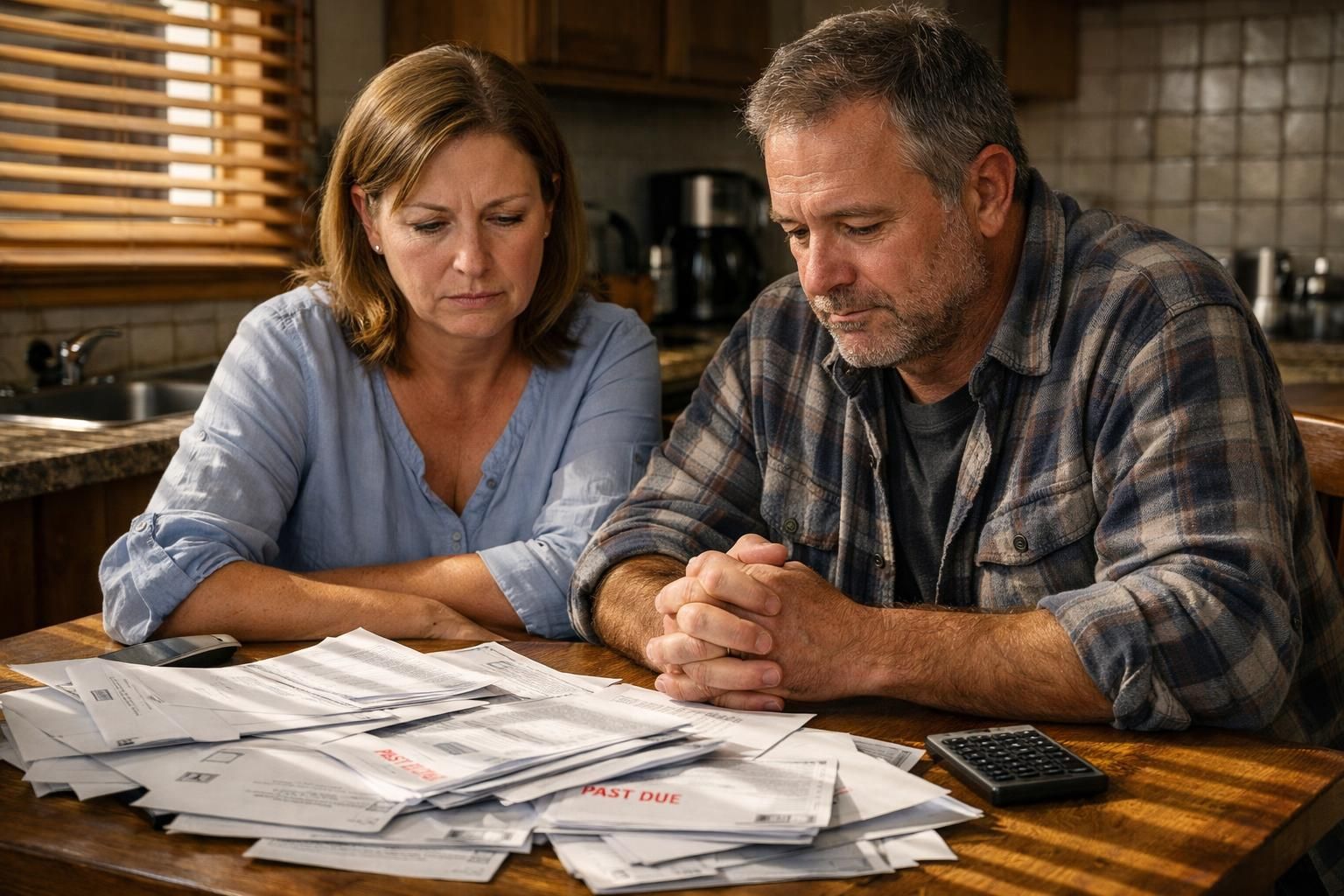
If you've lost your home in a California foreclosure, you might still worry about owing money even after the sale is over. A deficiency judgment after foreclosure can leave you responsible for any remaining mortgage debt if your house sold for less than what you owed. 1 The good news: California has some of the strongest anti-deficiency protections in the country. This article breaks down how the process works, what California law says, and what steps you can take to protect yourself.
Key Takeaways
- After a foreclosure, you could still owe money if your home sells for less than your mortgage balance — this gap is called a deficiency. On a $200,000 loan with a $150,000 foreclosure sale, that's a $50,000 deficiency. 1
- California is a strong anti-deficiency state. Most residential purchase-money mortgages and nearly all nonjudicial (trustee's sale) foreclosures are protected from deficiency judgments under California law.
- California's SB 458 (effective July 2011) also prohibits lenders from pursuing deficiency judgments after a short sale of a primary residence, regardless of lien type.
- If a deficiency judgment is allowed in your situation, consequences can include wage garnishment (up to 25% of disposable income) or liens on other property. Judgments can appear on credit reports for up to seven years.
- You can avoid deficiency risks through loan modifications, short sales, deeds in lieu, bankruptcy (Chapter 7 or 13), or selling quickly to a cash buyer before foreclosure begins. HUD-approved housing counselors have helped over half of counseled homeowners become current on their loans. 9
Understanding the fear and confusion after foreclosure
Losing your home to foreclosure can leave you feeling lost and afraid about what comes next. Many California homeowners assume the nightmare ends after the trustee's sale, but the reality depends on your loan type, how the foreclosure was conducted, and whether any exceptions to California's anti-deficiency rules apply.
For example, if you owe $200,000 and the foreclosure sale brings only $150,000, there is a $50,000 gap. In most California cases, the lender cannot pursue you for that amount — but there are important exceptions. Foreclosures stay on your credit report for up to seven years and can lead to higher interest rates or trouble securing new loans even when no deficiency judgment is entered.
What is a deficiency judgment? Example: $200k mortgage, $150k sale, $50k deficiency
A deficiency judgment is a court order making you personally responsible for the difference between your mortgage balance and the foreclosure sale price. If you owe $200,000 and the property sells for $150,000 at a trustee's sale, the lender might seek a $50,000 judgment. 1
In California, most homeowners are protected from this outcome. California's anti-deficiency statutes generally bar lenders from pursuing the remaining balance after a nonjudicial foreclosure — the most common type of foreclosure in the state. If granted by a court in an allowed situation, these judgments can lead to wage garnishment or liens on other assets you own.
How Deficiency Judgments Work
During a foreclosure sale, a court may order you to pay the difference between what your home sells for and your unpaid mortgage balance — but California law sharply limits when this is possible.
The foreclosure sale process and deficiency calculation
In California, most foreclosures are conducted as nonjudicial trustee's sales under a deed of trust. Once a Notice of Default is recorded, a homeowner typically has at least 111 days before a sale can occur. The lender sells the property at public auction to recover the loan balance.
If you owe $275,000 but the highest bid is $200,000, California law — in cases where a deficiency is permitted — often requires using the property's fair market value for deficiency calculation rather than just the sale price. 2 The deficiency equals your total debt minus the greater of the sale price or the appraised fair market value.
Lenders may also attempt to add unpaid interest, legal fees, and maintenance costs. Courts require documentation before entering any judgment, and any resulting deficiency could become a lien on other property or lead to wage garnishment up to 25% of disposable income under federal law. 3
Additional costs: legal fees, maintenance, and sale expenses
Legal fees, unpaid maintenance, and sale expenses can inflate the amount claimed after a foreclosure. If your mortgage balance is $200,000 and the property sells for $190,000, there is already a $10,000 gap. If the lender adds $40,000 in attorney fees and upkeep, they may seek $50,000 — unless California law limits or eliminates that claim entirely.
Courts require detailed records for every cost tied to the proceeding. Always verify whether insurance payouts or rental income were credited before any deficiency amount is finalized. These extra charges underscore why expert legal advice matters for anyone facing foreclosure in California.
States that allow and prohibit deficiency judgments
| State | Deficiency Judgment Allowed? | Special Rules or Limits | Statute of Limitations |
|---|---|---|---|
| California | No (for most loans) | Anti-deficiency law for purchase-money mortgages and all nonjudicial foreclosures; SB 458 bars deficiencies after short sales | N/A |
| Oregon | No | Nonjudicial foreclosures bar deficiencies | N/A |
| Washington | No (with exceptions) | Anti-deficiency for nonjudicial sales | N/A |
| Arizona | No (with exceptions) | Protections for purchase-money mortgages on owner-occupied homes | N/A |
| Florida | Yes | Judicial approval required; court can limit amount | 1 year to file |
| Texas | Yes | Limited to difference between sale and fair market value | 2 years to file |
| New York | Yes | Must file within 90 days after deed transfer; capped at fair market value difference | 90 days to file |
| Illinois | Yes | Deficiency judgment possible after foreclosure sale | Up to 7 years |
| Georgia | Yes | Requires court approval within 30 days of sale | 30 days to file |
California stands out as one of the most protective states for homeowners. Unlike recourse states such as Florida or Illinois, California's anti-deficiency statutes and the one-action rule severely limit a lender's ability to collect after a foreclosure sale. Always confirm your specific situation with a California foreclosure attorney.
Anti-Deficiency Protections in California

California's real estate law sharply limits when a lender can pursue a deficiency judgment. Understanding the key protections helps you know where you stand.
Recourse vs. non-recourse loans in California
California is primarily a non-recourse state for residential mortgages. Under California's anti-deficiency statutes, lenders who foreclose nonjudicially through a trustee's sale — the most common method — cannot pursue you for any remaining loan balance regardless of how much short the sale falls.
Recourse situations in California are limited. A lender may pursue a deficiency only if they foreclose judicially (through the courts), and even then the law limits the deficiency to the difference between the debt and the property's fair market value at the time of sale. Judicial foreclosure is rare in California precisely because it triggers these additional requirements and gives the borrower a one-year right of redemption.
Non-recourse protections apply broadly: if you used the loan to purchase your home and it was your primary residence, you are almost certainly protected from a deficiency judgment in California.
California's special protections: purchase-money mortgages and SB 458
California law provides two layers of protection worth knowing:
- Purchase-money mortgage protection: California prohibits deficiency judgments on loans used to purchase owner-occupied residential property of one to four units. This applies even if the lender pursues a judicial foreclosure.
- SB 458 (effective July 2011): This law extended short sale protections to all lien holders on a primary residence. After a lender approves a short sale, they cannot later seek a deficiency judgment — regardless of whether it is a first or second mortgage. This protection was a major shift for California homeowners in cities like Los Angeles and Sacramento who faced underwater mortgages after the housing crisis.
Note that refinanced loans, HELOCs, and loans on investment or rental properties may not carry the same protections. Always verify your specific loan type with legal counsel. 4
When Lenders Can Still Pursue You in California

Even in California, certain situations can expose you to deficiency liability. Knowing these exceptions helps you plan ahead.
Factors: size of deficiency, loan type, and legal costs
- The size of the deficiency matters. On a $200,000 loan with a $150,000 sale, the $50,000 gap may prompt a lender to evaluate litigation costs against potential recovery — especially for non-protected loan types.
- Loan type is critical in California. Refinanced loans, cash-out refinances, and HELOCs on investment properties may not be protected by anti-deficiency statutes. Lenders are more likely to pursue these.
- Your financial situation affects lender decisions. If you have few assets or limited income, a lender may conclude that pursuing a deficiency is not cost-effective.
- California's one-action rule requires lenders to choose a single legal remedy. If they elect nonjudicial foreclosure, they forfeit the right to sue for a deficiency. If they sue for the debt without foreclosing, they cannot also foreclose. This procedural rule adds another layer of protection. 5
- Investment and rental properties in the San Francisco Bay Area or San Diego carry higher deficiency risk since anti-deficiency protections are narrower for non-owner-occupied properties.
Statute of limitations for pursuing judgments in California
In the rare cases where a California lender can pursue a deficiency — typically after a judicial foreclosure — they must act within three months after the court confirms the foreclosure sale. Missing this deadline eliminates their right to collect. This short window is one reason lenders rarely choose judicial foreclosure in California. If you are unsure whether your lender has missed this window, consult a California real estate attorney promptly.
What Happens If You're Sued

If your lender files a lawsuit for a deficiency judgment in a situation where California law permits it, you must respond quickly to protect your rights.
Lawsuit process and response timeline
- The lender files suit in California Superior Court for a deficiency judgment after a judicially confirmed foreclosure sale.
- You receive a summons and complaint, typically by personal service or certified mail.
- You generally have 30 days to file a written response in California Superior Court. Missing this deadline can result in a default judgment against you.
- A default judgment allows the lender to begin collection — including wage garnishment and property liens — without further court proceedings.
- If you respond, the court schedules hearings where both sides present evidence, including independent appraisals of the property's fair market value at the time of sale.
- Judges review all documentation before entering any judgment, including the lender's claimed costs and the property's true market value.
- Legal counsel experienced in California real estate law can help you meet deadlines, challenge inflated figures, and raise anti-deficiency defenses.
Consequences of default judgment: wage garnishment, property liens
If a default judgment is entered against you, the lender can garnish up to 25% of your disposable income under federal law — California's wage garnishment rules follow this federal ceiling. The lender may also place liens on other real estate you own, preventing you from selling or refinancing those properties without satisfying the debt first. Judgments appear on your credit report and can limit access to future loans. California courts allow judgment creditors to renew judgments, keeping them active for extended periods if left unpaid.
Your Defense Options

Common defenses in California deficiency cases
- Anti-deficiency statute: Argue that your loan qualifies under California's anti-deficiency protections — covering purchase-money mortgages or nonjudicial foreclosures. This is the most powerful defense available.
- One-action rule violation: If the lender failed to follow California's one-action rule — choosing a single remedy — their deficiency claim may be barred entirely.
- Fair market value disputes: California law limits any deficiency to the difference between the debt and the property's fair market value. An independent appraisal can reduce or eliminate what you owe.
- Improper foreclosure procedures: If the lender failed to provide proper notice under California law or did not follow trustee's sale requirements, courts may rule in your favor.
- Inflated costs: Challenge excessive legal fees, maintenance charges, or costs not properly credited against the debt before calculating any deficiency.
- SB 458 protection: If your situation involved a short sale of your primary residence, confirm that SB 458 applies to block any deficiency claim entirely.
Importance of legal counsel
A California real estate or foreclosure defense attorney can identify which anti-deficiency protections apply to your loan and foreclosure type, help you meet strict court deadlines in California Superior Court, and challenge improper cost calculations. Nolo's legal resources offer state-specific guidance for California homeowners, and HUD-approved housing counselors provide free assistance for those who need it.
Alternatives and Solutions
You have options that can help you manage or avoid a mortgage deficiency after foreclosure in California.
Settlements, bankruptcy options, and payment plans
- Settlements often close for 20 to 40 cents on the dollar. On a $50,000 deficiency, you might settle for $10,000 to $20,000. Most lenders prefer settlement if they expect low recovery through litigation.
- Chapter 7 bankruptcy may discharge deficiency judgment debt entirely, stopping collection efforts. Chapter 13 structures remaining debt into a three-to-five-year repayment plan.
- Payment plans can prevent wage garnishment and property liens. Lenders sometimes accept monthly installments if you demonstrate financial hardship.
- Forgiven debt may be taxable income under IRS rules. The Mortgage Forgiveness Debt Relief Act, extended through 2025, may let you exclude up to $750,000 of forgiven mortgage debt on your principal residence. Insolvency exceptions may also apply. Consult a tax professional.
- Always get written confirmation of any deficiency waiver before completing a short sale or deed in lieu in California.
Tax implications for forgiven debt
If a California lender forgives more than $600 in mortgage debt, they issue a Form 1099-C. You must report this as income unless you qualify for an exclusion. The federal Mortgage Forgiveness Debt Relief Act exclusion (through 2025) covers forgiven debt on your primary residence up to $750,000. California generally conforms to this exclusion, but confirm the current state tax treatment with a qualified CPA, since California conformity to federal tax law can change. Borrowers who are insolvent at the time of cancellation may also avoid tax liability.
Preventing Deficiency Judgments
Taking proactive steps before a California foreclosure sale gives you the best chance of avoiding a deficiency judgment entirely.
Pre-foreclosure options: loan modifications, short sales, deeds in lieu
- Loan modification: Request a change to your mortgage terms before the foreclosure sale. Processing takes 30 to 90 days. Lenders require proof of hardship and income documentation. Acting before a Notice of Default is recorded gives you the most options.
- Short sale: Sell your home for less than the loan balance with lender approval. Under California's SB 458, lenders cannot pursue a deficiency judgment after approving a short sale of your primary residence — covering both first and second mortgages. Most California short sales take 60 to 120 days and must be completed before the trustee's sale date. 7
- Deed in lieu of foreclosure: Transfer ownership directly to the lender. Processing typically takes 30 to 60 days. Lenders may require that there are no junior liens on the property. Always obtain a written agreement confirming the lender waives any deficiency claim.
HUD-approved housing counselors can guide you through these options at no cost. Selling to a cash buyer is another effective solution before things reach the court order stage.
Selling to cash buyers as a proactive solution
Selling your home to a cash buyer can help you avoid a deficiency judgment before foreclosure proceedings take hold. 8 Cash sales in California can close in as few as 7 to 14 days — often fast enough to stop a trustee's sale. You maintain control over your financial future instead of waiting for court orders or fielding debt collection calls about a mortgage deficiency.
Many California homeowners — from Los Angeles to Sacramento — have used this strategy to sidestep legal fees and protect their credit. A quick cash sale prevents wage garnishment and property liens that can result from default judgments. If you want immediate relief and fewer complications, a fast cash offer may preserve more of your home equity while reducing your exposure under California real estate law.
Conclusion
California's anti-deficiency laws provide some of the strongest homeowner protections in the country, but exceptions exist — especially for refinanced loans, HELOCs, and investment properties. Understanding your rights under California law, acting early, and seeking expert guidance can make a significant difference in your financial outcome.
Deficiency judgments are manageable with the right approach
Keep thorough documentation of your loan balance, all foreclosure sale proceeds, and related expenses. An independent appraisal can challenge inflated deficiency claims. Negotiating settlements or payment plans often reduces long-term impact. In California, the anti-deficiency statutes and one-action rule are your most powerful tools — but you need legal counsel to deploy them effectively.
Seek legal and housing counseling — many homeowners find successful resolutions
HUD-approved counselors have helped 69% of counselees secure a mortgage remedy, and 56% managed to become current on their loans. 9 Reaching out early for support increases your chances of a successful outcome. California legal aid organizations, HUD-approved agencies, and private foreclosure defense attorneys can all provide guidance tailored to California's specific laws and timelines.
Consider Selling Your Home Quickly for Cash
Selling your California home quickly for cash lets you avoid the risk of a deficiency judgment, protect your credit, and close the chapter on mounting debt. 10 A fast cash sale means no waiting for buyers, no worrying about legal fees or maintenance costs, and no surprise lawsuits after the sale is done. Acting early also opens doors to professional guidance and keeps more options available to you.
If you're a California homeowner facing foreclosure or worried about a mortgage deficiency, KDS Homebuyers can help. Visit kdshomebuyers.net for a free, no-obligation cash offer and take the first step toward protecting your financial future.
Explore Foreclosure Avoidance Options for practical resources tailored to California homeowners facing tough financial situations. Acting before the trustee's sale can limit legal fees, prevent wage garnishment, and protect other assets you own.
FAQs
1. Can a lender get a deficiency judgment after a California foreclosure?
In most cases, no. California's anti-deficiency statutes bar deficiency judgments after nonjudicial (trustee's sale) foreclosures, which are the most common type in California. Purchase-money mortgages on owner-occupied homes also carry strong protections. Exceptions apply to certain refinanced loans, HELOCs, and investment properties.
2. What is California's one-action rule?
California's one-action rule requires a lender to choose a single legal remedy — either foreclose on the property or sue for the debt, but not both. Lenders who elect nonjudicial foreclosure give up the right to pursue a deficiency judgment, which is why most California lenders use the trustee's sale process.
3. Does SB 458 protect me after a California short sale?
Yes. Since July 2011, SB 458 has prohibited lenders from seeking a deficiency judgment after approving a short sale of a California primary residence, covering both first and junior lien holders. Always get lender approval in writing before closing a short sale.
4. Should I get legal counsel if facing foreclosure in California?
Yes. A California foreclosure defense attorney can identify which anti-deficiency protections apply to your specific loan and situation, help you respond to court filings within required deadlines, and challenge any improper deficiency claims in California Superior Court.
References
- ^ https://courts.ca.gov/sites/default/files/courts/default/2024-08/18th-annual-ab1058training-part1.pdf
- ^ https://www.nolo.com/legal-encyclopedia/deficiency-judgments-after-foreclosure-illinois.html
- ^ https://www.newlandattorneys.com/lake-county-lawyers/illinois-foreclosure-deficiency-judgments-explained
- ^ https://www.cga.ct.gov/2010/rpt/2010-r-0327.htm
- ^ https://academic.oup.com/rfs/article/24/9/3139/1571250?login=true
- ^ https://scholarlycommons.law.emory.edu/cgi/viewcontent.cgi?article=1068&context=elj
- ^ https://www.researchgate.net/publication/228679029_Interventions_in_mortgage_default_Policies_and_practices_to_prevent_home_loss_and_lower_costs
- ^ https://nycourts.gov/courthelp/Homes/foreclosureDeficiency.shtml
- ^ https://www.huduser.gov/portal/publications/pdf/foreclosure_counseling_v2
