

Getting Divorced With an Underwater Mortgage: Your Options in Florida
Divorce with an underwater mortgage can leave you feeling trapped and worried about your future. 1 An underwater mortgage means you owe more on your home loan than what your house is worth in today's market.
This article breaks down your options in Florida — from short sales and refinancing to working with a Florida divorce attorney to protect yourself from lasting financial harm. 2 Find out which steps can help both you and your family move forward.
Key Takeaways
- An underwater mortgage means you owe more than your home's current value. About 2-3% of U.S. mortgages are underwater as of 2024.
- Florida is an equitable distribution state, meaning courts divide marital assets and debts fairly — not necessarily 50/50.
- Selling the home may require a short sale or cash buyer if its value is less than the mortgage balance. Short sales can drop credit scores by 85 to 160 points.
- Florida law allows lenders to pursue deficiency judgments after a short sale or foreclosure in some cases — consult a Florida attorney before making any decisions.
- Forgiven debt after foreclosure or short sale may be taxed as income unless covered by the Mortgage Forgiveness Debt Relief Act (extended through 2025). Consult legal counsel before dividing marital property and debt.
What Does It Mean to Have an Underwater Mortgage?

An underwater mortgage happens when you owe more on your home loan than what the property is worth in today's housing market. This "upside-down" situation means your mortgage balance exceeds the current appraised value, creating negative equity. For example, if your Tampa home could sell for $300,000 but your remaining mortgage balance is $340,000, you have $40,000 in negative equity.
About 2-3% of U.S. mortgages are underwater as of 2024. Florida was among the states hardest hit during the 2008 housing crisis, and many homeowners still understand the stress of negative equity all too well. An upside-down mortgage can limit refinancing options and put you at risk of owing money even after a sale. The IRS may consider forgiven debt from these transactions as taxable income unless relief applies under the Mortgage Forgiveness Debt Relief Act through 2025.
Understanding the Challenges of Divorce and Negative Equity in Florida

Divorcing with an underwater mortgage in Florida often leads to difficult decisions about home ownership and marital debt. Homeowners face stress from both the emotional toll of divorce and the financial risks tied to negative equity in their property settlement.
Why negative equity complicates property division in Florida
Florida follows equitable distribution, meaning courts divide marital assets and debts in a way that is fair — but not automatically equal. Negative equity is treated as marital debt when dividing property, so both spouses may share responsibility for the underwater balance even after divorce.
Most lenders will not release either spouse from liability unless the mortgage is refinanced. Refinancing an underwater loan is difficult because most lenders require positive home equity. If selling becomes necessary, the sale price may not cover the outstanding loan, leading to a short sale or lender negotiation. Florida courts rarely force one spouse to absorb all the negative equity without mutual agreement or clear financial justification.
Emotional and financial impact on both spouses
The process of selling an underwater home can take 6 to 12 months, stretching out uncertainty and anxiety for both parties. Mortgage payments on a home worth less than you owe create ongoing financial pressure, and each choice — selling at a loss, renting out the property, or strategic default — can affect credit reports and long-term financial stability.
Mediation is widely used in Florida divorce cases and typically costs $3,000 to $7,000, far less than litigation. A clear written settlement agreement reduces the risks that can follow either spouse after the divorce is finalized. Open communication and legal counsel help couples recover faster while limiting lasting damage to their finances.
Your Primary Options for Handling an Underwater Mortgage in Florida

You have several paths to consider when your home loan exceeds your home's value during a Florida divorce. Each option can affect your finances, credit score, and future housing, so review them carefully before deciding.
Keeping the house: Refinancing and buyout considerations
Deciding to keep the house in a Florida divorce with an underwater mortgage creates both risks and opportunities. Refinancing or arranging a buyout each come with serious legal and financial challenges.
- Refinancing means applying for a new loan in your own name, which removes your spouse from future liability for the mortgage debt.
- Most Florida lenders require a minimum credit score of 680, sufficient income, and a stable employment history before approving a refinance.
- FHA guidelines allow refinancing up to 95% of your home's value, but negative equity often means the new loan may not fully cover the old balance.
- Until refinancing closes, both names remain on the original mortgage — keeping both parties liable even if a Florida court has assigned the home to one spouse in the divorce decree.
- If refinancing is not possible due to low property value or income changes, both parties remain jointly responsible for ongoing mortgage payments and property taxes unless other arrangements are made in the property settlement.
- A temporary court order in Florida can specify who makes monthly payments on the underwater mortgage while negotiations continue, protecting both parties' credit scores during the process.
- Your Florida divorce attorney can draft clear terms in the divorce decree covering mortgage responsibility, insurance, maintenance costs, and how to handle any future default or foreclosure.
Selling traditionally and splitting the shortfall
Listing your underwater home for a traditional sale means placing it on the market with a real estate agent. The process can take six to twelve months, especially in slower Florida markets. After selling, you and your spouse must address any shortfall if the sale price is less than the mortgage balance. Under Florida's equitable distribution rules, this remaining debt is typically split between both parties as part of the settlement. 1
You may need to bring cash to closing or negotiate a short sale with your lender. Both options carry serious credit score consequences — after a short sale, each spouse could see their scores drop by 85 to 160 points. Florida law permits lenders to seek deficiency judgments for remaining mortgage balances in some circumstances, so consulting a Florida divorce attorney is essential before proceeding. 2
Renting the property out temporarily
Renting out your underwater home can generate income to help cover mortgage payments while you wait for market conditions to improve or until children finish school. Both spouses must continue co-ownership, share rental income and expenses, and remain jointly liable for the mortgage debt.
A formal written co-ownership agreement protects both parties by outlining responsibilities such as repairs, rent collection, insurance, and handling vacancies. In Florida's competitive rental markets — particularly in the Orlando and Jacksonville metro areas — rental income can meaningfully offset carrying costs. This approach provides temporary relief but requires ongoing cooperation until you are able to refinance or sell.
Selling to a cash buyer for a quicker resolution
Selling your underwater home to a cash buyer is often the fastest path to resolution. Cash sales can close in as little as two to three weeks compared to six months or more for a traditional listing. You do not need to worry about repairs or staging because cash buyers purchase homes as-is, which removes extra stress during an already difficult time.
If divorce attorneys advise resolving the division of assets and debts quickly, a cash sale can eliminate months of open houses, uncertain appraisals, and financing delays. The clear timeline reduces legal costs and makes equitable distribution simpler for everyone involved — whether you are in Miami, Tampa, or a smaller Florida market.
Considering strategic default or foreclosure as a last resort
Strategic default and foreclosure should be considered only after all other options have been exhausted. Walking away from your home typically causes a credit score drop of 250 to 350 points, with a negative mark remaining on your credit report for seven years. After foreclosure in Florida, the waiting period for a new mortgage generally ranges from three to seven years.
Florida is a judicial foreclosure state, meaning the lender must file a lawsuit and obtain a court judgment before taking your home. This process can take a year or more, but it does not eliminate your liability. Florida courts can issue deficiency judgments against borrowers for the remaining balance after foreclosure or a short sale. A deed in lieu of foreclosure — voluntarily transferring ownership back to the lender — avoids some court costs but still damages credit and may create tax liability if debt is forgiven. Use this option only if refinancing, short sales, and all other avenues have failed.
Legal and Financial Considerations for Florida Homeowners

Mortgage and liability issues in a Florida divorce decree
A Florida divorce decree may assign the underwater mortgage to one spouse, but this does not release either party from legal responsibility to the lender. Both names remain on the original loan until the mortgage is refinanced or the home is sold. Lenders are not bound by divorce decrees and can pursue either borrower for missed payments.
Florida follows equitable distribution, so judges divide marital debt in a way that is fair based on each party's financial circumstances. Courts rarely force one spouse to absorb all the negative equity without agreement or a demonstrated financial reason. Temporary orders during the divorce process can set who pays month-to-month, but only the final settlement resolves long-term liability. An experienced Florida divorce attorney can help you explore creative solutions — such as asset swaps or delayed buyouts — to avoid being stuck with disproportionate mortgage debt.
Managing credit and tax implications of forgiven debt
Forgiven mortgage debt can affect your finances long after a short sale or deed in lieu of foreclosure. A short sale can drop your credit score by 85 to 160 points; foreclosure can cause a decline of 250 to 350 points with a seven-year reporting period. 3
The IRS may treat forgiven debt as taxable income unless you qualify for protection under the Mortgage Forgiveness Debt Relief Act, which runs through 2025 and generally covers primary residences. Florida does not have a state income tax, so there is no additional state-level tax liability on forgiven debt — but federal exposure remains. Florida also does not have a state transfer tax exemption specifically for divorce transfers, though interspousal deed transfers during divorce are typically exempt from documentary stamp tax under Florida law. Consult a Florida tax professional and legal counsel to confirm your eligibility and current rules before making any decisions involving negative equity and marital property.
Selling Your House During a Florida Divorce
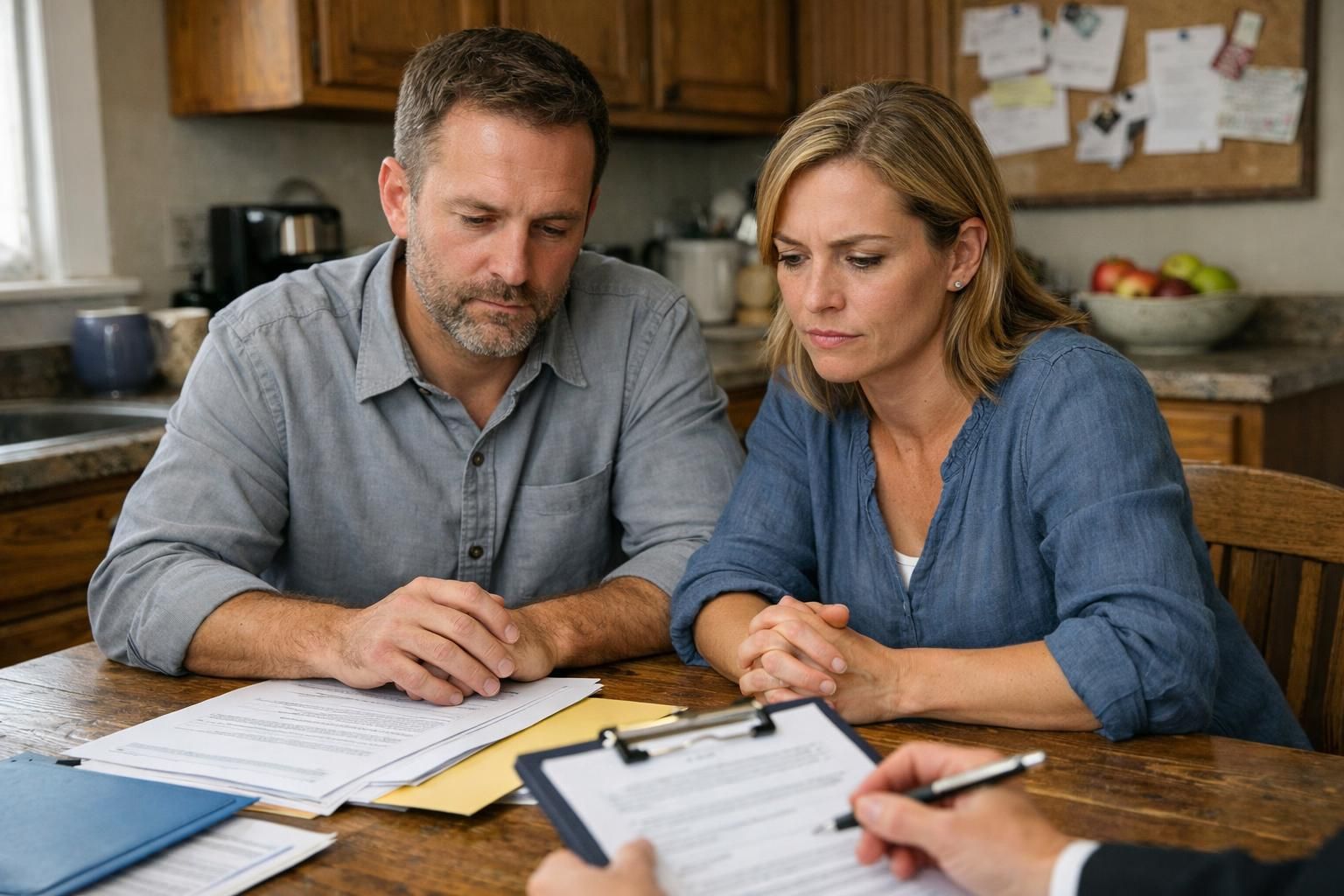
Selling during a Florida divorce brings unique challenges when an underwater mortgage is involved. You and your spouse may need to split the shortfall if the property sells for less than the mortgage balance. 4 Timing matters — Florida's spring and summer market typically brings more buyers and stronger offers, which can help narrow any gap between the sale price and loan balance.
Traditional sales often take six to twelve months and require coordination with divorce timelines, including agreements on splitting agent commissions and closing costs. Selling to a cash buyer offers faster resolution — sometimes closing in two to three weeks — and eliminates the need for showings, repairs, and financing contingencies. Open communication with your spouse and clear guidance from your Florida divorce attorney help set realistic expectations for equitable distribution of marital property and debt.
Making the Decision Together or Through Mediation
Florida courts often encourage or require mediation before contested divorce matters go to trial. Mediation typically costs between $3,000 and $7,000 and can lead to creative solutions such as one spouse retaining the home temporarily, swapping other assets to offset negative equity, or agreeing to rent the property together until market conditions improve.
A written agreement is critical for both peace of mind and for preventing future disputes over mortgage payments and home ownership. Florida family law attorneys can guide you through equitable distribution, protect your rights regarding marital debt, and help ensure your divorce decree clearly addresses all mortgage responsibilities. Clear plans backed by legal counsel prevent costly problems down the road when dividing a home with negative equity.
Conclusion
Facing a divorce with an underwater mortgage in Florida can feel overwhelming, but you do have options — selling the home, pursuing a short sale, refinancing, or maintaining temporary co-ownership while the market recovers. Each path carries unique risks and rewards under Florida law. Speak with a local Florida divorce attorney and a financial advisor to protect your credit score and long-term stability. Careful planning now can lead to a better outcome for your future.
If you need to sell quickly and want to avoid the stress of a traditional listing, KDS Homebuyers purchases homes directly from Florida homeowners for cash — as-is, with no repairs or commissions required. Visit kdshomebuyers.net to request your free cash offer and get clear answers fast.
FAQs
1. What does it mean to have an underwater mortgage during a Florida divorce?
An underwater mortgage means your loan balance is greater than your home's current market value. In a Florida divorce, this creates negative equity that must be addressed as marital debt during property division.
2. Can we sell our house if the mortgage debt is higher than what the home is worth?
Yes. You may pursue a short sale with lender approval, allowing you to sell for less than the mortgage balance. Florida lenders may seek a deficiency judgment for the remaining amount, so consult a Florida attorney before proceeding.
3. How do Florida courts handle an underwater house in a divorce?
Florida uses equitable distribution, meaning courts divide both assets and debts fairly based on each spouse's circumstances. Negative equity is treated as marital debt and factored into the overall property settlement.
4. Are there options besides selling for Florida couples with an underwater mortgage?
Yes — you might refinance the mortgage, rent the property temporarily, pursue a deed in lieu of foreclosure, or maintain joint ownership until the market improves. Each option has legal and financial trade-offs under Florida law.
5. Should I get a Florida divorce attorney if my home has negative equity?
Absolutely. A Florida family law attorney can advise you on deficiency judgment risks, equitable distribution of marital debt, and how to protect your financial interests during property settlement negotiations.
References
- ^ https://www.rrlawfirm.net/what-happens-if-were-underwater-on-our-mortgage-when-divorcing-in-massachusetts/ (2023-10-25)
- ^ https://www.weilerlawyers.com/st-charles-family-lawyers/getting-divorced-with-an-underwater-mortgage
- ^ https://scholarship.law.unc.edu/cgi/viewcontent.cgi?article=6858&context=nclr
- ^ https://www.infinlaw.com/faq/what-to-do-with-a-house-thats-under-water-in-a-divorce/ (2009-08-24)
