

Using a Quitclaim Deed in Divorce: What You Need to Know in California
You may feel stressed about how to divide your marital home during a California divorce. A quitclaim deed is a popular legal tool that helps transfer property ownership between spouses, often without large legal fees. 2 This guide explains how quitclaim deeds work under California law, what steps you need to take, and what risks to watch out for during the property division process. 1
Key Takeaways
- A quitclaim deed quickly transfers property ownership between spouses during divorce, but it does not remove a person's name from the mortgage. Both parties may still be responsible for unpaid home loans even after signing.
- You must prepare, sign before a notary, and record the quitclaim deed with your California county recorder's office to complete the transfer legally.
- Refinancing is usually required to remove a spouse's name from the mortgage entirely. California lenders do not accept a signed deed or divorce decree alone as proof of new sole responsibility.
- A quitclaim deed provides no title insurance protection against hidden liens or claims. Always conduct a title search and consult a California divorce attorney before signing.
- If your ex-spouse stops paying the mortgage after you use a quitclaim deed, you could face credit damage or foreclosure—even though you no longer own the house on paper.
Understanding the Divorce Property Settlement Process in California
California is a community property state. Under California Family Code, most assets and debts acquired during marriage are owned equally by both spouses. During divorce, you and your spouse must decide how to divide the marital home and other community assets. This decision shapes who keeps real property, retirement accounts, and other shared holdings under your divorce settlement agreement.
Deciding who keeps the house or opting to sell it
You may face a choice between one spouse keeping the marital home or selling it and splitting the proceeds. Because California follows community property rules, each spouse generally holds an equal interest in the home acquired during marriage. A court can order the home sold and proceeds divided, or award the property to one spouse as part of an overall settlement.
A quitclaim deed can help transfer ownership when one spouse keeps the house under the divorce decree. If neither party wants the financial burden of the mortgage or property taxes alone, selling is often the most practical solution. The timing of the quitclaim deed typically depends on the divorce being finalized in California Superior Court, which handles all family law matters throughout the state.
How Quitclaim Deeds Work in California Divorce

A quitclaim deed lets you quickly transfer your share of the marital home to your former spouse. Understanding how this legal document fits with mortgage responsibility and California property rights can protect your interests.
Transferring ownership interest from one spouse to the other
A quitclaim deed moves all your rights, title, and interest in the marital home to your former partner without any guarantees about the title's condition. In California, this is a common mechanism for completing property division once a Marital Settlement Agreement (MSA) or divorce judgment specifies who gets the home.
You must prepare the quitclaim deed accurately with both spouses' full legal names, the property's legal description as it appears in county records, and details consistent with your divorce judgment. After signing before a notary public, you must record the deed with the county recorder's office in the county where the property is located—for example, the Los Angeles County Registrar-Recorder, the San Diego County Assessor/Recorder, or the San Francisco County Recorder.
This step only shifts property ownership. Mortgage responsibility does not change unless refinancing occurs or the lender approves another arrangement.
Step-by-step process in California
Follow these steps to complete a legal and smooth property transfer under California law: 1
- Finalize your Marital Settlement Agreement (MSA) or obtain a court judgment specifying who keeps the marital home or whether it will be sold.
- Obtain a certified copy of your California divorce judgment or court order directing the property transfer.
- Prepare the quitclaim deed using accurate details from the judgment. Include both spouses' full legal names, the complete property address, the Assessor's Parcel Number (APN), and a reference to the divorce judgment.
- Both parties sign the quitclaim deed before a licensed California notary public.
- File the signed deed with the county recorder's office in the county where the property is located. Recording makes the transfer official under California law.
- Submit a Preliminary Change of Ownership Report (PCOR) along with the deed. California requires this form at recording to assess whether a property tax reassessment is triggered.
- Pay any required recording fees. Note that transfers between spouses incident to divorce are generally exempt from California's documentary transfer tax under Revenue and Taxation Code Section 11927.
- Confirm with your attorney that all terms of your MSA or divorce judgment have been satisfied after recording.
Skipping any of these steps may result in delays, title problems, or even contempt of court if a court order required the transfer.
Required information on the deed
The California quitclaim deed must include the full legal names of both parties, an accurate legal description of the real property (not just the street address), the Assessor's Parcel Number, and the transfer date. Include the consideration given, even if nominal. Both spouses must sign before a notary public. Always verify that every detail matches your MSA or divorce judgment to avoid title insurance issues or disputes later.
California Property Tax Considerations
California's Proposition 19 (effective February 2021) significantly changed property tax reassessment rules. When a spouse transfers the marital home to the other spouse as part of a divorce, the transfer is generally excluded from reassessment under California law, meaning the recipient spouse keeps the existing Prop 13 assessed value. However, if the receiving spouse later transfers the property to someone outside an eligible category, reassessment may occur. Always file the required PCOR and consult a California tax professional to confirm your exclusion applies.
For capital gains, transfers between spouses under a divorce instrument are generally not taxable under IRC Section 1041. However, the recipient spouse inherits the original cost basis. If they later sell, capital gains are calculated from the original purchase price. California also taxes capital gains as ordinary income at the state level, which can be significant in high-value markets like the San Francisco Bay Area or Los Angeles.
Mortgage vs. Title: Key Distinctions
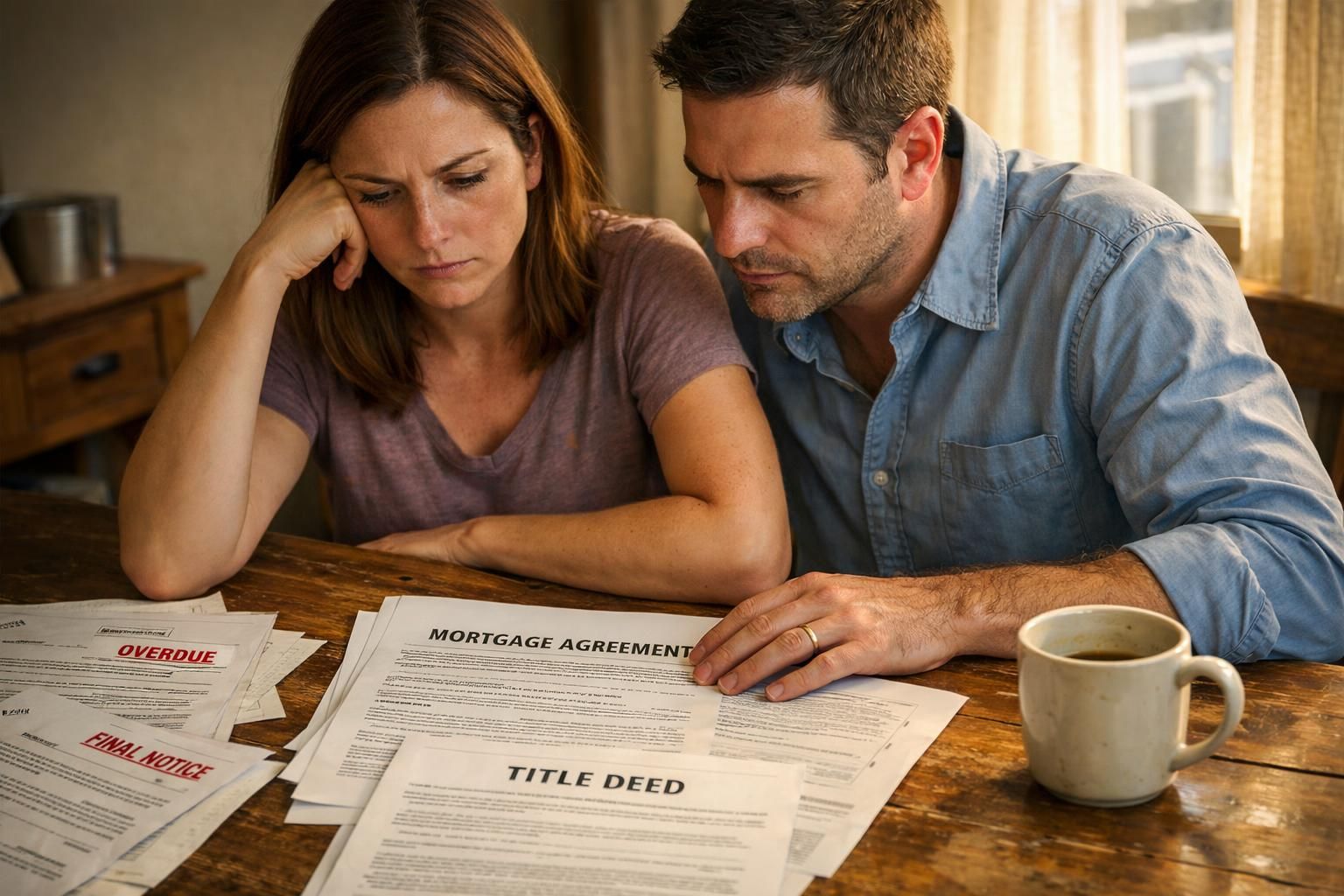
A quitclaim deed only changes the name on your home's title, not who must pay the mortgage. If both names remain on the loan, the lender can still hold you responsible for late payments or defaults.
Quitclaim deed removes ownership but not mortgage obligations
Signing a quitclaim deed takes your name off the property title, but it does not end your mortgage responsibility. California lenders still hold both spouses jointly liable for the loan after a title transfer with a quitclaim deed. 1 If the spouse keeping the home stops making payments, both parties risk credit damage and potential foreclosure—even though only one spouse is listed as owner on the recorded deed.
For a complete release from mortgage liability, refinancing is required. 3 California lenders will not release a borrower from a loan based solely on a divorce decree or a recorded quitclaim deed. Joint mortgage debt remains under both names regardless of how ownership changes in county records.
Risks if the remaining spouse defaults on the mortgage
If your former spouse keeps the home but stops paying the mortgage, the lender can pursue you for missed payments or the full loan balance. Your credit score will suffer, and missed payments will appear on your credit report. Foreclosure becomes a real threat, and the lender only looks at whose names are on the loan—not who lives in the house or what your divorce decree says. California's non-judicial foreclosure process (trustee's sale) can move relatively quickly, so the risks are serious.
Refinancing Requirements

Why refinancing is necessary
California lenders do not recognize divorce decrees as binding on loan contracts. If both names remain on the mortgage after divorce, both parties remain legally liable. Refinancing into the keeping spouse's name alone is the standard way to achieve a full release. The refinancing spouse must independently qualify based on credit score, income, and debt-to-income ratio. In high-cost California markets—where median home prices in cities like San Jose or San Diego can exceed $1 million—qualifying alone can be a significant hurdle.
Alternatives if refinancing isn't possible
If refinancing isn't possible due to insufficient equity, income, or credit issues, consider these options:
- Loan assumption: Some government-backed loans (FHA, VA) allow one spouse to assume the mortgage, removing the other from the obligation with lender approval.
- Deferred sale agreement: California courts can order a deferred sale of the family home (sometimes called a "Duke order") to allow children to remain in the home until a triggering event, such as the youngest child turning 18.
- Co-ownership agreement: Both spouses keep their names on the mortgage but establish clear terms in the MSA about payment responsibilities and future sale proceeds.
- Sell the home: Splitting sale proceeds after paying off the mortgage is often the cleanest solution when neither party can refinance alone.
Potential Risks of Quitclaim Deeds in California Divorce

Mortgage liability, tax implications, and equity loss
Transferring real property with a quitclaim deed does not remove your name from the mortgage. If your ex-spouse stops making payments, the lender will hold you responsible. 3 Missed payments can damage your credit and may lead to foreclosure even after you gave up ownership in the divorce settlement.
While a transfer under a divorce instrument is generally not federally taxable under IRC Section 1041, California taxes capital gains as ordinary income when you eventually sell. You do not get a reset cost basis. Giving up ownership also means forfeiting any future appreciation—significant in California's historically appreciating real estate markets. Always seek advice from both a divorce attorney and a California tax professional before signing.
Risks if the spouse keeping the house stops paying or sells later
If your ex-spouse keeps the home after a quitclaim deed and stops paying the mortgage, you still face serious financial exposure. 2 Your name on the loan means the lender can pursue you for the full debt. If your ex later sells the property without refinancing, you cannot claim any sale proceeds—you surrendered all equity rights when you signed the deed. Always consult a California family law attorney before agreeing to any property transfer.
When to Use a Quitclaim Deed vs. Other Deeds in California
A quitclaim deed offers a fast way to transfer property ownership but provides less protection than a grant deed. California's standard deed of conveyance in real estate transactions is the grant deed, which carries implied warranties that the grantor hasn't previously conveyed the property and that it is free from encumbrances made by the grantor. In divorce, quitclaim deeds are common because both parties typically know the property's history. However, if there is any doubt about hidden liens, back taxes, or title defects, conduct a title search and consult your attorney before choosing between deed types.
When a quitclaim deed makes sense—and when to be cautious
A quitclaim deed makes sense during a California divorce when both spouses agree on property division, trust each other's disclosure of title information, and there are no hidden liens or claims on the home. 5
Use caution if title issues exist, if your spouse has unpaid tax liens, or if bankruptcy proceedings are involved. Quitclaim deeds transfer whatever interest the grantor has—including problems. Always run a title search before signing, and consider whether a grant deed with more protective language better serves your situation. 4
Timing Considerations for Quitclaim Deeds in California
Signing before or after the divorce is final
In California, a divorce is not final until the court enters a judgment of dissolution. The earliest a California divorce can be finalized is six months after the respondent is served with divorce papers (the mandatory waiting period under California Family Code). Some county recorders prefer to see a final judgment before recording a quitclaim deed related to divorce, while others will accept one tied to a stipulated court order entered before final judgment. Signing a deed too early—before the property division terms are fully settled—can expose you to losing equity or retaining mortgage liability without recourse.
Coordinate with your California family law attorney to ensure the timing of your quitclaim deed aligns with your MSA, court orders, and the judgment of dissolution.
Coordinating with the divorce decree and settlement agreement
Your quitclaim deed must match the terms of your MSA or divorce judgment exactly. California courts require that property transfers follow what is ordered or agreed upon in these legal documents. Transfers incident to divorce are generally exempt from California's documentary transfer tax under Revenue and Taxation Code Section 11927, but you must note the exemption on the deed when recording. Make sure each step—preparation, notarization, and recording with the appropriate California county recorder—is consistent with what both parties agreed to and what the court ordered.
Practical Steps for Protecting Your Interests in California
Working with a California divorce attorney and verifying the deed's recording
- Hire a California-licensed family law attorney early. They can advise on community property rules, mortgage liability, spousal support, and the correct deed to use.
- Seek independent legal advice before signing any deed or settlement agreement. An attorney can identify risks that could affect your property rights or financial future.
- Review your MSA or divorce judgment carefully to confirm it addresses the marital home, equity division, and any deferred sale arrangements.
- Ensure the quitclaim deed contains all required information: both parties' full legal names, complete legal description, APN, and reference to the divorce judgment.
- Both parties must sign before a California-licensed notary public.
- Record the signed deed immediately with the county recorder in the county where the property is located. Pay any applicable recording fees.
- File the Preliminary Change of Ownership Report (PCOR) simultaneously to address California property tax reassessment questions.
- Note the documentary transfer tax exemption under Revenue and Taxation Code Section 11927 on the deed if applicable.
- Order a title search before transferring ownership to catch old liens or hidden claims that could affect title insurance eligibility.
- Obtain a certified copy of the recorded deed as proof that the transfer has been completed in California's official public records.
Conclusion: Alternatives to Keeping the House and Moving Forward
You have many choices as you move through property division in a California divorce. A quitclaim deed can help complete a clean transfer of homeownership, but it does not solve every problem—especially mortgage liability. Consider refinancing, a deferred sale arrangement, or selling the home outright if keeping it places too much financial strain on one party. California's community property laws and the state's high-value real estate markets make these decisions particularly consequential. Talk to a California family law attorney to fully protect your interests.
If selling the home makes the most sense for your situation, KDS Homebuyers offers a straightforward option. Visit kdshomebuyers.net for a free, no-obligation cash offer—so you can move forward with clarity and confidence.
FAQs
1. What is a quitclaim deed and how does it work in a California divorce?
A quitclaim deed is a legal document used to transfer property ownership from one spouse to another during divorce. It changes the name on the title but does not affect mortgage responsibility or remove financial obligations from the loan.
2. Does signing a quitclaim deed mean I give up all rights to the marital home in California?
Yes. Once you sign a quitclaim deed, you no longer have legal rights or claims to that property. The other party becomes the sole owner as directed by your California divorce judgment or MSA.
3. How does a quitclaim deed affect my mortgage after divorce in California?
Transferring title with a quitclaim deed does not change who must repay the loan. If your name stays on the mortgage, the lender can still hold you responsible for payments even though you no longer own the home.
4. Are there California-specific tax issues I should know about?
Transfers between divorcing spouses are generally exempt from California's documentary transfer tax. However, the recipient spouse inherits the original cost basis, and California taxes capital gains as ordinary income when the home is eventually sold. Filing the PCOR at recording helps address Prop 19 property tax reassessment questions.
5. Should I get title insurance or do a title search before transferring property with a quitclaim deed in California?
Yes. A title search confirms clear ownership and reveals any hidden liens or claims. Title insurance protects the new owner against undiscovered defects in the title, which a quitclaim deed itself does not guarantee.
References
- ^ https://www.divorcemortgageadvisors.com/quitclaim-deed-divorce/
- ^ https://www.stahlyllc.com/blog/2025/05/understanding-a-quit-claim-deed-during-divorce/
- ^ https://www.crislipphilip.com/blog/2024/11/should-you-use-a-quitclaim-deed-in-your-divorce-settlement/ (2024-11-29)
- ^ https://neryrichardsonlaw.com/blog/real-estate-quitclaim-deeds-illinois/ (2025-10-18)
- ^ https://www.cozzalaw.com/understanding-quitclaim-deeds (2024-08-31)
- ^ https://mosheslaw.com/a-complete-guide-to-quitclaim-deeds-in-divorce/ (2025-01-17)
