

How to Split Home Equity in a Divorce in Washington

Splitting home equity in a Washington divorce can feel overwhelming, especially when your home is your largest marital asset. Home equity is simply the difference between your home's current market value and the remaining mortgage balance. 1 Washington is a community property state, which means specific rules govern how courts divide that equity. This guide explains those rules, your options, and how to protect your share during this difficult time.
Key Takeaways
- Home equity equals your home's current market value minus the remaining mortgage balance. On a Seattle home worth $750,000 with a $400,000 mortgage, equity is $350,000 — a significant marital asset courts must divide.
- Washington is a community property state. Marital assets, including home equity, are generally split 50/50 under Washington law.
- Main options include one spouse buying out the other through refinancing, selling the home and dividing proceeds, co-owning temporarily until a set date, or trading other marital assets to offset the equity share.
- Get a licensed appraisal rather than relying on online estimates. In competitive markets like Seattle or Bellevue, automated valuations can vary widely from actual sale prices.
- Married couples can exclude up to $500,000 in federal capital gains when selling their primary residence before divorce is finalized. That drops to $250,000 per person afterward. Washington's capital gains tax — enacted in 2021 and upheld by the Washington Supreme Court in 2023 — may also apply to certain high-gain sales. Consult a CPA or divorce attorney about timing.
Understanding Home Equity
Home equity reflects how much of your home you truly own. Your property's current market value minus the outstanding mortgage balance determines this figure, and in a Washington divorce, it often represents the single largest item to be divided.
Definition: Current market value minus what's owed
You calculate equity by subtracting your remaining mortgage balance from the home's current market value. 1 For example, if a professional appraisal values your Tacoma home at $550,000 and you owe $300,000 on the mortgage, your home equity is $250,000.
Liens, home equity lines of credit (HELOCs), or second mortgages reduce this figure. All secured debts must be paid before any equity split occurs. Washington courts treat home equity as a core community property asset subject to division. 2
Example calculation of home equity
Suppose your Bellevue home appraises for $900,000 with an outstanding mortgage of $500,000. Subtracting the mortgage leaves $400,000 in equity. Under Washington's community property rules, each spouse is generally entitled to $200,000.
In another scenario, a Spokane property valued at $350,000 with a $200,000 balance carries $150,000 in equity — $75,000 per spouse in an equal split. Courts may also focus on appreciation that occurred during the marriage rather than just the purchase price. An updated appraisal or Comparative Market Analysis (CMA) from a licensed appraiser sets the foundation for any settlement discussion.
Legal Frameworks for Dividing Home Equity

Washington law shapes every aspect of how home equity is divided in a divorce. Understanding whether your property is community or separate is essential before any negotiation begins.
Washington is a community property state
Washington is one of nine community property states in the U.S. Property acquired during the marriage — including home equity built while married — is generally owned equally by both spouses and subject to a 50/50 division in divorce.
Community property rules apply even if only one spouse's name appears on the deed or mortgage. If you purchased the home during marriage and made mortgage payments from joint income, the equity is community property. Washington courts divide net proceeds — after paying off the mortgage balance and closing costs — equally between spouses.
Some exceptions exist. If you used inheritance funds or pre-marital savings for the down payment, you may be able to reclaim that separate property contribution before the remaining equity is split. You will need clear documentation to support that claim.
Separate property and commingling
Under Washington law, property owned before marriage or received as a gift or inheritance during marriage may qualify as separate property. However, if separate funds were mixed with community funds — for example, using an inheritance to pay the mortgage alongside joint income — the asset may become commingled and treated as community property.
Washington courts look carefully at tracing. If you cannot clearly document where separate funds went, a judge may treat the entire asset as community property. A divorce attorney familiar with Washington's property division rules is essential in these situations. 2
How Washington courts divide property
Washington courts are directed by law to make a "just and equitable" division of community property. While this usually means 50/50 for community assets, judges have discretion to weigh factors such as the length of the marriage, each spouse's economic circumstances, and the nature of the property. Separate property may also be distributed if needed for a just outcome.
Washington Superior Courts handle divorce proceedings. Cases in King County (Seattle), Pierce County (Tacoma), Snohomish County, and Spokane County each follow the same state statutes, though local court practices and timelines can vary.
| Property Type | Definition in Washington | Division Approach |
|---|---|---|
| Community Property | Acquired during marriage with joint income or effort | Generally 50/50; court aims for just and equitable split |
| Separate Property | Owned before marriage; inherited or gifted during marriage | Usually retained by owning spouse, but court may distribute if equitable |
| Commingled Property | Separate property mixed with community funds | May be treated as community property without clear tracing |
Main Options for Splitting Home Equity

Washington divorcing couples have several practical paths for dividing home equity. Each option carries different financial, tax, and logistical implications.
One spouse buys out the other
One spouse refinances the home into their name alone and pays the other spouse their share of equity. For example, on a Seattle home with $400,000 in equity, the buying spouse would owe $200,000 to their ex under a 50/50 split.
Lenders require the buying spouse to qualify independently based on credit score, income, and debt-to-income ratios. Washington divorce decrees typically allow 60–90 days to complete refinancing. If the buying spouse cannot qualify, selling may become the only option. Some agreements use a Property Settlement Note, allowing the equity payment to be made in installments over time with a documented amortization schedule.
Sell the home and divide the proceeds
Selling the home gives both spouses a clean financial break. After paying off the mortgage, closing costs (typically 8–10% of the sale price in Washington), and any applicable taxes, the remaining proceeds are divided per the divorce settlement. 3
A traditional sale in Seattle or Bellevue can take 60–90 days. Selling before the divorce is finalized may allow both spouses to claim the larger $500,000 federal capital gains exclusion as a married couple. Washington does not have a general state income tax, but its capital gains tax — applicable to gains above $250,000 on certain asset sales — may be relevant for high-equity properties. Consult a tax professional about your specific situation.
Co-own temporarily (delayed sale)
Some Washington couples choose to remain co-owners after divorce — often to provide children with housing stability until a milestone like high school graduation. Both spouses remain on the mortgage and deed, sharing responsibility for payments, property taxes, and maintenance.
Any missed payment affects both credit scores. Your divorce decree should clearly spell out who pays which expenses, how repairs are handled, and the exact trigger event for the future sale or buyout. Washington courts can incorporate these terms into the final decree to avoid future disputes.
Offset with other marital assets
Rather than selling or refinancing, one spouse can keep the home by giving up an equivalent share of other community property — such as retirement accounts, investment accounts, or savings. For example, if you owe your spouse $150,000 in home equity, you might offset that with $150,000 from a 401(k) or other liquid asset.
Accurate valuation of all assets is critical. Retirement account transfers in divorce require a Qualified Domestic Relations Order (QDRO) in Washington to avoid tax penalties. Work with a divorce attorney and financial advisor to structure an offset that is legally sound and financially fair. 3
Valuation Process for the Home
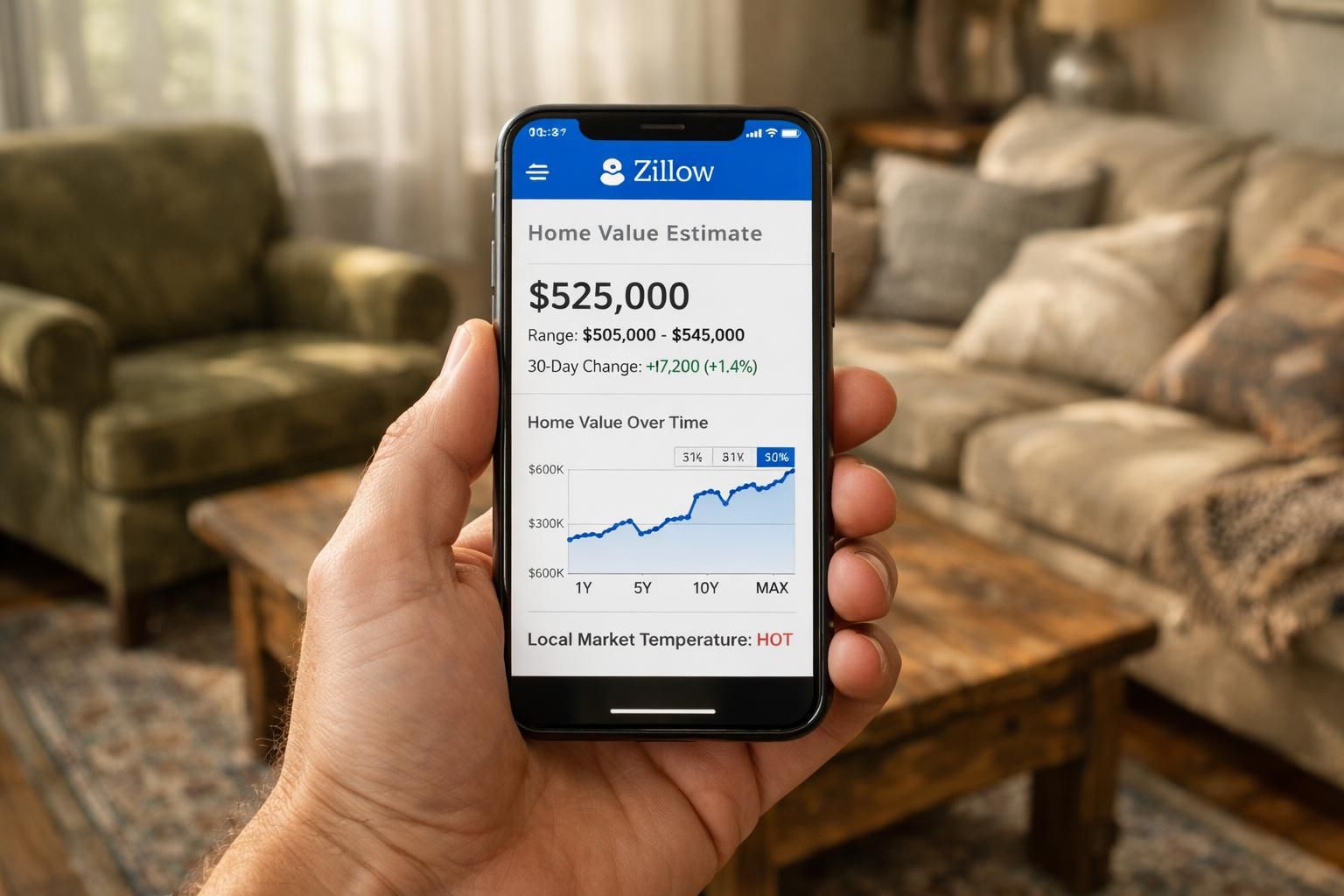
An accurate home value is the foundation of any fair equity split. In fast-moving Washington markets like Seattle or Bellevue, this step is especially important.
Appraisal vs. online estimates
A licensed residential appraisal provides an independent, defensible valuation that mortgage lenders require for refinancing and equity buyouts. 4 Appraisers conduct in-person visits and analyze recent comparable sales in your neighborhood.
Online tools like Zillow or Redfin can give a ballpark figure, but automated estimates often miss unique features, recent upgrades, or deferred maintenance. In Seattle's competitive market, Zestimates can differ from actual sale prices by tens of thousands of dollars. Courts and lenders will not accept online valuations for official property division purposes.
Handling disagreements on value
If spouses cannot agree on home value, each may hire a separate licensed appraiser. Washington courts may then order a third independent appraisal or bring in a neutral real estate expert. Documentation — including receipts for improvements, recent tax assessments, and mortgage statements — strengthens your position. 5
Professional mediation can resolve valuation disputes without costly litigation. If no agreement is reached, the Washington Superior Court judge presiding over your divorce will determine the final value before issuing the decree.
Tax Considerations

Tax timing can significantly affect how much each spouse keeps from an equity split. Washington has a unique tax landscape that divorcing homeowners should understand.
Federal capital gains exclusion
The IRS allows married couples to exclude up to $500,000 in capital gains on the sale of their primary residence, provided both spouses meet the two-year ownership and residency requirements. After divorce is finalized, each individual can only exclude $250,000. Selling before the decree is entered may allow both parties to benefit from the larger exclusion.
To qualify, you must have owned and lived in the home as your primary residence for at least two of the last five years. Any gain above the applicable exclusion is subject to federal capital gains tax. Track all improvement costs, closing expenses, and selling fees — these increase your adjusted basis and reduce your taxable gain. 7
Washington state capital gains tax
Washington enacted a capital gains tax in 2021, upheld by the Washington Supreme Court in 2023. The tax applies a 7% rate on long-term capital gains above $250,000 (adjusted annually for inflation) from certain asset sales. However, gains from the sale of real estate — including your primary residence — are generally exempt from Washington's capital gains tax.
Even so, you should consult a Washington CPA or divorce attorney about your specific circumstances, especially if the transaction involves business interests, investment property, or other assets being exchanged as part of the equity offset.
Washington real estate excise tax (REET)
Washington charges a Real Estate Excise Tax (REET) on most property sales. The rate is graduated based on sale price. However, transfers between spouses as part of a divorce settlement are generally exempt from REET under Washington law. Your divorce attorney should confirm this exemption applies to your specific transaction and ensure the correct paperwork is filed with the county.
Special Situations to Consider
Underwater mortgages
If your mortgage balance exceeds the home's current market value, you have negative equity. Neither spouse has equity to divide, and both remain responsible for the debt until it is resolved. Options include a short sale with lender approval, loan modification, or in severe cases, foreclosure — all of which carry credit consequences. A Washington divorce attorney who understands real property law can help you evaluate your options before making decisions. 8
Deferred maintenance or improvements
Deferred maintenance can reduce appraised value by 10–20%, and cash buyers typically offer 70–85% of after-repair value. Document all home improvements made during the marriage — courts may credit "sweat equity" when one spouse performed repairs rather than hiring contractors. Gather receipts, bank statements, and records of any major upgrades before finalizing your settlement.
Separate property contributions and inheritances
If you used inheritance money or pre-marital savings for a down payment or major improvement, Washington law may allow you to reclaim that separate property contribution before dividing remaining equity. You must provide clear records tracing those funds. If community income was used to pay down the mortgage or fund renovations, courts may treat the appreciation during marriage as community property even on a home purchased before the marriage. Legal guidance is essential. 2
Role of Professionals in the Process
Navigating Washington's community property rules, tax laws, and court procedures is complex. The right professionals protect your interests at every stage.
- A Washington family law attorney explains your rights under state community property law, reviews financial disclosures, and ensures the divorce decree reflects the agreed equity division with legal precision.
- A Certified Divorce Financial Analyst (CDFA) models long-term financial impacts of keeping versus selling the home, helping you avoid decisions that feel good now but hurt you later.
- A licensed appraiser provides a court-defensible home valuation — essential in high-value markets like Seattle and Bellevue where small valuation differences can mean large dollar amounts.
- A mediator helps both spouses reach agreement on value and division without costly litigation, keeping the process civil and data-driven.
- A Washington CPA advises on federal capital gains exclusion timing, the Washington capital gains tax exemption for real estate, REET exemptions for divorce transfers, and basis documentation.
- A Certified Divorce Lending Professional (CDLP) helps the buying spouse qualify for a refinance or equity buyout loan under current lending standards.
Action Steps for Dividing Home Equity in Washington
Gather your mortgage and property documents
Collect your most recent mortgage statement showing current balance, any HELOC or lien information, and recent property tax records from your county assessor. Request a professional appraisal or CMA from a licensed appraiser. If you disagree on value, get multiple independent appraisals. Gather receipts for major improvements — these affect both market value and your adjusted tax basis.
Consult a Washington family law attorney
Washington's community property rules, Superior Court procedures, and REET exemptions are state-specific. An experienced Washington divorce attorney ensures proper asset disclosure, guides you through valuation disputes, and drafts decree language that protects your equity interests long after the divorce is final. 9
Explore all division options carefully
Compare buyout, sale, delayed co-ownership, and asset offset options with your attorney and financial advisor. Factor in current mortgage rates, your ability to qualify for refinancing, federal and state tax implications, and your long-term financial goals. All agreed terms should be incorporated into the final Washington divorce decree to prevent future disputes.
Conclusion
Dividing home equity in a Washington divorce involves community property law, court procedures, federal tax rules, and Washington-specific taxes like REET. Taking careful steps — gathering documentation, getting a professional appraisal, and working with experienced legal and financial professionals — gives you the best chance of a fair outcome. Whether you are in Seattle, Tacoma, Olympia, or Spokane, clear knowledge of your rights under Washington law helps you move forward with confidence.
If selling your home is the right path forward, KDS Homebuyers works directly with Washington homeowners to make the process simple and stress-free. Visit kdshomebuyers.net for a free, no-obligation cash offer and take one more step toward your next chapter.
FAQs
1. How does Washington's community property law affect home equity division in divorce?
Washington requires that community property — including home equity built during the marriage — be divided in a just and equitable manner, which typically means 50/50. Both spouses have equal ownership of assets acquired during the marriage, regardless of whose name is on the deed or mortgage.
2. How do I determine my home's value for a Washington divorce settlement?
Start with a licensed residential appraisal to establish current market value. Subtract your remaining mortgage balance to find your equity. In competitive markets like Seattle or Bellevue, a professional appraisal is far more reliable than automated online estimates for court and lender purposes.
3. Can one spouse keep the house after a Washington divorce?
Yes. One spouse can buy out the other by refinancing the mortgage into their name alone and paying the other spouse their equity share. The keeping spouse must qualify independently for the new loan. If refinancing is not possible, selling is usually the next option.
4. Are there tax consequences when selling a home during a Washington divorce?
Federally, married couples can exclude up to $500,000 in capital gains on a primary residence sale; this drops to $250,000 per individual after divorce. Washington's state capital gains tax generally exempts real estate sales. Transfers between divorcing spouses may also be exempt from Washington's Real Estate Excise Tax. Always confirm specifics with a Washington CPA.
5. What happens if we owe more on our Washington home than it is worth?
Negative equity means there is no equity to divide. Both spouses remain responsible for the mortgage debt. Options may include a short sale with lender approval, loan modification, or foreclosure — all with credit implications. A Washington family law attorney can help you evaluate your options before the divorce is finalized.
References
- ^ https://www.pencefirm.com/how-do-you-divide-equity-in-a-home-when-divorcing/ (2024-11-12)
- ^ https://digitalcommons.law.uga.edu/cgi/viewcontent.cgi?article=1946&context=fac_artchop
- ^ https://www.bankrate.com/home-equity/how-is-home-equity-split-in-divorce/ (2025-06-20)
- ^ https://www.divorcelendingassociation.com/library/determining-the-value-of-real-property-in-divorce.cfm
- ^ https://digitalcommons.pace.edu/cgi/viewcontent.cgi?article=1947&context=plr
- ^ https://www.journalofaccountancy.com/issues/2013/apr/20126248/ (2013-03-31)
- ^ https://papers.ssrn.com/sol3/Delivery.cfm/SSRN_ID2364374_code680143.pdf?abstractid=1920795&mirid=1 (2011-09-11)
- ^ https://papers.ssrn.com/sol3/Delivery.cfm/SSRN_ID2888907_code488916.pdf?abstractid=2352266&mirid=1
- ^ https://www.colesorrentino.com/dividing-marital-property-new-yorks-equitable-distribution-law/ (2024-11-13)
