

How to Split Home Equity in a Divorce in Indiana

You may feel worried about splitting equity in divorce and what that means for your financial future. Home equity is the difference between your home's current market value and the mortgage balance you owe. 1 This guide explains how Indiana courts divide home equity, what options you have, and which state-specific rules may affect you. 2 Discover smart ways to protect your share during this difficult time. 3
Key Takeaways
- Home equity is the difference between your home's current market value and the remaining mortgage balance. If a house appraises for $350,000 with a $150,000 mortgage, the equity is $200,000. Indiana courts treat this as a primary marital asset in divorce.
- Indiana follows equitable distribution law, meaning courts divide marital property fairly but not always equally. A judge considers factors like length of marriage, each spouse's contributions, and future earning potential.
- Main options include one spouse refinancing to buy out the other's share, selling the home and dividing proceeds, co-owning temporarily before a delayed sale, or trading other assets like retirement accounts to offset equity.
- Accurate valuation matters. Get a licensed appraisal rather than relying solely on online estimates. Disputes may require separate appraisers or court involvement in Indiana's circuit or superior courts.
- Tax rules matter: Married couples can exclude up to $500,000 of capital gains when selling their primary residence before divorce finalizes — this drops to $250,000 per person afterward. Timing your sale correctly and keeping documentation of improvements can significantly reduce your tax burden.
Understanding Home Equity
Home equity shows how much of your home you truly own compared to what is still owed on the mortgage. Your property's market value, less the current mortgage balance, shapes this number and influences your financial options during an Indiana divorce.
Definition: Current market value minus what's owed
You find your equity by subtracting what you still owe on your mortgage from the current market value of your property. 1 For example, if a real estate appraisal puts your Indianapolis home at $350,000 and you have a remaining mortgage balance of $150,000, your home equity stands at $200,000.
Liens or second loans like home equity lines of credit can lower this figure. Mortgage debt and other secured debts must be paid off first before any equity split occurs. Indiana courts treat home equity as part of the marital estate subject to equitable distribution. 2
Example calculation of home equity
Suppose your home in Fishers, Indiana appraises for $320,000 and the outstanding mortgage balance is $170,000. Subtract the mortgage from the market value to calculate home equity — in this case, $150,000 in marital assets available for division.
For another scenario, consider an Indianapolis property valued at $400,000 with a remaining loan of $200,000, leaving $200,000 in equity. An Indiana court applying equitable distribution principles would then determine each spouse's fair share based on the circumstances of the marriage, not simply a 50/50 formula.
Equity division typically begins with a licensed appraisal or a Comparative Market Analysis (CMA) from a local real estate agent to establish the property's current value. Courts may also examine how much the home appreciated during the marriage versus before it.
Legal Frameworks for Dividing Home Equity in Indiana

Indiana law governs how you and your spouse divide home equity during a divorce. Working with an Indiana family law attorney helps you understand your rights and obligations under state statutes.
Indiana is an equitable distribution state
Indiana is not a community property state. Instead, Indiana follows equitable distribution principles under Indiana Code. Courts divide marital property in a way that is fair, though not necessarily equal. Indiana law creates a presumption that an equal division is just and reasonable, but either spouse can present evidence to rebut that presumption.
Factors Indiana courts consider include the length of the marriage, each spouse's economic circumstances at the time of division, each party's contributions to the acquisition of marital property (including contributions as a homemaker), whether the property was acquired before or during marriage, and each spouse's earning capacity and financial needs going forward.
Unlike community property states, Indiana courts have flexibility. A judge in Marion County, Hamilton County, or Boone County may award one spouse a larger share of home equity if the facts support it — for example, if one spouse contributed a pre-marital down payment or made significantly larger mortgage payments throughout the marriage.
What counts as marital property in Indiana
Indiana courts generally treat all property either spouse owned before or acquired during marriage as part of the marital pot subject to division. This broad approach means even a home purchased before the wedding can be included in the marital estate unless you can clearly document separate property contributions.
Inheritances and gifts received by one spouse may retain separate character if kept clearly apart from marital funds, but commingling those assets — for example, depositing an inheritance into a joint account used for mortgage payments — can cause them to be treated as marital property. Careful documentation is critical.
How Indiana courts handle property division
Divorce cases in Indiana are filed in the circuit or superior court of the county where either spouse lives. After filing, Indiana imposes a mandatory 60-day waiting period before a final decree can be entered. Most contested property division cases take considerably longer.
If spouses cannot reach a settlement, the court holds an evidentiary hearing and the judge decides how to divide all marital assets, including home equity. The final divorce decree will specify how the home is handled — whether it is sold, awarded to one spouse, or subject to a delayed sale arrangement.
| System | Indiana's Approach | Key Features |
|---|---|---|
| Equitable Distribution | Indiana Code governs property division; all marital property is subject to division by the court. |
|
Main Options for Splitting Home Equity in Indiana

Each path for dividing home equity brings unique pros and cons. Your choice may affect the divorce settlement, property division timeline, and your long-term financial stability.
One spouse buys out the other
One spouse refinances the home to pay out the other's share of equity. For example, if your Carmel home has a market value of $450,000 and you owe $100,000, there is $350,000 in equity. If the court awards each spouse an equal share, the remaining spouse must pay the other $175,000 through a cash-out refinance or equity buyout loan.
Indiana mortgage lenders will require the buying-out spouse to qualify based on credit score, income, and debt-to-income ratio. Divorce agreements typically allow 60–90 days to complete refinancing. If the spouse cannot secure financing, selling the home may become the only workable option.
Sell the home and divide the proceeds
Selling the home during an Indiana divorce gives both parties a clean break and ends shared financial obligations. After paying off the mortgage balance, closing costs, and any applicable taxes, you divide the net proceeds as specified in your divorce settlement or court decree.
A traditional home sale in the Indianapolis metro area can take 60 to 90 days. Expect selling costs including agent commissions and closing expenses to total roughly 8 to 10 percent of the sale price. 3 Selling before your divorce is finalized may allow both spouses to claim the larger married-couple capital gains exclusion — an important tax consideration discussed below.
Co-own temporarily (delayed sale)
Co-owning the home temporarily after divorce keeps both names on the title and mortgage until a defined future event — such as a child finishing school. This approach is more common in Indiana divorces involving minor children, where stability at a specific school or in a particular neighborhood is a priority.
Both spouses remain legally responsible for mortgage payments, property taxes, and maintenance. Missed payments affect both credit scores. Your Indiana divorce attorney should spell out every financial responsibility in the divorce decree, including who pays what and how proceeds will be divided when the home eventually sells.
Offset with other assets
Offsetting home equity with other marital assets lets one spouse keep the home without refinancing. For example, if you want to stay in your Noblesville home but owe your spouse $100,000 in equity, you may be able to exchange retirement account balances, investment accounts, or other assets of equal value.
Accurate, current valuations of all assets are critical. If retirement accounts are used as offsets, a Qualified Domestic Relations Order (QDRO) may be required in Indiana to divide those funds without triggering early withdrawal penalties or tax consequences. Work with a divorce attorney and financial advisor to structure any offset arrangement correctly and include full terms in the divorce decree. 3
Valuation Process for the Home
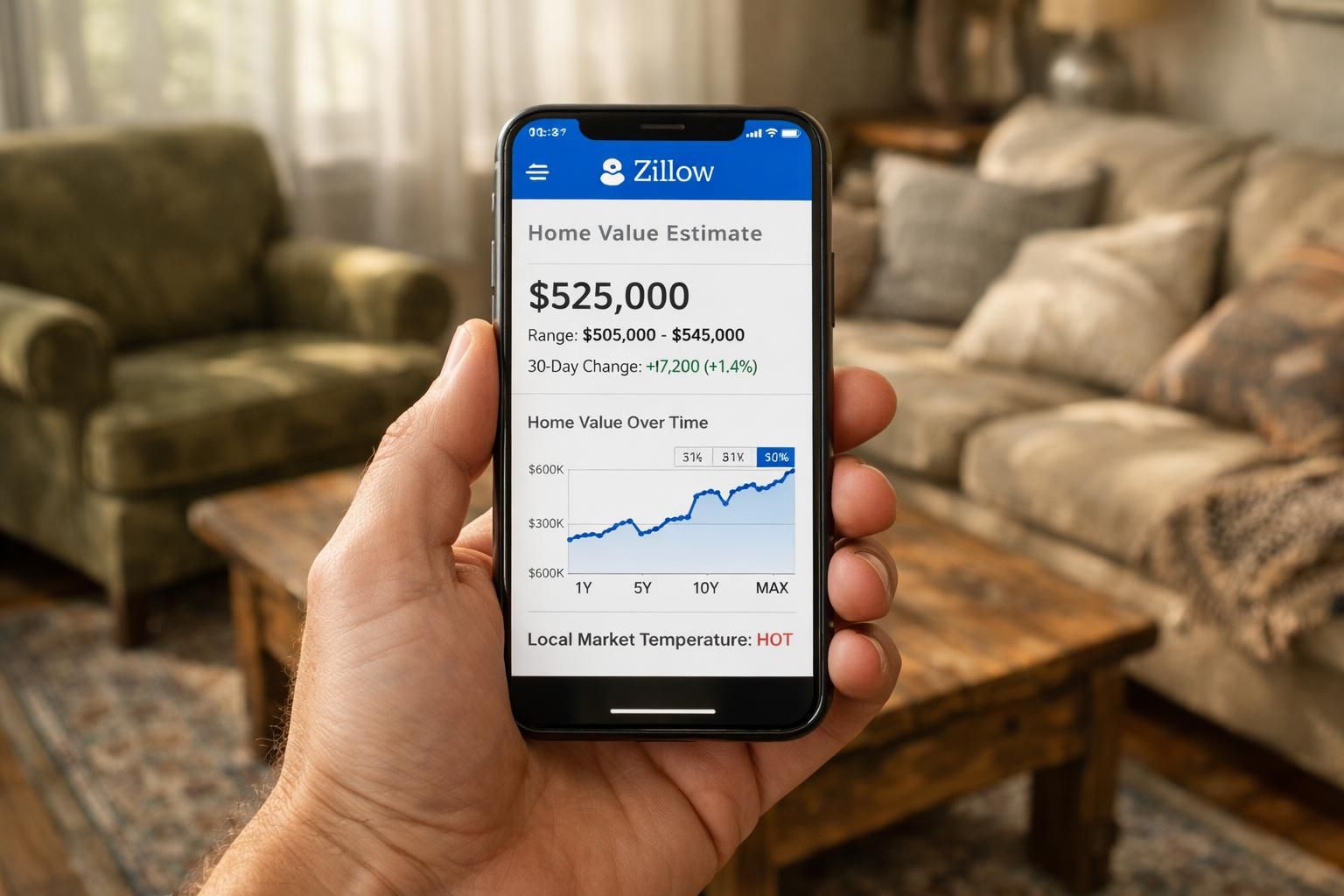
You need a reliable property value before you can split home equity. Indiana courts expect documented, credible valuations — not just online estimates.
Appraisal vs. online estimates
A professional home appraisal by a licensed Indiana appraiser provides an independent valuation most mortgage lenders and courts require for refinancing and equity buyout situations. 4 Appraisers conduct in-person visits and analyze current market data specific to your neighborhood.
Online estimates from sites like Zillow or Redfin can vary widely and frequently miss unique upgrades, deferred maintenance, or local market nuances in areas like Carmel versus Lebanon. These tools provide a rough starting point, not a definitive figure for a court or lender. If spouses rely only on conflicting online estimates, Indiana courts may order an independent appraisal.
Handling disagreements on value
If you and your spouse cannot agree on your home's worth, each party may hire a separate licensed appraiser. Indiana family courts can also appoint a neutral appraiser when disputes persist. Your divorce attorney should submit supporting documentation — improvement receipts, tax records, mortgage statements — to back your position. 5
Mediation is a common and cost-effective way to resolve valuation disagreements before they reach a judge. If mediation fails, the Indiana court will set the value and proceed with property division based on the evidence presented.
Tax Considerations for Indiana Homeowners

Federal capital gains exclusion: Married vs. individual
When you sell your primary residence, the IRS allows up to $500,000 in capital gains exclusion for married couples filing jointly. Once the divorce is final and each spouse sells or retains the home individually, that exclusion drops to $250,000 per person. Selling before your Indiana divorce decree is entered may let both parties benefit from the larger exclusion — potentially saving tens of thousands of dollars in federal taxes.
To qualify, both spouses must have owned and lived in the home as their primary residence for at least two of the last five years. Consult a CPA familiar with Indiana tax matters to confirm you meet ownership and residency requirements before timing your sale.
Indiana property taxes and transfer considerations
Indiana does not impose a state-level real estate transfer tax on home sales, which simplifies transactions somewhat compared to other states. However, Indiana property taxes are assessed annually, and the homestead exemption — which reduces assessed value for owner-occupied homes — can be affected when ownership changes. If the home is transferred from joint ownership to one spouse as part of the divorce, the new sole owner should promptly update their homestead exemption filing with the county assessor's office to preserve that benefit.
Timing of sale and basis adjustments
Track and document all costs related to home improvements, agent fees, repairs, and closing costs — these increase your adjusted cost basis and reduce taxable gains. 7 Starting with the original purchase price, add documented improvements like a new roof or renovated kitchen, then subtract selling expenses. A CPA can help you apply these calculations correctly so you do not pay more federal tax than required on your Indiana home sale. 6
Special Situations to Consider
Underwater mortgages
An underwater mortgage occurs when your loan balance exceeds your home's current market value, leaving you with negative equity and nothing to divide. Both spouses remain responsible for the mortgage debt until a solution is reached. Options include a short sale with lender approval, a loan modification, or in the worst case, foreclosure — all of which can significantly damage credit. Indiana courts can still address how each spouse shares responsibility for the deficiency. Speak with an Indiana divorce attorney before making any decisions about underwater property. 8
Deferred maintenance or home improvements
Deferred maintenance can reduce your Indiana home's appraised value and the proceeds available to divide. Cash buyers typically offer 70 to 85 percent of after-repair value when major repairs are needed. Document all improvements made during the marriage with receipts and contractor invoices. Indiana courts may credit "sweat equity" if one spouse performed significant repairs in lieu of hiring contractors. These records support your position during settlement negotiations.
Separate property contributions and inheritances
If you used pre-marital savings or an inheritance for a down payment, Indiana courts may credit those funds back to you before dividing remaining equity — but you must provide clear documentation tracing those contributions. If marital income was later used for mortgage payments or renovations, the home may become at least partially marital property regardless of its origins. An Indiana family law attorney can help you build a paper trail and argue for appropriate credit during property division. 2
Role of Professionals in the Process
Working with the right professionals protects your interests throughout an Indiana divorce involving real estate.
- An Indiana family law attorney explains how equitable distribution applies to your specific circumstances, reviews the marital estate, and ensures the divorce decree contains clear, enforceable property division terms.
- A licensed Indiana appraiser provides the credible, court-accepted property valuation needed for settlement negotiations or court hearings.
- A Certified Divorce Financial Analyst (CDFA) analyzes long-term financial impacts of keeping versus selling the home, factoring in mortgage rates, taxes, and future earning potential.
- A mediator helps both spouses reach agreement on equity division, sale terms, or asset offsets without a contested court hearing — saving time and legal fees.
- A CPA familiar with Indiana and federal tax law guides you on capital gains timing, basis adjustments, and how the homestead exemption may be affected by ownership changes.
- Real estate agents with divorce transaction experience can provide Comparative Market Analyses and help manage a sale that satisfies both parties and meets court requirements.
Action Steps for Dividing Home Equity in Indiana
Gather mortgage balance and property value
Start with your most recent mortgage statement showing your current balance and any home equity loans or liens. Pull your county property tax records to confirm assessed value, then request a professional appraisal or CMA from a licensed Indiana appraiser or local real estate agent. Gather receipts for major repairs or upgrades completed during the marriage — these affect available equity and may support your position in settlement talks.
Consult an Indiana divorce attorney
Indiana's equitable distribution rules mean outcomes vary significantly based on the facts of each marriage. An experienced Indiana family law attorney can explain how courts in your county typically handle real estate division, whether your home qualifies fully as marital property, and what documentation you need to protect any separate property claims. Attorneys also ensure your divorce decree contains specific, enforceable language about the home — including deadlines for refinancing, sale timelines, and responsibility for ongoing mortgage payments during any transition period. 9
Explore all division options carefully
Compare a buyout, a sale, a delayed sale, and an asset offset before committing to any path. Consider current mortgage interest rates, your ability to refinance, Indiana's 60-day minimum divorce waiting period, and the tax consequences of each scenario. All agreed terms should appear in your final Indiana divorce decree to prevent future disputes.
Conclusion
Dividing home equity during an Indiana divorce is challenging, but clear steps and the right professional guidance make it manageable. Gather your documents, get an accurate property valuation, and work with an Indiana divorce attorney to understand how equitable distribution applies to your situation. Fair solutions exist even in difficult circumstances — and you deserve the support to find them.
If you need to sell your home quickly as part of an Indiana divorce settlement, KDS Homebuyers can help. We buy houses directly from Indiana homeowners for cash, with no repairs, no agent commissions, and no lengthy closing timelines. Visit kdshomebuyers.net to request your free, no-obligation cash offer today.
FAQs
1. How do Indiana courts divide home equity in a divorce?
Indiana uses equitable distribution, meaning courts divide marital property fairly based on factors like the length of marriage, each spouse's contributions, and financial circumstances — not necessarily a strict 50/50 split, though equal division is the starting presumption.
2. How do I determine my home's value for an Indiana divorce settlement?
Start with a professional appraisal from a licensed Indiana appraiser. Subtract your remaining mortgage balance from that appraised value to determine available equity. If spouses disagree, each may retain a separate appraiser, or the court may appoint one.
3. Can one spouse keep the house after an Indiana divorce?
Yes. One spouse can buy out the other's equity share through refinancing or an equity buyout loan, provided they qualify for new financing. The buying spouse typically must complete the refinance within a court-ordered timeframe and have the other spouse removed from the mortgage and deed.
4. Are there tax issues when splitting home equity in Indiana?
Federal capital gains tax may apply if appreciation exceeds the available exclusion. Indiana does not impose a real estate transfer tax, but homestead exemption status should be updated promptly after a change in ownership. Consult a CPA about timing your home sale relative to when your divorce decree is entered.
5. What happens if our Indiana home loses value during the divorce process?
If the home's value drops below the mortgage balance, you have negative equity. Both spouses remain liable for the mortgage debt. Options include a short sale, loan modification, or foreclosure — all of which carry significant financial consequences. An Indiana divorce attorney can help you navigate shared liability for an underwater property.
References
- ^ https://www.pencefirm.com/how-do-you-divide-equity-in-a-home-when-divorcing/ (2024-11-12)
- ^ https://digitalcommons.law.uga.edu/cgi/viewcontent.cgi?article=1946&context=fac_artchop
- ^ https://www.bankrate.com/home-equity/how-is-home-equity-split-in-divorce/ (2025-06-20)
- ^ https://www.divorcelendingassociation.com/library/determining-the-value-of-real-property-in-divorce.cfm
- ^ https://digitalcommons.pace.edu/cgi/viewcontent.cgi?article=1947&context=plr
- ^ https://www.journalofaccountancy.com/issues/2013/apr/20126248/ (2013-03-31)
- ^ https://papers.ssrn.com/sol3/Delivery.cfm/SSRN_ID2364374_code680143.pdf?abstractid=1920795&mirid=1 (2011-09-11)
- ^ https://papers.ssrn.com/sol3/Delivery.cfm/SSRN_ID2888907_code488916.pdf?abstractid=2352266&mirid=1
- ^ https://www.colesorrentino.com/dividing-marital-property-new-yorks-equitable-distribution-law/ (2024-11-13)
