

How to Split Home Equity in a Divorce in Florida

You may feel worried about splitting equity in divorce and what that means for your financial future. Home equity is the difference between your home's current market value and the mortgage balance you owe. 1 This guide will help you understand how Florida courts divide home equity, what options you have, and which legal rules apply under Florida's equitable distribution laws. 2 Discover smart ways to protect your share during this tough time. 3
Key Takeaways
- Home equity is the difference between your home's current market value and the remaining mortgage balance. For example, if a house appraises for $450,000 with a $200,000 mortgage, the equity is $250,000. Florida courts treat this as a primary marital asset in divorce.
- Florida is an equitable distribution state, meaning courts divide marital property fairly but not always equally. A judge weighs factors like length of marriage, each spouse's financial contributions, and earning capacity.
- Main options include one spouse refinancing to buy out the other's share; selling the home and dividing proceeds after closing costs; co-owning temporarily before selling; or trading other assets like retirement accounts to offset an equity stake.
- Accurate valuation is essential. Get a licensed appraisal rather than relying on online estimates like Zillow. Disputes about value may require separate appraisers or circuit court involvement.
- Tax rules matter: Married couples can exclude up to $500,000 of capital gains when selling their primary residence before divorce finalizes — this drops to $250,000 per person afterward. Florida has no state income tax, but federal capital gains tax still applies. Consult a divorce attorney or CPA about timing.
Understanding Home Equity
Home equity shows how much of your home you truly own compared to what is still owed on the mortgage. Your property's market value, less the current mortgage balance, shapes this number and can influence your financial options during a Florida divorce.
Definition: Current market value minus what's owed
You find your equity by subtracting what you still owe on your mortgage from the current market value of your property. 1 For example, if a real estate appraisal puts your Tampa home at $450,000 and you have a remaining mortgage balance of $200,000, your home equity stands at $250,000.
Liens or second loans like home equity lines of credit can lower this figure. Mortgage debt and other secured debts must be paid off first before any equity splits happen. Florida courts treat home equity as part of the marital estate under the state's equitable distribution statute. 2 Many couples discover their biggest asset is their shared equity after deducting all outstanding loan amounts.
Example calculation of home equity
Suppose your home in Orlando appraises for $400,000 and the outstanding mortgage balance is $250,000. Subtract the mortgage from the current market value — you hold $150,000 in equity as part of your marital assets. If a Florida court divides this equally, each spouse walks away with $75,000. 2
Equity division typically starts with an updated appraisal or a Comparative Market Analysis (CMA) to establish the property's true value. Courts may also focus on how much the home appreciated during the marriage rather than only its purchase price. If no mortgage remains, dividing equity becomes more straightforward under Florida's equitable distribution rules. 3
Legal Framework for Dividing Home Equity in Florida

Florida law shapes how you and your spouse split home equity during a divorce. A Florida family law attorney can help you understand how equitable distribution rules affect your marital estate.
Florida is an equitable distribution state
Florida follows equitable distribution, not community property. This means your home equity will not automatically split 50/50. Instead, Florida circuit courts divide marital property in a way that is fair, considering multiple factors. The starting point under Florida law is an equal split, but judges can deviate based on circumstances.
Factors Florida courts consider include the length of the marriage, each spouse's economic circumstances, contributions to the marriage (including homemaking and child care), whether one spouse helped the other advance their career, and whether either party intentionally wasted marital assets. A house owned before the marriage may still contain marital equity if both spouses paid the mortgage or funded renovations during the relationship.
Importantly, moving out of the marital home does not forfeit your equity rights in Florida. Refinancing is also not always required to complete a buyout. Consulting with a Florida-licensed divorce attorney ensures you understand how local circuit courts approach your specific situation.
Marital vs. separate property in Florida
Florida law distinguishes between marital and non-marital (separate) assets. Property acquired before marriage or received as a gift or inheritance generally remains separate. However, if marital funds were used to pay the mortgage, make improvements, or refinance a home originally owned by one spouse, that home may become partially or fully marital property.
Commingling — mixing separate funds with marital money — can convert separate property into a marital asset. Clear documentation is essential if you want to claim a non-marital interest in the home.
Main Options for Splitting Home Equity in Florida

Each path for dividing home equity brings unique pros and cons, often shaped by your mortgage balance, Florida's real estate market, and your financial resources.
One spouse buys out the other
One spouse refinances the home to pay out the other's share of equity. For example, if your Jacksonville home has a market value of $500,000 and you owe $100,000 on the mortgage, there is $400,000 in equity. To buy out your spouse's equal share, you would need to provide $200,000.
Mortgage lenders will require you to qualify for a new loan based on your credit score, income, and debt-to-income ratio — independent of your spouse's finances. Many Florida divorce agreements allow 60–90 days to complete refinancing. If you cannot secure financing, selling may become the only viable option.
Sell the home and divide the proceeds
Selling the home often gives both parties a clean financial break. After paying off the mortgage balance, closing costs, and any applicable taxes, you split the remaining proceeds according to your divorce settlement or final judgment. In Florida's active markets — Miami, Orlando, Tampa — a well-priced home can move quickly, though realtor commissions and closing costs typically total 8–10% of the sale price. 3
Selling before your divorce is finalized may allow both spouses to claim the larger $500,000 IRS capital gains exclusion as married filers. This clean break also avoids ongoing disputes over shared mortgage payments, insurance, and maintenance costs.
Co-own temporarily (delayed sale)
Co-owning the home temporarily lets both spouses keep their names on the title and mortgage until a triggering event — such as a child finishing school. Both parties remain responsible for mortgage payments, property taxes, and upkeep. Florida's final judgment of dissolution can incorporate detailed terms covering who pays which expenses and what happens when it's time to sell.
This arrangement carries risk: missed payments affect both credit scores, and you remain legally tied to the debt even after moving out. Clear written terms in your divorce decree protect both parties.
Offset with other assets
If you want to keep the home without refinancing, you can exchange other marital assets of equal value — retirement accounts, savings, or investment holdings — to offset your spouse's equity share. 3 Accurate valuation of all assets is critical. A Florida divorce attorney or Certified Divorce Financial Analyst can help structure a fair exchange that holds up in court.
Valuation Process for the Home
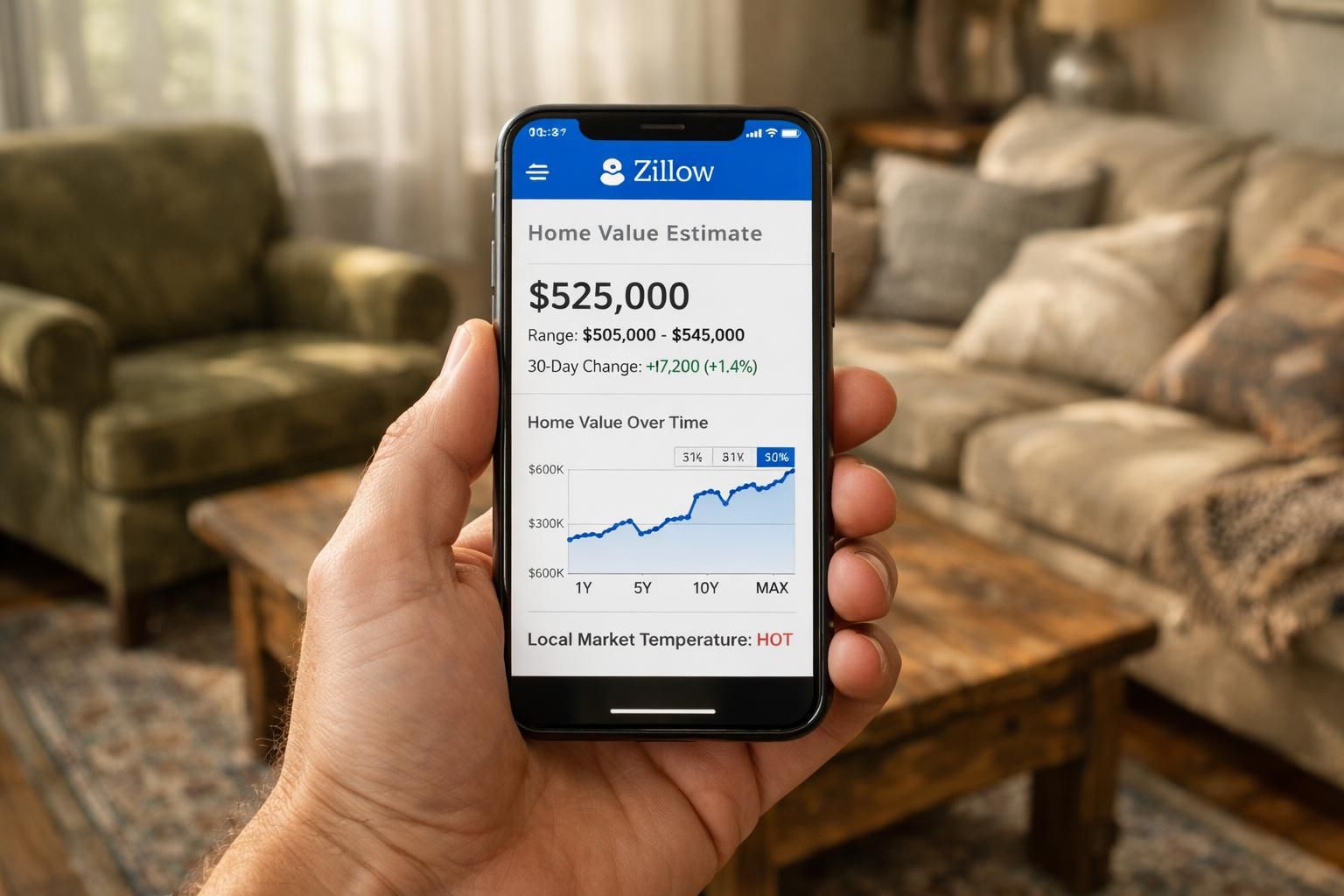
You need a fair value for your home before splitting equity. A licensed Florida appraiser or a Comparative Market Analysis from a local real estate agent gives the most reliable figure for divorce proceedings.
Appraisal vs. online estimates
A professional home appraisal provides an independent valuation that Florida courts and mortgage lenders require for refinancing and equity buyouts. 4 Licensed Florida residential appraisers conduct in-person inspections and use current local market data.
Online estimates from Zillow or Redfin can show wide price ranges based on automated formulas and may miss unique upgrades, deferred maintenance, or Florida-specific factors like hurricane-resistant improvements or flood zone designations. These tools offer a quick snapshot but rarely meet the accuracy standard required for legal proceedings.
Handling disagreements on value
If you and your spouse cannot agree on the home's value, both may hire separate licensed appraisers. Florida circuit courts can order an independent appraisal or appoint a neutral expert when disagreements persist. 5 Professional mediation — encouraged under Florida family law rules — can also resolve valuation disputes before they reach a judge, saving time and legal fees.
Tax Considerations in Florida

Florida has no state income tax, which simplifies the picture somewhat — but federal tax rules still apply and can significantly affect your net proceeds from a home sale during divorce.
Capital gains exclusion for married couples vs. individuals
The IRS allows married couples to exclude up to $500,000 in capital gains when selling a primary residence. After divorce is final, each individual can only exclude up to $250,000. To qualify, you must have owned and lived in the home for at least two of the last five years.
Selling before your Florida divorce is finalized may allow both spouses to claim the larger exclusion — a meaningful advantage in high-appreciation markets like Miami or South Florida. Any appreciation above the exclusion limit is subject to federal capital gains tax.
Florida documentary stamp tax
Florida imposes a documentary stamp tax on deed transfers. Transfers between spouses as part of a divorce settlement are generally exempt from this tax, but you should confirm the specific requirements with a Florida real estate attorney or title company to ensure proper documentation at closing.
Timing of sale and basis adjustments
Track and document all costs related to home improvements, repairs, agent fees, and closing costs — these increase your adjusted basis and lower your taxable gain. 7 A CPA familiar with Florida real estate transactions can help ensure you report capital gains correctly and don't pay more tax than required. 6
Special Situations to Consider
Florida Homestead protections
Florida's Homestead law provides significant protections for primary residences, including limits on forced sale by creditors. However, in a divorce, the marital home is subject to equitable distribution regardless of homestead status. One important consideration: Florida law restricts the devise of homestead property when a spouse or minor child survives — this can affect estate planning tied to your divorce settlement. A Florida family law attorney can explain how homestead rules intersect with your property division.
Underwater mortgages
An underwater mortgage — where your balance exceeds the home's market value — leaves you with no equity to split. Options include a short sale with lender approval, loan modification, or foreclosure. All three can damage both spouses' credit scores. Florida was historically one of the states with longer foreclosure timelines due to its judicial foreclosure process, though timelines have shortened in recent years. Speak with a Florida divorce attorney before making decisions about an underwater property.
Deferred maintenance or home improvements
Deferred maintenance can reduce your appraised value by 10–20%, and cash buyers typically offer 70–85% of after-repair value. Home improvements made during the marriage can boost value, but you need receipts and records for every upgrade. Florida courts may also credit "sweat equity" if one spouse performed repairs rather than hiring contractors.
Separate property contributions or inheritances
Inheritance money or pre-marital funds used for a down payment can remain separate property in Florida if you have clear documentation. If marital income was later used for mortgage payments or renovations, the home may become a commingled asset. Legal guidance is essential — tracing separate contributions requires thorough records and professional advice. 2
Role of Professionals in the Process
A Florida-licensed divorce attorney, a Certified Divorce Financial Analyst, and an experienced real estate appraiser form the core team you need for an informed and fair equity division.
- Mediators help both spouses reach agreement on equity division without going to court — Florida courts often require mediation before a contested divorce hearing.
- Divorce attorneys protect your legal rights, ensure full financial disclosure, and make sure property division terms are properly incorporated into the final judgment of dissolution.
- A Certified Divorce Financial Analyst (CDFA) provides data-driven analysis of long-term financial impacts, including home loans, tax consequences, and future market conditions.
- Real estate agents familiar with local Florida markets — from Miami-Dade to the Tampa Bay area — can provide updated CMAs that support accurate valuation in settlement negotiations.
- A CPA or tax professional helps structure the timing of any home sale to maximize federal capital gains exclusions and document basis adjustments correctly.
Action Steps for Dividing Home Equity in Florida
Gather mortgage balance and property value
Start by collecting your most recent mortgage statement showing your current balance and any liens or home equity loans. Request a professional appraisal from a Florida-licensed appraiser or ask a local real estate agent for a Comparative Market Analysis. Gather receipts for major repairs or upgrades made during the marriage, as these affect available equity and your tax basis.
Consult a Florida family law attorney
Florida's equitable distribution rules differ meaningfully from community property states. An experienced Florida divorce attorney can clarify whether your home equity qualifies as marital or separate property, explain homestead implications, and ensure all terms appear in your final judgment of dissolution of marriage. If spousal support or complex commingled asset issues arise, legal counsel ensures your interests are protected at every stage. 9
Explore all division options carefully
Compare your options — selling, buying out, co-owning, or offsetting with other assets — against your current financial situation and Florida's real estate market conditions. Weigh immediate cash needs against long-term stability and federal tax implications. All agreement details should appear in your final divorce decree to ensure clear legal protection for both parties.
Conclusion
Dividing home equity during a Florida divorce can feel overwhelming, but clear steps and the right professionals make it manageable. Gather your documents, get an accurate property valuation, and work with a Florida-licensed divorce attorney who understands equitable distribution rules and local market conditions. Fair solutions exist — even in difficult circumstances — and you deserve confident guidance as you move into your next chapter.
If you need to sell quickly as part of your divorce settlement, KDS Homebuyers can help. We buy houses directly from homeowners for cash, with no repairs, no agent fees, and no delays. Visit kdshomebuyers.net to request a free cash offer and learn how a straightforward sale can simplify your property division process.
FAQs
1. How do Florida courts divide home equity in a divorce?
Florida uses equitable distribution, not a strict 50/50 community property split. Circuit court judges divide marital property fairly based on factors like length of marriage, each spouse's financial contributions, and economic circumstances. The starting presumption is an equal split, but courts can deviate when the facts justify it.
2. How do I determine my home's value for a Florida divorce settlement?
Get a professional appraisal from a Florida-licensed residential appraiser to establish current market value. Subtract the remaining mortgage balance from that figure to calculate your home equity. If spouses disagree, each may hire a separate appraiser, or a Florida circuit court may order an independent valuation.
3. Can one spouse keep the house after a Florida divorce?
Yes. One spouse can buy out the other's share by refinancing the home into a new loan solely in their name. The buying spouse must qualify independently for financing. Alternatively, equity can be offset by transferring other marital assets of equal value, as approved in the final judgment of dissolution.
4. Are there tax issues when splitting home equity in Florida?
Florida has no state income tax, but federal capital gains tax still applies to profits above the IRS exclusion limits. Selling before your divorce is finalized may allow both spouses to use the $500,000 married-couple exclusion. After divorce, each person is limited to $250,000. Consult a CPA about timing and documentation.
5. What happens if our Florida home loses value during the divorce process?
If your home's value drops below the mortgage balance, you have negative equity and nothing to split. Options include a short sale with lender approval, loan modification, or foreclosure — all of which affect both parties' credit. A Florida divorce attorney can help you navigate these options within the context of your overall settlement.
References
- ^ https://www.pencefirm.com/how-do-you-divide-equity-in-a-home-when-divorcing/ (2024-11-12)
- ^ https://digitalcommons.law.uga.edu/cgi/viewcontent.cgi?article=1946&context=fac_artchop
- ^ https://www.bankrate.com/home-equity/how-is-home-equity-split-in-divorce/ (2025-06-20)
- ^ https://www.divorcelendingassociation.com/library/determining-the-value-of-real-property-in-divorce.cfm
- ^ https://digitalcommons.pace.edu/cgi/viewcontent.cgi?article=1947&context=plr
- ^ https://www.journalofaccountancy.com/issues/2013/apr/20126248/ (2013-03-31)
- ^ https://papers.ssrn.com/sol3/Delivery.cfm/SSRN_ID2364374_code680143.pdf?abstractid=1920795&mirid=1 (2011-09-11)
- ^ https://papers.ssrn.com/sol3/Delivery.cfm/SSRN_ID2888907_code488916.pdf?abstractid=2352266&mirid=1
- ^ https://www.colesorrentino.com/dividing-marital-property-new-yorks-equitable-distribution-law/ (2024-11-13)
