

How to Split Home Equity in a Divorce in Colorado
You may feel worried about splitting equity in divorce and what that means for your financial future. Home equity is the difference between your home's current market value and the mortgage balance you owe. 1 This guide will help you understand how Colorado courts divide home equity, what options you have, and which legal rules might affect you as a Colorado homeowner. 2 Discover smart ways to protect your share during this tough time. 3
Key Takeaways
- Home equity is the difference between your home's current market value and the remaining mortgage balance. For example, if a Denver house appraises for $550,000 with a $300,000 mortgage, the equity is $250,000. Colorado courts treat this as a primary marital asset in divorce.
- Colorado follows equitable distribution law, not community property. Courts divide marital assets fairly but not always equally, weighing factors like length of marriage, each spouse's financial contributions, and earning capacity.
- Main options include one spouse refinancing to buy out the other's share; selling the home and dividing proceeds after closing costs; co-owning temporarily before selling; or trading other assets like retirement accounts to offset an equity stake.
- Accurate valuation is key. Get a licensed appraisal rather than relying solely on online estimates like Zillow or Redfin. Disputes about value may require separate appraisers or court involvement in Colorado district court.
- Tax rules matter: Married couples can exclude up to $500,000 of capital gains when selling their primary residence before divorce finalizes—this drops to $250,000 per person afterward. Colorado also conforms to federal capital gains treatment. Always consult a divorce attorney or CPA about timing and documentation.
Understanding Home Equity

Home equity shows how much of your home you truly own compared to what is still owed on the mortgage. Your property's market value, less the current mortgage balance, shapes this number and directly influences your financial options during a Colorado divorce.
Definition: Current market value minus what's owed
You find your equity by subtracting what you still owe on your mortgage from the current market value of your property. 1 For example, if an appraisal puts your Aurora home at $500,000 and you have a remaining mortgage balance of $250,000, your home equity stands at $250,000.
Liens or second loans like home equity lines of credit can lower this figure. Mortgage debt and other secured debts must be paid off first before any equity splits occur. Colorado courts treat home equity as part of the marital estate subject to equitable division. 2
Example calculation of home equity
Suppose your home in Colorado Springs appraises for $450,000 and the outstanding mortgage balance is $250,000. Subtract the mortgage from the current market value to calculate your home equity—in this case, $200,000 in marital equity available for division.
For another scenario, consider a Lakewood property valued at $500,000 with a remaining loan of $300,000, leaving $200,000 in equity. Under Colorado's equitable distribution rules, the split may not be exactly 50/50, but courts still begin with that as a baseline in many cases. 2
Equity division typically starts with an updated appraisal or a Comparative Market Analysis (CMA) from a licensed appraiser or real estate agent. Online estimators can help set expectations before negotiations, but courts generally require a formal appraisal for official proceedings.
Legal Frameworks for Dividing Home Equity in Colorado

Colorado law shapes how you and your spouse divide home equity during a divorce. A Colorado divorce attorney can help you understand how the state's equitable distribution rules apply to your marital estate.
Colorado is an equitable distribution state
Colorado follows equitable distribution law, meaning courts divide marital property fairly but not necessarily equally. Under Colorado's dissolution of marriage statutes, courts consider factors including the length of the marriage, each spouse's economic circumstances, contributions to marital property (including homemaking), and any decrease in value of separate property during the marriage.
This means your home equity division could be 50/50 or it could reflect an unequal split based on the specific facts of your case. A judge in a Colorado district court will review all relevant circumstances before issuing a final order on property division.
Myths can cause confusion: moving out of the family home does not forfeit your equity rights, and refinancing is not always required to complete a buyout. Consulting a Colorado family law attorney is the best way to understand how equitable distribution applies to your situation.
Marital vs. separate property in Colorado
Colorado courts only divide marital property—assets and debts acquired during the marriage. Separate property, such as a home owned before marriage or received as an inheritance, generally stays with the original owner.
However, if marital funds were used to pay the mortgage or fund renovations on a separately owned home, a portion of that equity may become marital property through commingling. Keeping thorough financial records is essential if you need to trace separate property contributions in court.
Community property vs. equitable distribution: Where Colorado stands
| System | States | Key Features |
|---|---|---|
| Community Property |
|
|
| Equitable Distribution (including Colorado) |
|
|
Main Options for Splitting Home Equity

Each path for dividing home equity brings unique pros and cons, often shaped by your mortgage balance and financial resources. Your choice may affect the divorce settlement, property division, and access to equity buyout financing.
One spouse buys out the other
One spouse refinances the home to pay out the other's share of equity. For example, if your Denver home has a market value of $600,000 and you owe $200,000 on the mortgage, there is $400,000 in equity. If each spouse is awarded an equal share, the remaining spouse must pay $200,000 to complete the buyout.
Colorado mortgage lenders will require the buying spouse to qualify for an equity buyout loan or cash-out refinance based on credit score, income, and debt-to-income ratios. Many Colorado divorce agreements allow 60–90 days to complete this process. If the buying spouse cannot secure financing, selling the home may become the only viable option.
Sell the home and divide the proceeds
Selling the home during divorce often gives both parties a clean break and ends shared financial obligations. After paying off the mortgage balance, closing costs, and any applicable taxes, you split the remaining proceeds according to your Colorado divorce decree.
Expect selling costs such as real estate commissions and closing fees to total roughly 8 to 10 percent of the sale price. A traditional sale through a Colorado real estate agent can take 60 to 90 days. Selling before your divorce is finalized may allow both spouses to claim the larger $500,000 federal capital gains exclusion as married filers. 3
Co-own temporarily (delayed sale)
Co-owning a home temporarily after divorce allows both spouses to keep their names on the title and mortgage until a specific triggering event, such as a child finishing high school. This approach is common in the Denver metro area where school stability is a priority for families.
Both parties remain legally responsible for mortgage payments, property taxes, and maintenance. Any missed payment affects both credit scores. Build clear written terms into your Colorado divorce decree covering who pays which bills, how repairs are handled, and the timeline and process for the eventual sale.
Offset with other assets
Offsetting home equity with other marital assets lets one spouse keep the home without refinancing. For example, if you want to stay in your Colorado Springs home and owe your spouse $150,000 in equity, you can exchange retirement accounts, investment portfolios, or other marital assets of equivalent value. 3
Accurate valuation of all assets is essential. A Colorado divorce attorney or certified divorce financial analyst can help structure fair exchanges and ensure the agreement is properly documented in your final decree. Property Settlement Notes that allow payment over time must include clear terms and an amortization schedule to be enforceable under Colorado law.
Valuation Process for the Home
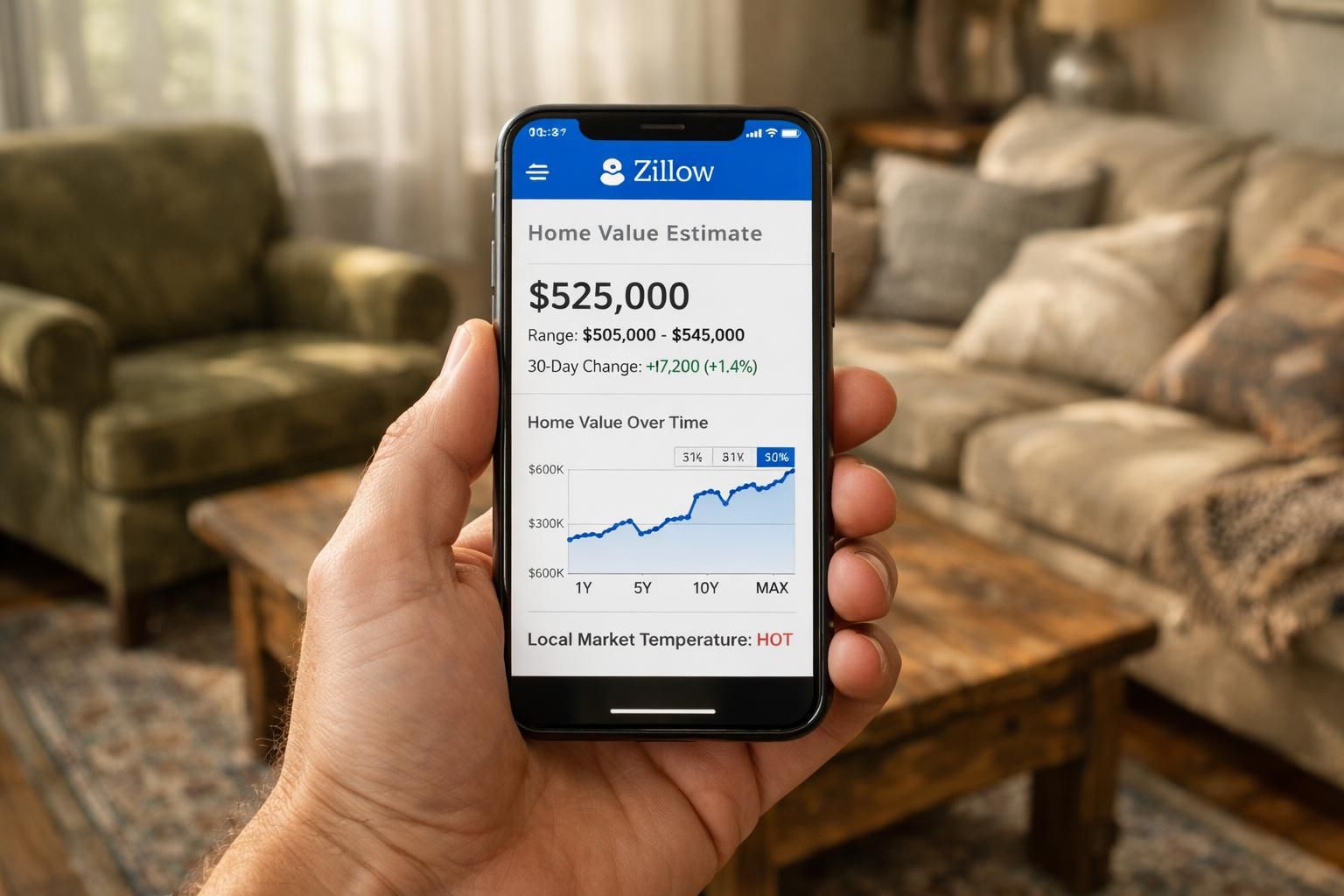
You need a reliable home value before splitting equity in a Colorado divorce. A licensed Colorado appraiser or a Comparative Market Analysis from a local real estate agent provides the most defensible figure for negotiations and court proceedings.
Appraisal vs. online estimates
A professional home appraisal provides an independent valuation that Colorado mortgage lenders require for refinancing and buyout loans. 4 Licensed appraisers conduct in-person visits, analyze recent comparable sales, and account for local market conditions in areas like the Denver metro or Colorado Springs.
Online estimates from Zillow or Redfin offer a quick snapshot but frequently miss unique upgrades, deferred maintenance, or neighborhood nuances. These tools are useful for setting initial expectations but are generally not accepted by Colorado courts as standalone evidence of value.
If both spouses dispute the value, each may hire separate licensed appraisers. A Certified Divorce Lending Professional can help align credit and financing requirements with an accurate valuation for your settlement. 2
Handling disagreements on value
If you and your spouse cannot agree on your home's value, your Colorado divorce attorney may recommend separate appraisals. Colorado district courts can order an independent real estate expert when disputes persist. Courts require documentation such as receipts for improvements, tax records, and mortgage statements to support each valuation position. 5
Professional mediation is a common and effective option in Colorado, helping both parties stay focused on data rather than emotion. If mediation and negotiation both fail, a Colorado judge will determine the final value and issue a ruling as part of the divorce decree.
Tax Considerations

Tax rules can significantly affect how much you keep from an equity division after a Colorado divorce. Speak with a Colorado divorce attorney or CPA about capital gains timing, state tax conformity, and documentation requirements.
Capital gains exclusion: married couples vs. individuals
The IRS allows married couples to exclude up to $500,000 in capital gains when selling a primary residence. Once divorce is final and only one person owns the home, that exclusion drops to $250,000 per individual. This difference can have a major impact on your net proceeds in a high-appreciation Colorado market.
To qualify, you must have owned and used the home as your primary residence for at least two of the last five years. Selling before your Colorado divorce decree becomes final may allow both parties to claim the larger exclusion. Any appreciation above these thresholds is subject to federal capital gains tax. Colorado generally conforms to federal capital gains treatment, so state income tax may also apply to gains above the exclusion limit.
Timing of sale and basis adjustments
Carefully tracking your adjusted cost basis lowers your taxable gain. Start with the original purchase price, add documented improvements such as a kitchen remodel or new roof, and subtract selling expenses like real estate commissions and closing costs. Selling before finalizing your Colorado divorce can preserve the $500,000 joint exclusion. 7
A Colorado CPA familiar with divorce transactions can guide you through basis calculations and help you avoid paying more tax than required. Proper documentation—receipts, bank statements, contractor invoices—is essential for supporting your basis claims. 6
Special Situations to Consider
Some Colorado property settlements involve added complexity. Underwater mortgages, deferred maintenance, and separate property contributions each require careful handling during divorce.
Underwater mortgages
An underwater mortgage means your loan balance exceeds the home's current market value, leaving no equity to divide. Both spouses remain responsible for the mortgage until a resolution is reached. Options include a short sale with lender approval, a loan modification, or in some cases foreclosure—all of which can negatively affect both parties' credit scores for years. 8
A Colorado divorce attorney experienced in real estate matters can help you weigh these options and understand how Colorado law handles joint mortgage liability in a dissolution of marriage.
Deferred maintenance or home improvements
Deferred maintenance can lower your home's appraised value and reduce net proceeds at sale. Cash buyers typically offer 70 to 85 percent of after-repair value when significant repairs are needed. Courts may credit "sweat equity" if one spouse performed repairs or improvements during the marriage, provided you have documentation such as receipts or contractor estimates.
Separate property contributions or inheritances
If you used pre-marital savings or inherited funds for a down payment in Colorado, those contributions may qualify as separate property. You must provide clear records—bank statements, gift letters, closing documents—to support a separate property claim. Colorado courts require careful tracing of funds, especially when marital and separate assets have been commingled over time. Value increases on a separately owned home that occurred during marriage may still be subject to equitable division if marital funds contributed to the property. 2
Role of Professionals in the Process
Working with the right professionals in Colorado makes the equity division process more manageable and protects your legal and financial interests at every step.
- Colorado divorce attorneys protect your legal rights, ensure full financial disclosure, and make sure any property division agreement complies with Colorado dissolution of marriage law.
- Mediators serve as neutral third parties to help spouses reach agreement without going to Colorado district court—often faster and less costly than litigation.
- Certified Divorce Financial Analysts (CDFAs) provide data-driven analysis of long-term impacts, including home equity, retirement accounts, and tax consequences under Colorado law.
- Licensed Colorado appraisers deliver defensible home valuations that courts and lenders accept for buyout loans and settlement negotiations.
- Real estate agents with divorce transaction experience can provide Comparative Market Analyses and help structure sales that align with your decree requirements.
- CPAs familiar with Colorado tax law help you minimize capital gains exposure and properly document your adjusted basis for the home sale.
Action Steps for Dividing Home Equity in Colorado
Gather mortgage balance and property value
Start with your most recent mortgage statement to confirm your current loan balance and any liens or home equity lines of credit. Request a professional appraisal or ask a Colorado real estate agent for a Comparative Market Analysis. If you and your spouse disagree on value, consider obtaining separate appraisals from licensed Colorado appraisers. Collect receipts for major upgrades and repairs, as these affect the equity calculation and your tax basis.
Consult a Colorado family law attorney
Colorado's equitable distribution rules require legal guidance. An experienced Colorado divorce attorney can clarify whether your home equity is marital or separate property, help you meet court disclosure requirements, and review any settlement agreement before it becomes part of your final divorce decree. If spousal maintenance, commingled funds, or complex asset structures are involved, legal counsel is especially important. 9
Explore all division options carefully
Compare selling, buying out, co-owning, or offsetting with other assets before committing to a path. Consider your ability to refinance at current Colorado mortgage rates, your immediate cash needs, and long-term tax implications. All terms should be clearly written into your Colorado divorce decree to prevent future disputes and ensure legal enforceability for both parties.
Conclusion
Dividing home equity during a Colorado divorce may feel overwhelming, but clear steps and the right professional support can help you move forward with confidence. Gather your documents, get an accurate property valuation, and work with a Colorado divorce attorney who understands state-specific rules. Fair solutions do exist, even in difficult circumstances—and you deserve guidance as you build your next chapter.
If you need to sell your home quickly as part of a Colorado divorce settlement, KDS Homebuyers can help. We buy houses directly from Colorado homeowners for cash, with no repairs required and no realtor fees. Visit kdshomebuyers.net to request your free cash offer today.
FAQs
1. How do Colorado courts divide home equity in a divorce?
Colorado uses equitable distribution, meaning courts divide marital property fairly but not always equally. Judges consider factors like the length of the marriage, each spouse's financial contributions, earning capacity, and economic circumstances before deciding on an equity split.
2. How do I determine my home's value for a Colorado divorce settlement?
Start with a professional appraisal from a licensed Colorado appraiser to establish current market value. Subtract your remaining mortgage balance to calculate available equity. Online estimates can help set expectations, but a formal appraisal is required for court proceedings and lender approval.
3. Can one spouse keep the house after a Colorado divorce?
Yes. One spouse can buy out the other's equity share by refinancing the mortgage. The spouse keeping the home must qualify for a new loan on their own income and credit. The other spouse is typically removed from the title via a quitclaim deed as part of the divorce decree.
4. Are there tax implications when splitting home equity in Colorado?
Yes. Federal capital gains exclusions apply—$500,000 for married couples, $250,000 per individual after divorce. Colorado generally conforms to federal capital gains treatment, so state income tax may also apply to gains above the exclusion. Consult a Colorado CPA about the timing of your sale to minimize tax exposure.
5. What happens if our Colorado home is worth less than what we owe?
If your mortgage balance exceeds the home's value, there is no equity to divide. Both spouses remain liable for the debt until a solution is reached—whether through a short sale, loan modification, or other arrangement. A Colorado divorce attorney can help you navigate the legal and financial implications of an underwater mortgage.
References
- ^ https://www.pencefirm.com/how-do-you-divide-equity-in-a-home-when-divorcing/ (2024-11-12)
- ^ https://digitalcommons.law.uga.edu/cgi/viewcontent.cgi?article=1946&context=fac_artchop
- ^ https://www.bankrate.com/home-equity/how-is-home-equity-split-in-divorce/ (2025-06-20)
- ^ https://www.divorcelendingassociation.com/library/determining-the-value-of-real-property-in-divorce.cfm
- ^ https://digitalcommons.pace.edu/cgi/viewcontent.cgi?article=1947&context=plr
- ^ https://www.journalofaccountancy.com/issues/2013/apr/20126248/ (2013-03-31)
- ^ https://papers.ssrn.com/sol3/Delivery.cfm/SSRN_ID2364374_code680143.pdf?abstractid=1920795&mirid=1 (2011-09-11)
- ^ https://papers.ssrn.com/sol3/Delivery.cfm/SSRN_ID2888907_code488916.pdf?abstractid=2352266&mirid=1
- ^ https://www.colesorrentino.com/dividing-marital-property-new-yorks-equitable-distribution-law/ (2024-11-13)
