

Divorce and Your Mortgage: What Happens and What to Do in Florida

Facing divorce in Florida can leave you worried about your home and mortgage. Many divorcing couples do not realize that both parties remain responsible for a joint mortgage, even after signing the divorce decree.
This guide breaks down what happens to your mortgage during a Florida divorce and covers your options — selling the home, refinancing, or buying out equity. Find answers that protect your credit score and help you plan ahead. 1 2
Key Takeaways
- Both spouses stay legally responsible for a joint mortgage unless they refinance, pay off the loan, or obtain lender approval for a mortgage assumption. A Florida divorce decree alone does not remove anyone's name from the debt.
- Missed payments on a joint mortgage hurt both credit scores for up to seven years and can lead to foreclosure. Florida has one of the country's highest foreclosure rates, and the process can take 6–18 months through the court system.
- Refinancing requires strong credit (typically at least 620), steady single income, and usually at least 20% home equity. Rates near 7% as of spring 2024 raise monthly costs significantly compared to the 3% rates of 2020.
- Florida is an equitable distribution state, meaning courts divide marital assets fairly but not necessarily 50/50. A marital settlement agreement or final judgment of dissolution controls how home equity is split.
- Selling the marital home lets both parties divide proceeds per their settlement agreement. Florida charges documentary stamp taxes on deed transfers — typically $0.70 per $100 of the sale price — which adds to closing costs.
What Happens to Your Mortgage During Divorce in Florida
Divorce can make it hard to keep up with joint mortgage payments, especially when you hold a shared mortgage note. Florida's courts finalize divorces through a Final Judgment of Dissolution of Marriage, but your lender still expects regular payments from both parties regardless of what any court order says.
Legal responsibility for a jointly-held mortgage
If your name appears on a joint mortgage, you stay legally responsible for the full loan amount until it is paid off or refinanced. Florida mortgage lenders do not remove your obligation based on a divorce decree or marital settlement agreement alone.
Both you and your former spouse remain equally liable no matter who lives in the marital home after the divorce process ends. Missed mortgage payments appear on both credit reports and can affect each person's credit score for up to seven years.
Florida is an equitable distribution state — not a community property state — meaning a judge divides marital assets based on fairness rather than an automatic 50/50 split. However, equitable distribution of the home does not override joint liability to your lender. You will need lender approval through refinancing, loan modification, or a formal mortgage assumption before ending joint responsibility for the debt.
Florida divorce agreements vs. mortgage obligations
A Florida marital settlement agreement or final judgment of dissolution may outline who keeps the home and who pays the mortgage, but your lender only recognizes those named in the original loan documents. Your legal obligation continues unless you refinance, complete a formal mortgage assumption with lender approval, or pay off the debt in full.
Some lenders will require a quitclaim deed if one spouse's name is coming off the title, but this does not remove that person from liability for the underlying debt. Florida courts in Jacksonville, Miami, Tampa, and elsewhere regularly see post-divorce disputes arising because one spouse assumed the other had handled the mortgage — when the lender had not been formally notified.
Always confirm any changes directly with your mortgage servicer. Never rely on a court order alone to resolve home financing obligations.
Consequences if one spouse stops paying
If one spouse stops paying, the lender still expects full payment from both of you. Even if your Florida divorce decree assigns payment to only one person, lenders are not bound by that order — they follow the original loan agreement.
Florida is a judicial foreclosure state, meaning lenders must file a lawsuit in circuit court to foreclose. While this process typically takes longer than non-judicial states — often 6 to 18 months — a foreclosure still drops each borrower's credit score by 200 to 300 points and blocks most people from getting new mortgages for three to seven years.
Even a short sale will damage your ability to obtain home financing for two to four years. Monitor all joint accounts regularly during separation. Prompt communication with your mortgage servicer helps avoid severe consequences as you work through divorce-related home equity decisions.
Your Options for the House and Mortgage in Florida

You have several routes for handling your mortgage during a Florida divorce. Understanding home equity, lender approval, and your available options can help protect your credit score and financial stability going forward.
Refinancing to remove one spouse
Refinancing can remove a spouse from the mortgage after divorce, but it requires careful planning in Florida's current rate environment.
- Lenders require a new mortgage application under your name only if you plan to keep the marital home.
- Most lenders need at least a 620 credit score for conventional refinances and 580 for FHA loans.
- You must qualify based solely on your own income, assets, debt-to-income ratio, and credit history.
- At least 20 percent home equity is typically required for conventional refinancing.
- Refinance rates are near 7 percent as of spring 2024 — far above the 3 percent historic lows of 2020–2021.
- Florida courts will generally recognize alimony or child support listed in your final judgment as qualifying income if it will continue for at least three years.
- A cash-out refinance can allow you to buy out your spouse's equity share; FHA and conventional loans cap this at an 80 percent loan-to-value ratio, while VA loans may allow up to 100 percent.
- For example, if your Orlando home is worth $400,000 and you owe $275,000, you have $125,000 in equity. A cash-out refinance could provide roughly $62,500 to your ex while creating a new mortgage of about $337,500 in your name only.
- Your lender will likely require your finalized marital settlement agreement or final judgment of dissolution before processing a release of liability for the departing spouse.
- Factor in Florida's closing costs, including documentary stamp taxes on the new note (at $0.35 per $100 of the loan amount) and intangible tax (at $0.002 per dollar of the loan).
Selling the house and splitting proceeds
Selling the marital home often provides the cleanest resolution during a Florida divorce. A real estate agent typically charges 5 to 6 percent of the sale price. Total closing costs — including commission, title insurance, and Florida's documentary stamp tax on the deed — typically run 8 to 10 percent.
On a $400,000 home with a $275,000 mortgage balance, you might pay roughly $24,000 in agent fees plus additional closing costs, leaving around $94,000 to divide per your settlement agreement.
Florida's housing markets — particularly in the Tampa Bay area, South Florida, and the Orlando metro — have seen strong appreciation, meaning many couples have meaningful equity to divide. The sale process typically takes 30 to 60 days once an offer is accepted.
Keep capital gains tax rules in mind. Married couples filing jointly can exclude up to $500,000 in profit; single filers qualify for up to $250,000 if they meet IRS ownership and use requirements. Selling while still legally married may allow you to capture the larger exclusion — consult a tax advisor before proceeding.
Co-owning temporarily (risks and logistics)
Some Florida couples co-own the marital home temporarily for stability — particularly when minor children are involved or when waiting for the market to improve. Both parties remain fully liable for mortgage payments, property taxes, and insurance during this period.
Florida property taxes include homestead exemption benefits. If one spouse moves out, the departing spouse may lose their eligibility for the homestead exemption on a future primary residence if the exemption remains attached to the shared property. Written co-ownership agreements should address monthly payment responsibilities, maintenance costs, rental income if applicable, and a clear exit timeline.
Always consult a Florida family law attorney before setting up these arrangements, as disputes over property management can become costly.
One spouse pays the existing mortgage without refinancing
If one spouse keeps paying the joint mortgage without refinancing, both parties remain legally responsible for the loan. The lender holds each person accountable regardless of what your Florida divorce decree says.
Missed payments hurt both credit scores and complicate future home financing. Your name stays on the mortgage note until refinancing, a formal assumption with lender approval, or sale of the home. Stay in direct contact with your mortgage servicer and document every payment made, as this record may become important in any future Florida court proceeding.
Deferring the decision until later
Some couples delay decisions about the marital home while waiting for market conditions to improve or emotional factors to settle. Florida family law judges can order a sale if spouses cannot agree on disposition of the property.
Deferring may affect your eligibility for the married-couple capital gains exclusion if the home is ultimately sold after the divorce is finalized. Temporary agreements must clearly spell out who pays the mortgage, property taxes, insurance, and maintenance. Consult both a Florida family law attorney and a financial advisor before choosing this path.
The Refinancing Process During Divorce in Florida

Florida lenders look closely at your debt-to-income ratio, credit score, and available equity when you apply to refinance during divorce. Loan officers may request your finalized marital settlement agreement, proof of alimony or child support, and an updated appraisal of the marital home.
Credit, income, and equity requirements
To qualify for a refinance after divorce in Florida, most lenders require a minimum credit score of 620 for conventional loans or 580 for FHA loans. Your debt-to-income ratio generally must be no higher than 43 percent. You will need proof of steady income — recent pay stubs, or documentation of at least six months of consistent alimony or child support payments.
Most refinancing options also require at least 20 percent equity in the home. Negative equity will block a refinance entirely. If you recently re-entered the workforce, many lenders require six months of consistent paychecks before approving a loan in your name alone.
Challenges of qualifying alone
Qualifying on a single income is often harder than it looks. Lenders now evaluate only your income, debts, and credit score. Divorce-related credit disruptions can drop scores by 50 to 100 points according to Experian, making approval more difficult.
At today's rates near 7 percent, monthly payments on a refinanced mortgage can run $1,000 or more higher than the original loan. Florida lenders will count court-ordered alimony or child support as income only if payments are documented and expected to continue for at least three years.
Timing considerations: before or after divorce in Florida
Refinancing before the divorce is finalized may offer better joint qualification odds and preserves the $500,000 capital gains exclusion if you sell the home while still married. Some lenders require both spouses' signatures on new loan documents if the divorce is not yet final.
Waiting until after your Final Judgment of Dissolution is entered gives lenders the documentation they need — including your marital settlement agreement — to verify alimony or child support income. However, you will then qualify on a single income, which may reduce your loan amount or increase your rate. Work with a Florida-licensed mortgage professional and a family law attorney to determine the best timing for your situation.
Selling the House in Florida: When It's the Best Option

Selling the marital home can offer a clean break and allow both spouses to access their share of Florida's often-significant home equity. Here is when it makes the most sense and how it compares to other routes.
Situations where selling makes sense
Selling often makes sense when neither spouse qualifies to refinance alone, when major repairs are needed that neither party can afford, or when the home carries negative equity. If both parties disagree on value or neither wants the ongoing responsibilities of Florida homeownership — property taxes, insurance, HOA fees — selling provides clarity and a clear division of assets per your settlement agreement.
In competitive Florida markets like Miami or Tampa, a timely sale can capture strong appreciation before market conditions shift. Acting early in the divorce process protects both parties from missed payments that could damage their credit for years.
Comparing traditional sales to alternatives
A traditional sale through a real estate agent involves commissions of 5 to 6 percent and total closing costs up to 10 percent, including Florida's documentary stamp tax on the deed. The process typically takes 45 to 55 days after an accepted offer.
A short sale — used when the home is underwater — avoids foreclosure but creates a two-to-four year waiting period before qualifying for a new mortgage. Foreclosure in Florida requires court action and can take 6 to 18 months, damaging credit by up to 300 points and blocking new home financing for three to seven years.
Selling directly to a cash buyer closes faster — sometimes in days — with no repairs or agent fees, though you typically accept a below-market price. Always review capital gains tax rules before selling; single filers receive only a $250,000 exclusion compared to $500,000 for married couples filing jointly.
Protecting Your Credit and Financial Future in Florida
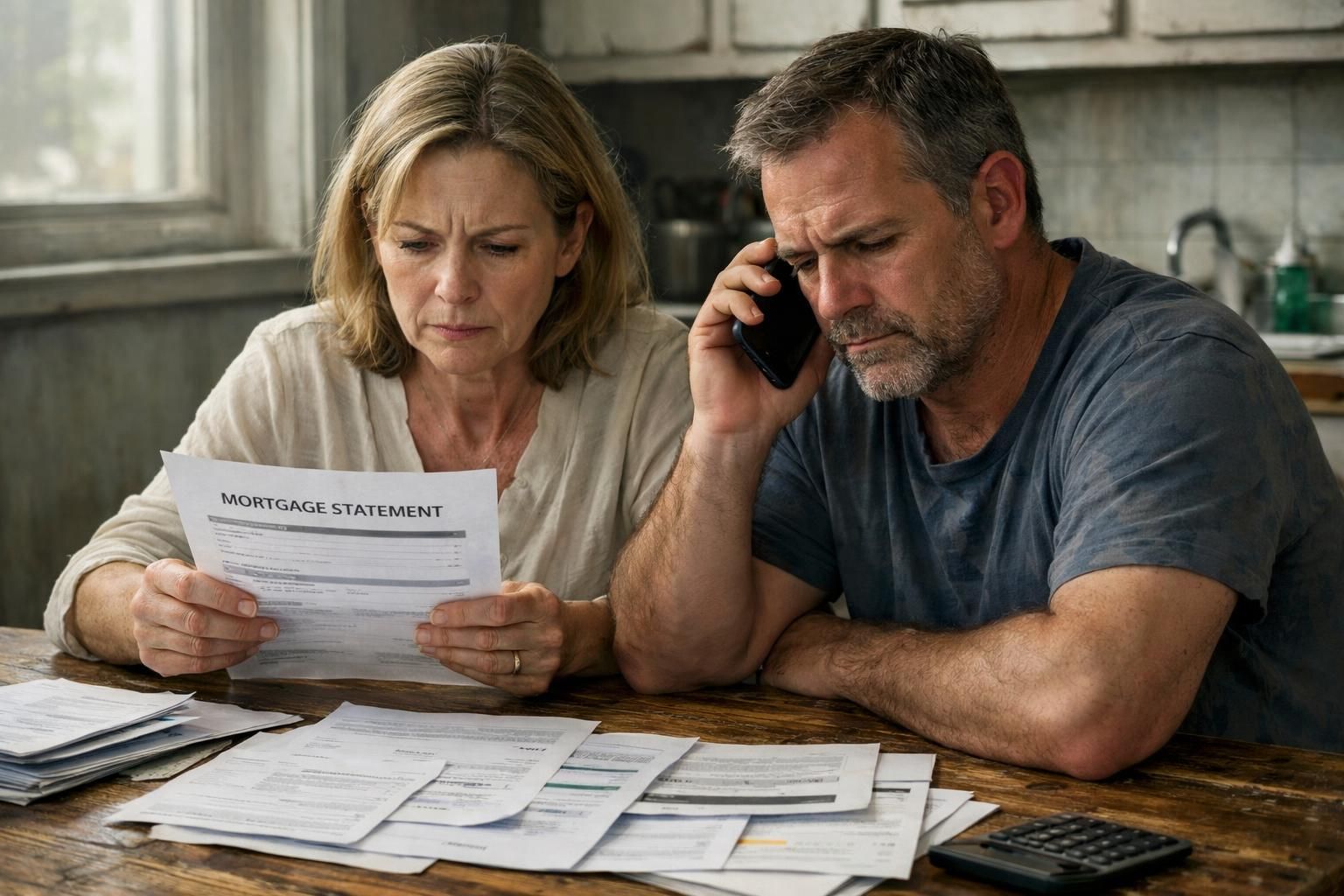
Monitoring mortgage payments during separation
Keep joint mortgage payments current during your Florida separation to protect both credit scores. Lenders do not recognize changes in liability until refinancing or a formal assumption is complete. Set up written agreements specifying who pays the monthly mortgage bill while separated.
Use credit monitoring services to catch late payments early. Document every payment — these records may become important in Florida circuit court proceedings or property settlement discussions.
Avoiding common financial mistakes
A Florida divorce decree does not remove your name from a joint mortgage or guarantee release of liability. Close joint accounts to prevent future debt exposure, and monitor mortgage statements throughout the separation period.
Document all alimony and child support through proper legal channels — incomplete paperwork can prevent you from qualifying for new home financing. Consulting a financial advisor early in the Florida divorce process prevents costly mistakes that can linger long after your case is finalized.
Florida Divorce and Real Estate: Understanding the Connection
Florida is an equitable distribution state. Courts divide marital assets — including the family home — based on fairness, which may not mean an equal split. A professional appraisal resolves valuation disputes and helps calculate equity for any buyout discussion.
Home equity is the market value minus your mortgage balance. Florida homeowners in markets like Jacksonville and Orlando have seen strong equity growth, making equitable distribution negotiations particularly important. Lenders will not honor ownership changes until they approve terms through refinancing, assumption, or sale — a divorce decree does not override your joint mortgage note.
Florida also offers a homestead exemption that provides significant property tax savings and creditor protections. Divorce can complicate homestead status, particularly if one spouse moves out. Work with a Florida-licensed real estate attorney and a financial advisor to protect your interests in any property settlement agreement covering alimony, child support, cash-out options, or temporary co-ownership.
Conclusion
Divorce can make decisions about your Florida home and mortgage feel overwhelming, but you have options. Reviewing each path carefully — refinancing, selling, co-owning, or assuming the loan — protects both your credit score and financial stability. Work with Florida-licensed legal and financial professionals to build a plan that fits your settlement agreement and secures your future.
If selling the marital home makes sense for your situation, KDS Homebuyers can help. We buy houses directly from Florida homeowners for cash — no repairs, no agent fees, and no lengthy closing timelines. Visit kdshomebuyers.net to request your free cash offer today and take one clear step forward during a difficult time.
FAQs
1. What happens to a joint mortgage during a Florida divorce?
A joint mortgage remains both partners' responsibility until the loan is paid off or one person formally assumes it with lender approval. Florida's Final Judgment of Dissolution does not remove your name from the mortgage note.
2. How can I keep the marital home after a Florida divorce?
You may need to refinance in your name alone, qualifying based on your own credit score, income, and debt-to-income ratio. Your marital settlement agreement should clearly outline who keeps the home and how equity is divided.
3. Can selling the home help resolve mortgage issues in a Florida divorce?
Yes. Selling clears joint debt and divides proceeds per your settlement agreement. It also avoids the risk of missed payments damaging both credit scores during a prolonged dispute.
4. What are my options if I want to assume sole responsibility for the mortgage?
A mortgage assumption lets one spouse take over full payment obligations, but it requires lender approval. The lender will review your credit and income. Some loans include a due-on-sale clause that prevents assumption without refinancing.
5. Will alimony or child support help me qualify for a new mortgage in Florida?
Florida lenders can count court-ordered alimony or child support as qualifying income if the payments are documented and expected to continue for at least three years, which can improve your debt-to-income ratio.
6. Should I consult a financial advisor about my mortgage during a Florida divorce?
Yes. A financial advisor familiar with Florida's equitable distribution rules can help you evaluate refinancing costs, capital gains tax implications, and long-term financial stability as you negotiate your property settlement agreement.
