

Deed in Lieu of Foreclosure: How It Works and When to Use It in Florida

Falling behind on your mortgage payments can feel overwhelming. A deed in lieu of foreclosure lets you give the property back to your lender, which may help you avoid Florida's lengthy judicial foreclosure process. 1 This guide explains how a deed in lieu works in Florida, when it makes sense to use it, and what steps you need to take. 2
Key Takeaways
- A deed in lieu of foreclosure lets you voluntarily transfer your home to the lender rather than going through Florida's court-supervised foreclosure process. It typically causes less credit damage—around 50–125 points—compared to 200–300 points for a full foreclosure. 3
- Florida is a judicial foreclosure state, meaning lenders must file suit in circuit court to foreclose. A deed in lieu bypasses that entire process and keeps the matter private.
- You must demonstrate genuine financial hardship, attempt to sell your home first, have no unresolved junior liens, and submit documents such as tax returns and bank statements. Most lenders require at least 90 days of missed payments under FHA guidelines.
- Florida allows lenders up to five years to pursue a deficiency judgment after a deed in lieu transfer unless the agreement specifically waives that right in writing. Always get a written release.
- Forgiven mortgage debt over $600 may count as taxable income under IRS Form 1099-C rules. Consult a real estate attorney or HUD-approved housing counselor before proceeding.
What Is a Deed in Lieu of Foreclosure?
A deed in lieu of foreclosure lets you transfer your home's ownership to the mortgage lender when you can no longer keep up with payments. This voluntary agreement can help you avoid the lengthy judicial foreclosure process that Florida requires, which involves circuit court filings, hearings, and a public auction. 1
Your lender accepts the property title subject to any existing claims or liens, such as a second mortgage or HOA lien. If the lender approves, this arrangement usually releases you from further obligation on your mortgage debt unless a separate agreement states otherwise. Many lenders also offer moving assistance—often called "cash for keys"—to ease your transition.
Unlike a formal Florida foreclosure, a deed in lieu does not become part of public court records and causes significantly less credit damage. This solution works best when both parties want to minimize loss: you avoid deficiency judgment exposure while the lender gains control of the property far more quickly than through circuit court proceedings.
Step-by-Step Process of a Deed in Lieu of Foreclosure

You can take clear steps to request a deed in lieu from your loan servicer in Florida. Title searches, mortgage agreements, and fair market analyses all play a key role.
Identifying financial hardship and missed payments
Most Florida lenders require at least 90 days of missed mortgage payments before considering a deed in lieu. Lenders look for proof of genuine, ongoing hardship—not a temporary setback. If your home is "underwater," meaning you owe more than its current market value, that is often an early signal to seek help.
Gather recent tax returns, pay stubs, and bank statements. If you are self-employed, include profit and loss statements. The lender may also require evidence that your property was listed for sale for at least 90 days before agreeing to accept a deed in lieu.
Communicating with the lender
Contact your mortgage servicer as soon as you begin missing payments. Put your request in writing, clearly explaining your hardship and the terms you are seeking. Your servicer should respond with any conditions for accepting a deed in lieu, including whether it will clear the full mortgage balance or leave a deficiency.
Some lenders only accept this option if no junior liens—such as a second mortgage, home equity line, or HOA lien—exist on the property. In Florida, HOA and condo association liens are common and can complicate title, so address these early. Expect the full process to take between 90 and 180 days from application to completion.
Submitting an application
Gather a hardship letter, recent tax returns, bank statements, pay stubs, and a full income-and-expense summary. 2 Submit everything to the lender's loss mitigation department. Many lenders require proof you attempted a sale first, such as a listing agreement or documented buyer offers. 1 Include a property value report from an appraiser or a Broker Price Opinion (BPO). A complete submission moves the process forward faster.
Property valuation and negotiation
Your lender will order a BPO or formal appraisal to compare your home's value against the outstanding mortgage balance. In markets like Tampa or Orlando, where values have shifted significantly in recent years, this step is especially important. Any unresolved junior liens—second mortgages, HELOCs, or property tax certificates—must be addressed before the lender will proceed.
Negotiate the settlement agreement carefully. Confirm whether the lender will forgive any remaining balance or waive deficiency rights entirely. Lenders may pay transfer costs or offer relocation funds if equity exists, though this rarely equals full market value.
Signing the deed and transferring ownership
You and your lender meet—typically at a title company or real estate attorney's office in Florida—to sign the deed transfer documents. Florida law requires deeds to be signed before two witnesses and a notary public before recording with the county clerk. Once recorded, the lender holds clear title and your rights to the property end immediately.
If the lender agreed to release you from the remaining mortgage balance, they should issue a satisfaction of mortgage. Review every detail with a Florida real estate attorney before signing, since errors can affect your tax liability or future borrowing ability.
Deed in Lieu vs. Foreclosure: Key Differences
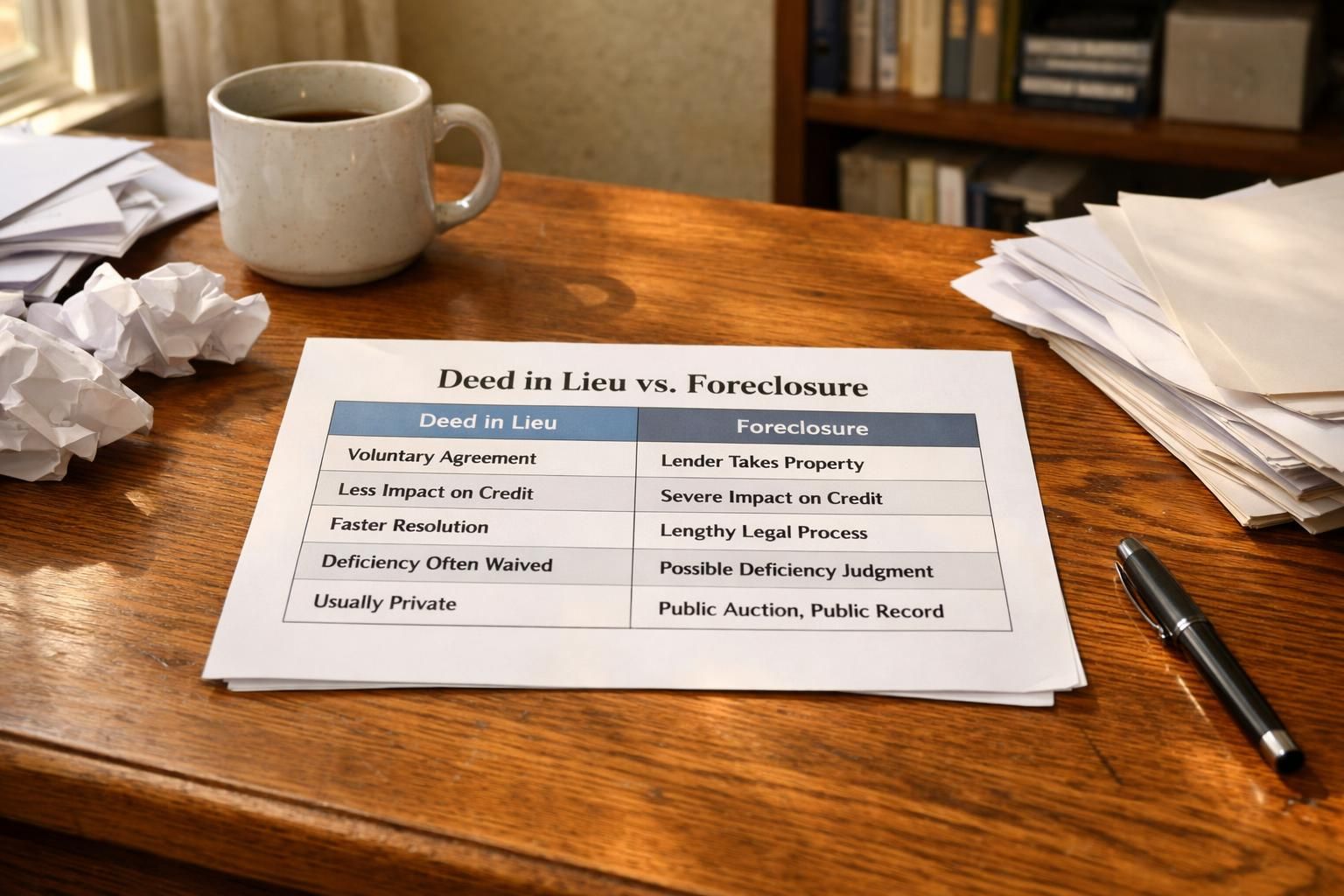
Credit score impact
A deed in lieu typically lowers your credit score by 50 to 125 points, while a full Florida foreclosure can drop it by 200 to 300 points. 3 A deed in lieu remains on your credit report for about four years; a foreclosure stays for seven. You may qualify for a conventional mortgage within two to four years after a deed in lieu, or three years for an FHA loan—much sooner than after a foreclosure judgment.
Timeline comparison
A deed in lieu typically takes 90 to 180 days from application to closing. Florida's judicial foreclosure process, by contrast, often takes one to three years due to required court filings, mandatory mediation under Florida's Foreclosure Mediation Program, and the final public auction. For homeowners in the Miami or Jacksonville metro areas facing active foreclosure suits, a deed in lieu can dramatically shorten that timeline.
Deficiency judgment possibilities
Florida is a recourse state. Under Florida law, lenders have up to five years after transferring ownership to seek a deficiency judgment for any remaining mortgage balance not covered by the property's value. This is a significant risk that homeowners in Florida must address directly in any deed in lieu agreement. Always negotiate a written deficiency waiver as part of the settlement. Without it, you could owe thousands even after giving up the home.
Public record implications
Florida foreclosures are fully public. The circuit court complaint, lis pendens filing, and final judgment all appear in county court records and are accessible to employers, landlords, and future lenders. A deed in lieu avoids this—only the deed transfer is recorded, with no attached foreclosure history. This privacy benefit is meaningful, particularly in competitive rental markets like Miami or Tampa where landlords routinely run background checks.
Eligibility Requirements for a Deed in Lieu of Foreclosure
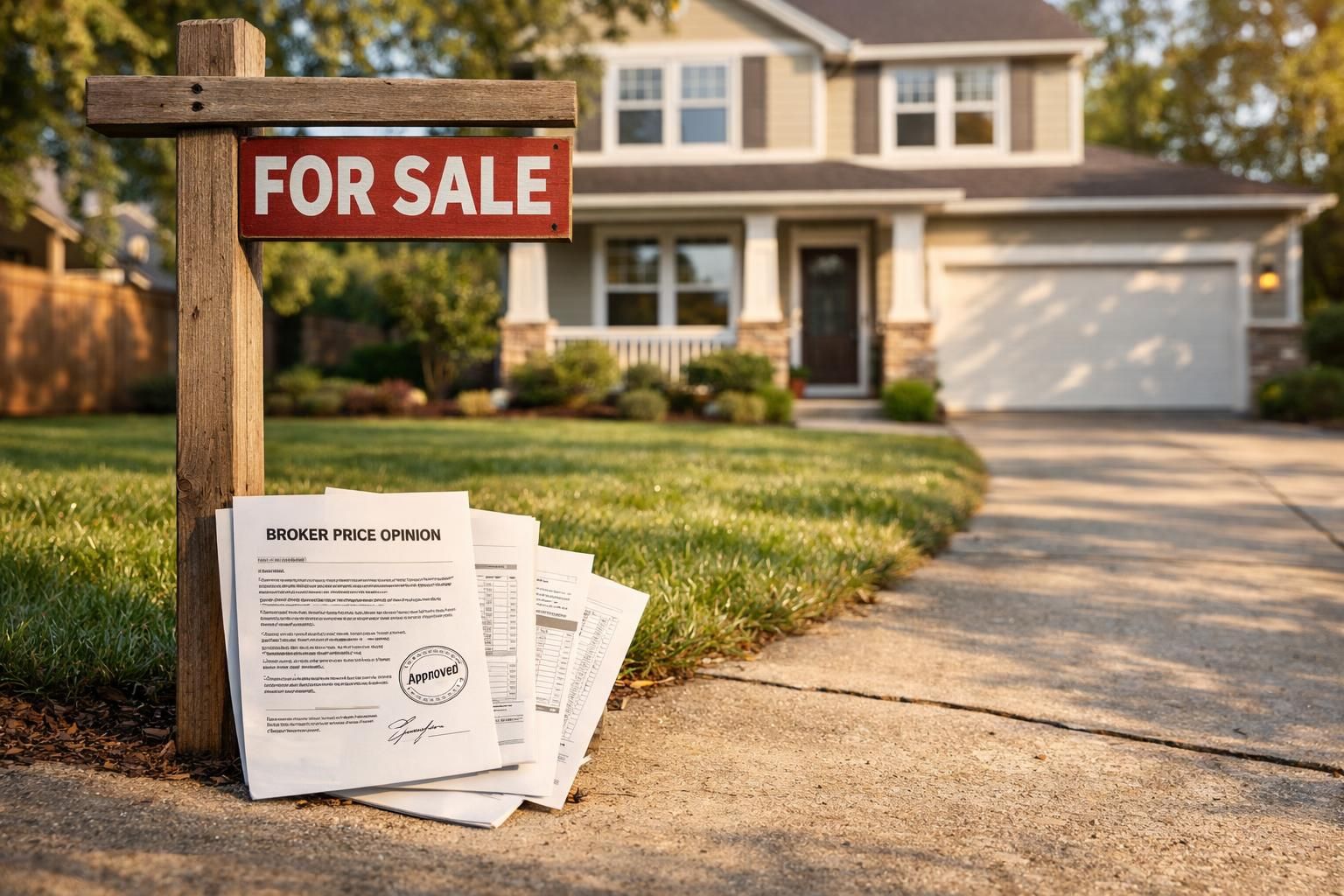
To qualify in Florida, you must demonstrate genuine ongoing financial hardship with clear documentation. 4 The home must be in acceptable condition with no major code violations or unresolved repairs. Your title must be clean—free of second mortgages, judgment liens, unpaid property tax certificates, or HOA/condo association liens that would block a clean transfer.
Most lenders require proof the property was listed for sale for at least 90 days with no buyer before accepting a deed in lieu under FHA guidelines. A BPO or appraisal confirming current market value is also required. If you meet these criteria, you may move forward without enduring Florida's full foreclosure process.
When to Consider and When to Avoid a Deed in Lieu

Consider a deed in lieu if your home is underwater, you have exhausted loan modification and forbearance options, and you cannot sustain monthly payments. It is especially useful when the lender agrees in writing to waive any deficiency judgment. Always confirm liability release terms before signing.
Avoid a deed in lieu if your property carries unresolved junior liens—Florida lenders will reject the application until all title issues are cleared. Do not use this option if your home has substantial equity; selling outright may put money in your pocket. If your home needs significant repairs, many lenders will reject the deed due to resale concerns. When other debts complicate your situation, speak with a Florida bankruptcy attorney about Chapter 7 or Chapter 13 options before deciding.
Deficiency Judgments and Tax Implications in Florida
Florida is a recourse state, and lenders can pursue a deficiency judgment within five years after a deed in lieu transfer if the agreement does not waive that right. 5 This makes written deficiency waivers critical in any Florida deed in lieu negotiation. Always have a Florida real estate attorney review the agreement before you sign.
On the tax side, if your lender forgives more than $600 in mortgage debt, the IRS requires them to issue a Form 1099-C, and that forgiven amount may be treated as taxable income. The Mortgage Forgiveness Debt Relief Act has expired; unless Congress renews it or a specific exclusion applies—such as insolvency—forgiven debt could increase your federal tax bill. Florida has no state income tax, so there is no additional state-level income tax concern on forgiven debt. However, consult a tax professional to evaluate your specific situation.
Florida also does not impose a mortgage recording tax on deed in lieu transactions in the same way as a new mortgage, but documentary stamp taxes apply to deed transfers. The rate is $0.70 per $100 of consideration in most Florida counties ($0.60 per $100 in Miami-Dade). Clarify in your agreement who bears this cost.
Alternatives to Deed in Lieu of Foreclosure
Short sale
A short sale lets you sell your Florida home for less than the mortgage balance with lender approval. 6 You must submit a loss mitigation package including a hardship letter, financial statements, and a listing history. The process can take several months, and a deficiency may still follow unless the lender agrees in writing to waive it. Tax implications are similar to a deed in lieu—consult a tax professional about any forgiven debt.
Loan modification
A loan modification changes your mortgage terms to make payments manageable—through a lower interest rate, extended loan term, or forbearance period. Lenders require proof of hardship and full financial documentation. Government-backed programs through FHA and the Making Home Affordable initiative may be available. A successful modification lets you keep your home and avoid further credit damage.
Forbearance
Forbearance temporarily pauses or reduces your mortgage payments during a short-term hardship such as job loss or illness. Plans typically run three to twelve months, but missed payments must be repaid later. 7 If your hardship continues past the relief period, lenders may suggest a modification or other alternative. Florida homeowners who participated in COVID-era forbearance programs saw firsthand how this tool can bridge a difficult period.
Chapter 13 bankruptcy
Chapter 13 bankruptcy allows Florida homeowners with regular income to propose a three-to-five-year repayment plan through the federal bankruptcy court. Filing an automatic stay immediately halts any active foreclosure proceedings in Florida circuit court. This option suits homeowners who want to keep their home and can commit to a structured repayment schedule. Consult a Florida bankruptcy attorney, as deed in lieu transactions completed within 90 days of filing may be reviewed by the court under federal preference rules.
Selling to a cash buyer
Selling to a cash buyer can help you avoid foreclosure entirely if you need a fast exit. Cash buyers often purchase Florida homes as-is—no repairs, no staging, no open houses. Closings can happen in as little as 7 to 14 days. The trade-off is that the offer may be below full market value, but you sidestep deficiency judgment risk, foreclosure court costs, and further credit damage. 8 This option works best if your home carries meaningful equity that a quick sale can capture. 9
Foreclosure Avoidance Strategies for Florida Homeowners
Act early if you begin missing mortgage payments. Florida's judicial foreclosure process moves slowly, but a lis pendens filing damages your credit and becomes a public record immediately. Early contact with your servicer opens the door to more options—modification, forbearance, short sale, or deed in lieu. Work with a HUD-approved housing counselor (available at no cost) and a Florida real estate attorney to understand your rights before any agreement is finalized. Federal programs through FHA and the Florida Homeowner Assistance Fund may provide additional support. Always secure written confirmation that any agreement releases you from personal liability on the mortgage debt.
Actionable Next Steps for Florida Homeowners
- Contact your mortgage servicer immediately when you foresee missed payments. Florida lenders have loss mitigation departments required to review alternatives before completing a foreclosure.
- Gather financial documents: recent pay stubs, two years of tax returns, bank statements, and a monthly expense summary.
- Write a hardship letter explaining why you cannot continue making payments and what relief you are seeking.
- Ask about all foreclosure alternatives—modification, forbearance, short sale, and deed in lieu—before agreeing to anything.
- Negotiate a written deficiency waiver. Florida lenders have five years to pursue unpaid balances unless they formally waive that right. 1
- Resolve any junior liens, HOA arrears, or property tax certificates before submitting a deed in lieu application—Florida lenders require clear title.
- Contact a HUD-approved housing counselor for free guidance on available programs and next steps.
- Hire a Florida real estate attorney to review all settlement documents, particularly deficiency and liability language, before signing.
- Consult a tax professional about potential IRS Form 1099-C liability on any forgiven debt. Florida has no state income tax, but federal tax exposure may apply.
- Ask about "cash for keys" relocation assistance—many Florida lenders offer funds for leaving the property promptly and in good condition.
- Keep copies of all written communications, agreements, and signed documents throughout the process.
Conclusion
Facing the loss of your home in Florida is difficult, but a deed in lieu of foreclosure can offer meaningful relief compared to a lengthy circuit court foreclosure. Understand your deficiency judgment exposure, secure written liability releases, and get professional legal and tax guidance before making any decision. Every situation is different—weigh all your options to protect your family's financial future.
If you need to sell your Florida home quickly to avoid foreclosure, KDS Homebuyers buys houses for cash in any condition across Florida. Visit kdshomebuyers.net to request a free, no-obligation cash offer and explore your options today.
FAQs
1. What is a deed in lieu of foreclosure and how does it work in Florida?
A deed in lieu lets a Florida homeowner voluntarily transfer property title to the lender, settling the mortgage debt and avoiding the judicial foreclosure process that would otherwise proceed through Florida circuit court.
2. Can a Florida lender still sue me for a deficiency after a deed in lieu?
Yes. Florida allows lenders up to five years to pursue a deficiency judgment for any remaining balance unless the deed in lieu agreement contains a written waiver. Always negotiate this release before signing.
3. Will my credit score be affected by a deed in lieu in Florida?
Yes, but typically less severely than a full foreclosure. A deed in lieu generally drops scores by 50–125 points and remains on your credit report for about four years, versus seven years for a foreclosure judgment.
4. Can I use a deed in lieu if my Florida home has an HOA lien or second mortgage?
Generally no. Florida lenders require clear title and will reject a deed in lieu application if junior liens—including HOA or condo association liens, second mortgages, or tax certificates—remain unresolved.
5. Should I get legal advice before accepting a deed in lieu offer in Florida?
Absolutely. A Florida real estate attorney can review deficiency language, documentary stamp tax obligations, and any tax consequences of forgiven debt—protecting you from costly surprises after the transfer.
References
- ^ https://www.consumerfinance.gov/ask-cfpb/what-is-a-deed-in-lieu-of-foreclosure-en-291/
- ^ https://www.nar.realtor/financing-credit/deed-in-lieu-of-foreclosure
- ^ https://residentialequitypartners.com/foreclosure-vs-deed-in-lieu-which-is-the-better-option/
- ^ https://www.nycbar.org/get-legal-help/article/real-property-law/residential-mortgage-loan-foreclosure-in-new-york/deed-in-lieu/
- ^ https://academic.oup.com/rfs/article/24/9/3139/1571250?login=true
- ^ https://www.nolo.com/legal-encyclopedia/deed-lieu-vs-short-sale.html
- ^ https://www.huduser.gov/portal/Publications/pdf/alt.pdf
- ^ https://scholarship.law.upenn.edu/cgi/viewcontent.cgi?article=1410&context=jbl
- ^ https://www.justia.com/foreclosure/alternatives-to-foreclosure/short-sales-and-deeds-in-lieu-of-foreclosure/
